Council Minutes, Then the Sauna Tax
Wedding’s wellness landlords want public gratitude for turning sweating into a civic virtue, while quietly charging extra for the privilege of pretending the heat is inclusive.
Gentrification Symptoms & Pretend-Creative Economy Reporter
Steam, Grants, and a Moral Sweat Gland
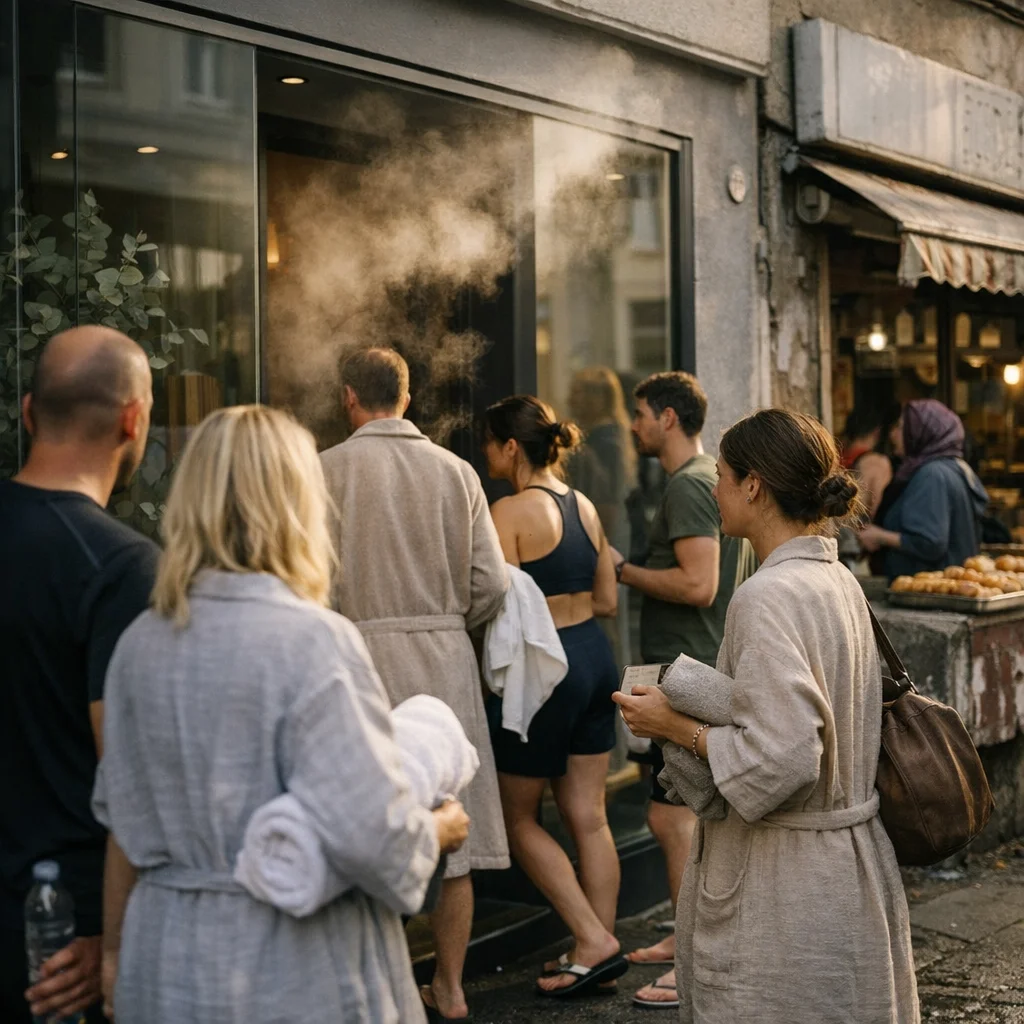
Wedding’s newest temples of hot stones and expensive remorse are asking the district for applause, subsidies, and a very specific kind of gratitude: the sort that arrives after you have paid €22 to sit in eucalyptus vapor beside a man in linen overalls explaining “community care” with the glazed sincerity of a minor cult leader. The sauna operators, boutique gym managers, and recovery-space entrepreneurs have discovered a civic miracle: if you call luxury healing, nobody notices you are charging people to suffer in a curated room.
The first wave opened with the usual Berlin perfume of moral vanity and poured concrete. A converted rear workshop now offers “restorative heat journeys.” A former discount gym promises “inclusive decompression.” One venue near a Turkish bakery has a menu that reads like a Beckett monologue written by a wellness influencer: infrared, cold plunge, guided breath, soft consent, hard pricing. The result is less public health than Foucault with scented candles.
“We are building resilience for the neighborhood,” said Miriam Voss, who runs one of the spaces and requested anonymity because she still owes three friends money and cannot survive another debate about privilege. She said the price structure was “socioeconomically sensitive,” which is the kind of sentence that usually means the poorest person in the room is the intern. Asked why a “community” sauna needs a monthly membership plus surcharges for towel use, Voss smiled like a creditor in a white robe.
The district office, never hostile to a good PowerPoint, said it was reviewing whether such venues qualify for cultural or preventive-health support. A spokesperson said the city welcomes “low-threshold recovery offers,” a phrase so elastic it could describe a rehab clinic, a Pilates cage, or a very expensive apology. Local residents were less lyrical. One longtime tenant on Müllerstraße said the new places “want to wash their conscience in public while charging by the minute for the steam.”
That is the real business model: not sweat, but witness. The clientele is the usual cross-section of Berlin self-regard—startup casualties, freelance philosophers, and the kind of leftists who quote Brecht while paying for a cold plunge with a card linked to family money. They arrive wanting to be seen enduring discipline correctly. They leave looking purified, although what they mostly scrubbed off was shame.
The neighborhood’s older Turkish-run bath culture, which has survived actual hardship without a brand deck, now watches these wellness landlords repackage endurance as lifestyle. The difference is simple and ugly. One tradition serves people. The other serves a mood board.
By next month, the district is expected to decide whether any of this deserves funding, oversight, or just a larger towel surcharge. Until then, Wedding can enjoy the aroma of sandalwood, class anxiety, and people with very clean pores pretending they have a social mission.