Council Plants ‘Open Wide’ Bench Plan in Wedding
A new seating policy promises relief for tired residents, but local officials keep attaching conditions that make every stop look like a test of obedience.
Civic Hypocrisy & Neighborhood Compliance Reporter
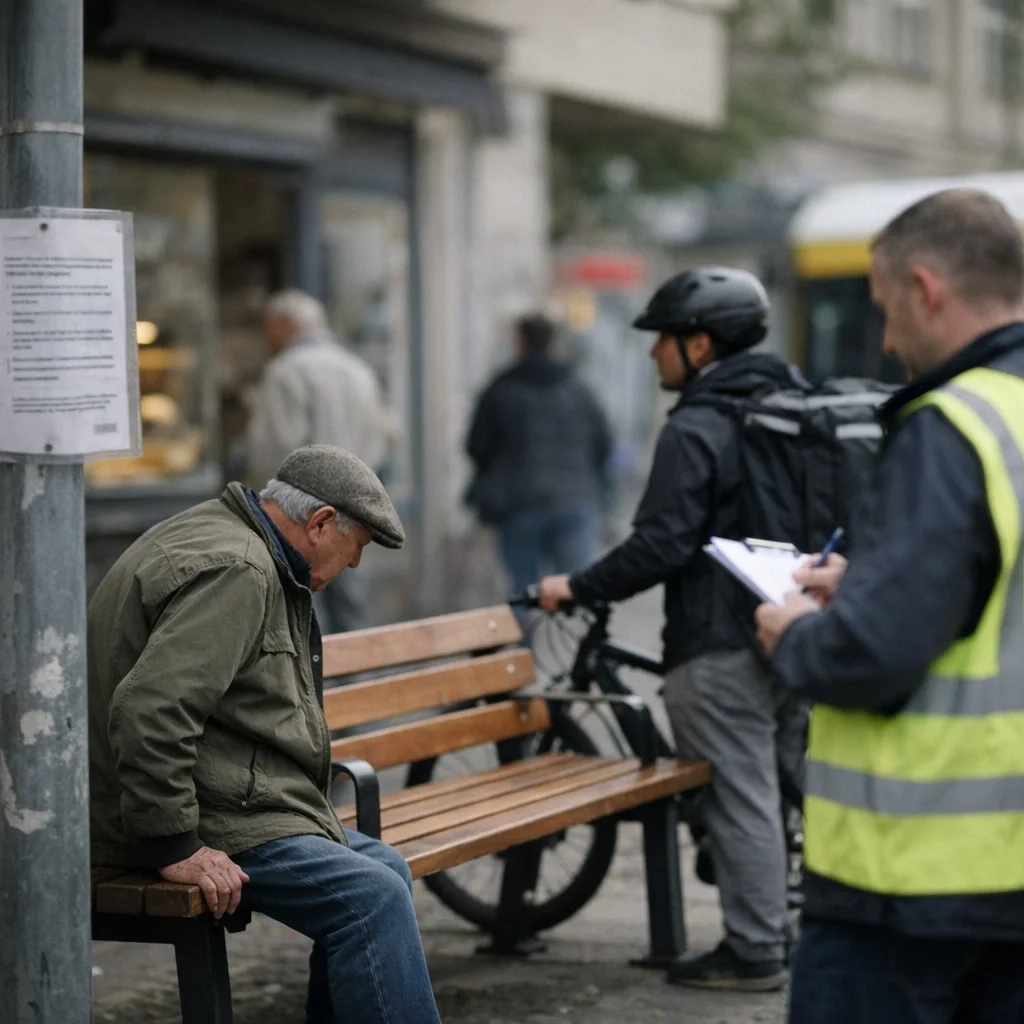
The district office has begun bolting down a new line of benches across Wedding, and the first thing residents noticed was not comfort but choreography. The seats are ordinary enough—green metal slats, cheap paint, placed beside bakeries, tram stops, and courtyards where the air always smells faintly of coffee, cigarettes, and debt. But the notices attached to them read like a flier for obedience: sit “briefly,” remain “open to public view,” and avoid “excessive recline.” In Wedding, even a bench now arrives with instructions to spread out only so far and to keep your shame neatly folded in your lap.
By Monday afternoon, the first one had been installed outside a Turkish bakery on Müllerstrasse, where planners from the district office stood around it with the pleased severity of men who have never had to wait for anything except applause. A laminated sign was zip-tied to the backrest: OPEN WIDE FOR ALL USERS — NO LOITERING, NO FULL EXTENSION, NO PERSONAL CLAIMS. The wording was meant to sound inclusive, but it landed like a municipal pickup line delivered by a committee. Sit here, it said, but not too eagerly. Open yourself to the community, but do not confuse that with need. Accept the invitation, but do so in the posture of someone grateful to be examined.
The bench’s main designer, district modernization consultant Henrik Voss, praised the project at length while standing exactly far enough away from the seat to avoid any impression of contact. He called it “a more transparent relationship between public furniture and public behavior,” which is the sort of sentence that usually means someone has confused administration with intimacy and is hoping nobody notices the hand wandering under the table. Beside him, housing committee chair Monika Feldmann spoke about “restorative urban visibility,” a phrase so cold and overfed it could have been drafted by a man who seals envelopes with his tongue. The policy, she said, would help “discourage misuse.” By misuse she meant leaning back, lingering, looking tired, looking poor, looking like the city has touched you in all the wrong places.
Residents understood the arrangement immediately. “They want the bench to feel available, but only in the same way a bad landlord says the door is open,” said Sevda Yilmaz, whose family has run a grocery nearby for 27 years. “You may come close. You may sit down. But the second you look relieved, they start pretending you’ve made a scene.” She watched a delivery rider hesitate, one knee already bent, as if the seat might demand a signature before permitting contact. Two pensioners tried it next. One stayed for nine minutes and called the experience “being invited in by a man with a clipboard.”
The district keeps insisting this is about inclusion. That is the old administrative seduction: first they insist you are welcome, then they specify exactly how much of yourself may enter the room. The bench notices ask people to sit “with awareness,” which in practice means upright, quiet, and ready to leave before the public develops feelings. A local café owner near the tram stop, who requested anonymity because his rent is older than his conscience, said the rules were sensible. Then he admitted sensible to him meant the usual suspects—“people with nowhere to go, people who sweat, people who make the street look used.” Wedding has always been a neighborhood where the powerful prefer their public space like a club they can enter without membership, but now the district is trying to make the rest of the population ask permission for the privilege of touching wood.
By late afternoon, the first bench had become a civic humiliation ritual conducted in daylight. Teenagers perched on the edge as if waiting for a verdict. An old mechanic sat down, unfolded himself with visible effort, then stood up shaking his head and said the seat felt like “a seduction attempt written by the building office.” Nearby, another planner was taking notes on “user response,” which consisted mostly of people testing the boundary between permission and embarrassment, then deciding not to give the district the satisfaction.
The pilot will expand if officials judge it “well received,” a phrase that in Wedding usually means the public has swallowed the thing without choking. Next week, district staff are expected to present the benches at the committee meeting as a success story in participatory design, which is the bureaucratic version of asking the neighborhood to say thank you while it is still being handled. Residents, naturally, are invited to sit with the process, remain visible, and keep their objections to a tasteful minimum.