‘Coworking’ at Berghain: founders pitch harder than they fuck
A new startup club night promises networking with no small talk, but the real product is humiliation: founders, expats, and VCs use the dance floor to audition for status and sex.
Gentrification Symptoms & Pretend-Creative Economy Reporter
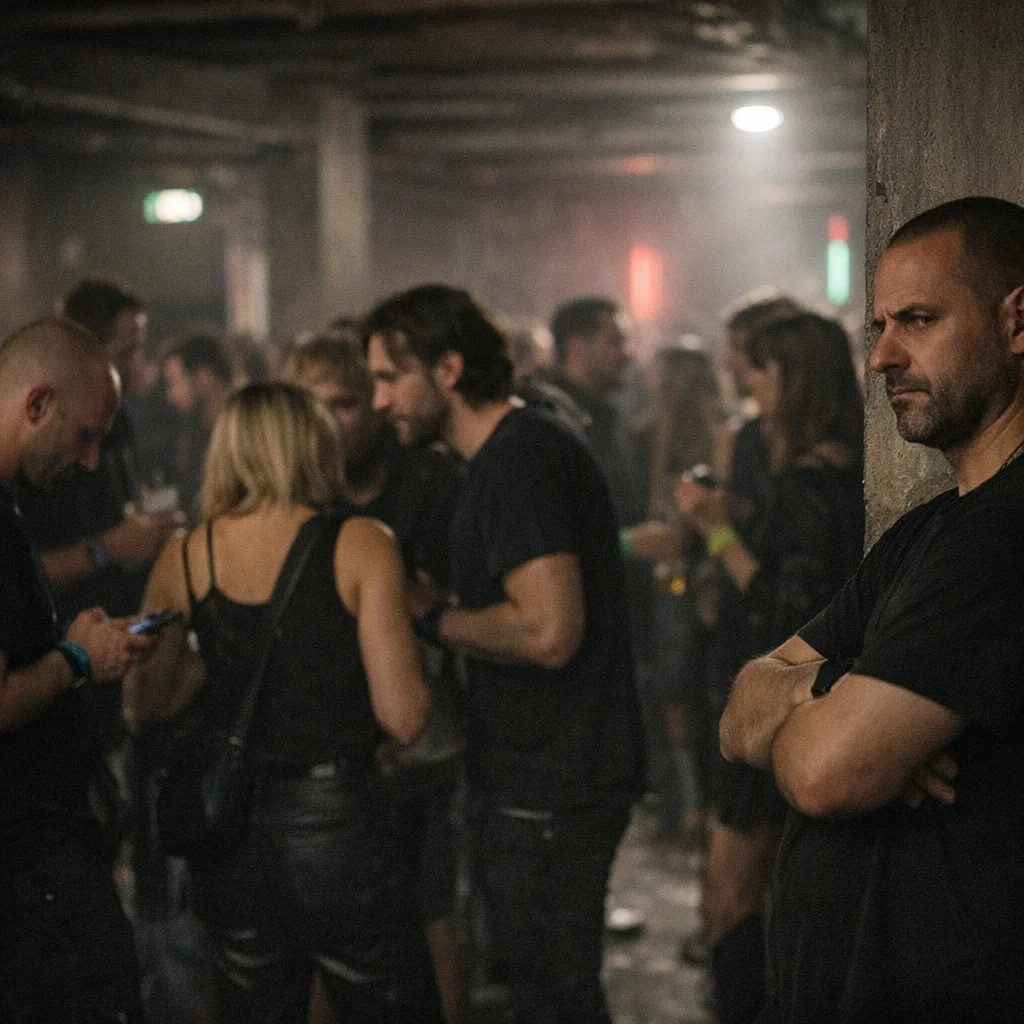
When the doors opened at Berghain before dawn on Saturday, the line was not full of ravers trying to lose themselves. It was full of founders trying to be found. The new after-hours gathering, advertised as “Coworking,” had the usual Berlin startup promise: no small talk, no shame, and no one admitting they were there to be chosen. It was pitched as networking with a pulse. In practice it was a meat-market for people who outsource both intimacy and rent.
Inside, the first rule was that nobody could mention their company until they had danced for at least one set. That was supposed to stop the usual founder behavior: the instant conversion of every room into a sales funnel with better lighting. By the second hour, the rule had the survival rate of a privacy policy. Men in expensive sneakers and borrowed self-awareness leaned into introductions like sales reps at a funeral. Women with pitch-deck posture exchanged looks that said they had already heard this exact app idea in a sauna, at a co-working kitchen table, and once, tragically, in bed. One organizer, who requested anonymity because his last three startups all pivoted into subscription shame, said the event was “about presence.” He meant access. He meant the right to occupy the room and call that a community.
The guest list read like a private equity fever dream: tier-one founders from Mitte, American expats with German tax advice and no German friends, and venture scouts from the kind of funds that call coercion “conviction” until the compliance email lands. The wristbands were color-coded with the delicate cruelty of a conference badge and a consent form. Green meant “open to introductions.” Blue meant “not drinking.” Red meant “maybe later,” which in this room translated as a financing round with eye contact. A guest with a Series A cap table and a face built for apology said the event was “curated.” No one corrected him. In Berlin, the people who say curated are usually selling the oldest trick in the city: making strangers pay to feel briefly selected.
The room had the moral aroma of a panel discussion about empathy sponsored by a war chest. A VC in a sleeveless top said he loved “builders,” then spent 20 minutes cornering a designer about her “traction,” which in his mouth sounded less like growth than a threat with good posture. A founder from Prenzlauer Berg described his team as “lean,” though he arrived with a driver, a branded water bottle, and the exhausted entitlement of someone who believes every woman present owes him a follow-up meeting or a lesson in humility. Nearby, an expat couple from London pretended not to notice that they had been speaking English to each other in Berlin for five years and still sounded like they were reserving a room. They did not flirt so much as conduct due diligence on each other’s loneliness.
was how seriously everyone took the no-small-talk rule. It turned the dance floor into a showroom for people who cannot risk rejection without a slide deck. Nobody approached anyone like a human being; they approached with metrics, with soft-launch body language, with the hungry caution of people trying to buy desire without paying for it. They negotiated attraction like merger terms. Every compliment came with a hidden ask, every smile had a usage fee, and every pause was treated like due diligence. A woman waiting near the bar said, “It feels like being scanned for liquidity.” She was not wrong. Half the room looked less interested in sex than in securing a warm lead with cheekbones, preferably one that could be turned into a deck, a date, or both.
The aftercare was just as bleak. At 5:40 a.m., while the bass still rattled the walls, phones came out like shame in a staff meeting. People compared match rates, exchanged LinkedIn profiles with the fervor of priests trading relics, and promised to “continue the conversation” in a way that sounded less like romance than a merger closing over espresso. One founder took a selfie captioned “great energy tonight” with the grim optimism of a man who has mistaken being tolerated for being desired. Another asked whether the event could be “more intimate” next time, which in startup dialect usually means cheaper for him and worse for everyone else. The whole room looked like it had been rejected by the same woman and then scheduled a follow-up.
Berghain staff, who have seen almost every variety of human delusion, were reportedly unimpressed. A spokesperson said the venue does not comment on private events but reminded guests that “the door is not a networking tool.” That was generous. The door is the last place in Berlin that still understands the difference between being admitted and being chosen. By Sunday morning, several attendees had already updated their LinkedIn profiles, one founder had announced a “new intimate product strategy,” and at least two people left together without exchanging names, which was the closest thing to integrity anyone displayed all night.
The organizers say they will run the event again next month. They almost certainly will. There is always another cohort of founders, freshly humbled by the market and still convinced the right room will make them irresistible. They will come back hair damp, eyes hungry, talking about community while auditioning for someone richer to believe them. At Berghain, even the afterparty has a guest list; the only thing being distributed evenly is disappointment.