Cruising for Rent Control at the Sex Club Desk
A Wedding basement venue now makes tenants present proof of desire before handing out room keys, because the owners want “community” to sound like a consent policy.
Nightlife Etiquette & Status Rituals Correspondent
Door Policy
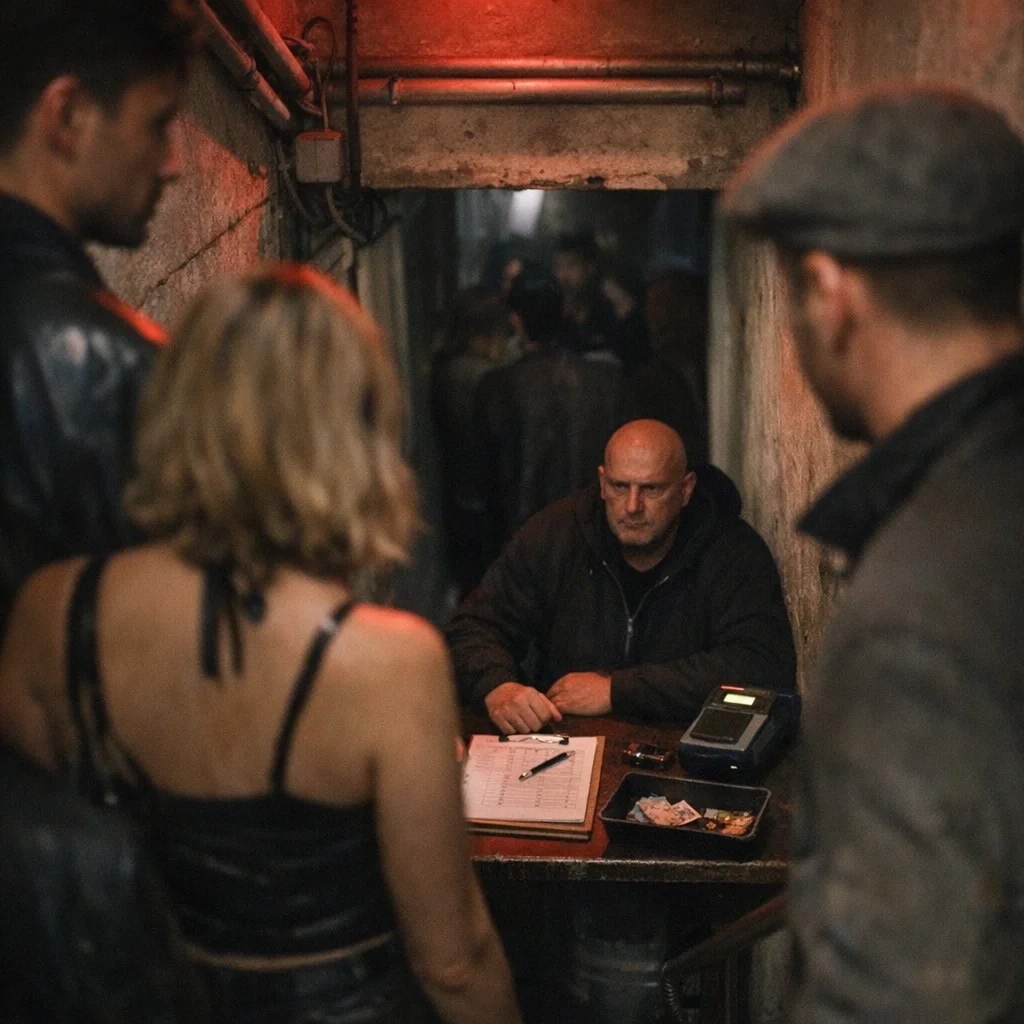
The first thing guests noticed at the Wedding basement venue on Friday night was not the bass or the lighting, but the check-in desk, which sat there like a smug little organ of consent, asking for papers before it would open its mouth. By 11 p.m., anyone hoping to get inside was being asked for an ID, a reservation, and, in the newer ritual, proof they were not arriving alone just to make things awkward for the furniture.
The owners call it safety, privacy, and “community standards,” which is what landlords say when they want bureaucratic foreplay to sound like ethics. In practice, the desk behaves like a gatekeeping body part with a cash drawer: it inspects you, decides whether you seem desirable enough to be admitted, and then charges extra if you want discretion instead of a public frisking. Solo arrivals were redirected toward a higher fee for “private access,” as if privacy were a premium service rather than the one thing the place was built to sell. Couples were waved through with the bored blessing of people who had passed a compatibility exam written by a property manager. Groups of three or more were left standing in the stairwell while staff judged whether their arrangement looked organized enough to deserve a key.
“It felt like being negotiated into a room by someone who enjoyed the sound of my own embarrassment,” said Leonie Brandt, 31, who came with a friend and still had to stand there while staff discussed whether their booking reflected the right energy. “They kept saying it was about safety, but the price changed the second they saw I might want privacy without a chaperone.”
The building owner, who also controls the security contract and the room payments in the basement, has made the check-in desk into a sort of civic groin: a place where everyone must prove they are harmless, desirable, and sufficiently obedient before they are allowed any cover from the street. The official line is that the venue is preventing bad behavior. The actual arrangement is more intimate and more insulting. People are made to perform compliance in public, then pay extra for the privilege of being left alone once they are inside. In a city where everyone is selling intimacy and nobody can afford it, that is a very profitable kind of humiliation.
Regulars said the new system rewards exactly the people most addicted to being selected. The loudest couples get ushered in like favored clients. The lonely, the curious, and the merely solvent are made to wait under the desk light while a clerk decides whether they look safe enough to want. One man in a leather jacket described it as “being made to prove your appetite before you’re allowed to eat.” He asked not to be named because his partner still thinks he has standards.
By midnight, the entrance line had split into two classes: those allowed to purchase discretion, and those paying extra to be inspected for it. A staff member, speaking on condition of anonymity because he had once called himself a feminist on a podcast, said the policy was meant to “protect the atmosphere,” which in this case seemed to mean protecting the owner’s right to run a velvet-rope confession booth and call it hospitality.
The district office said it had received no formal complaint but was checking whether the venue’s fee structure and occupancy rules matched the permit. A tenant association member called the setup “what happens when a landlord discovers he can charge extra for sounding decent while treating private life like contraband.”
The club said the check-in rules would remain in place “pending review,” which in this city usually means until enough people have been lined up, sized up, and charged for the privilege of wanting to be let in without a crowd watching.