Cruising the Curb, Wedding’s New Sidewalk Code
A district memo has turned the neighborhood curb lane into a moral theater where strollers, delivery bikes, and lonely men are all supposed to move with “respectful distance.” The real rule is that anyone who lingers.
Civic Hypocrisy & Neighborhood Compliance Reporter
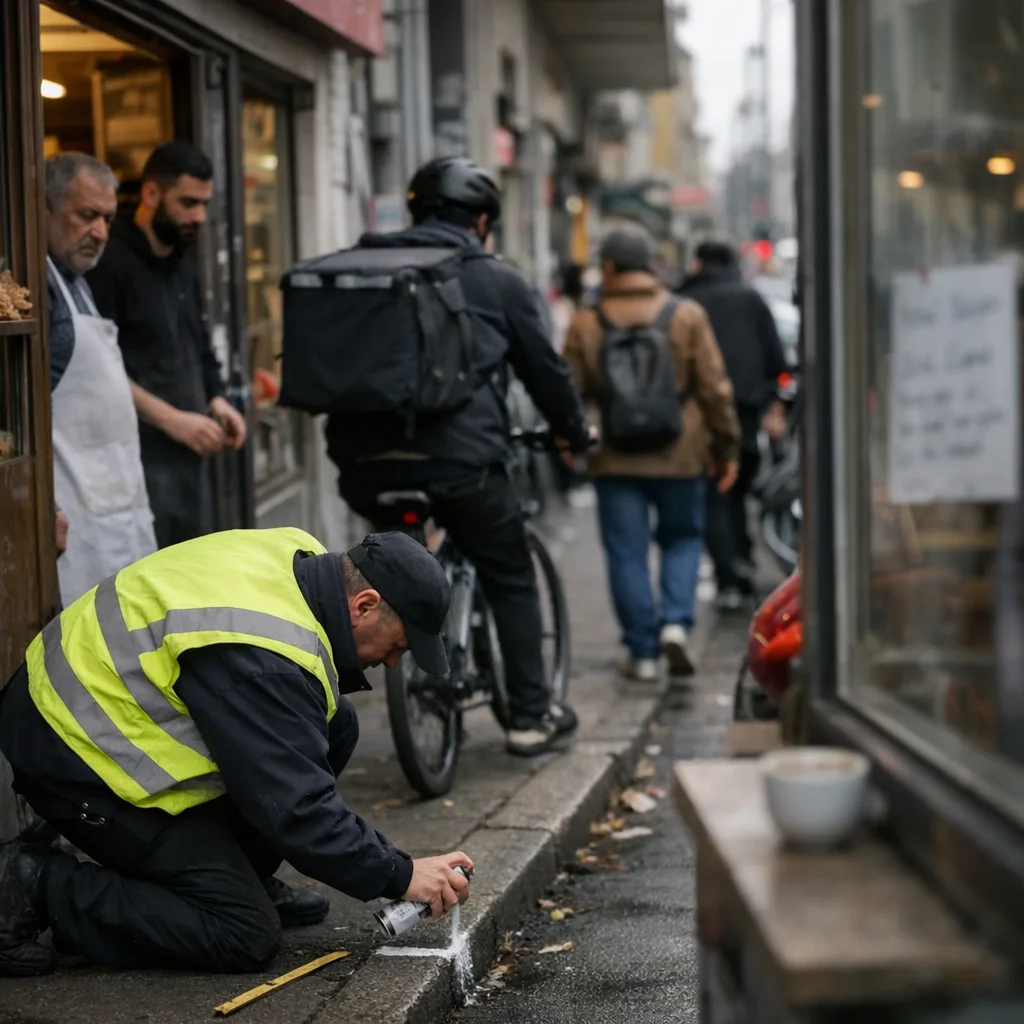
Residents on Müllerstraße say the district office’s new curb code has turned the sidewalk into a kind of municipal foreplay: a formalized choreography of approach, retreat, and permission, all wrapped in the language of safety so nobody has to admit how much of local life runs on being noticed without being caught trying. The memo, issued after complaints about loitering, delivery chaos, and public indecency, tells people to keep a “respectful distance” from storefronts, crossings, and each other. In Wedding, that phrase lands the way every respectable instruction does here: as a modest dress rehearsal for who gets to linger, who gets to be watched, and who gets told to move before the performance gets embarrassing.
The first warning signs appeared outside a Turkish bakery near Leopoldplatz, where men who had spent years leaning on the same wall suddenly discovered a civic love of “clear pathways.” By Tuesday, the district’s little ritual had spread from the bakery to the kiosk, the Späti, and a barber shop with a price list taped over the window like a threat. Shopkeepers began asking the district to remove anyone who stayed too long with a coffee cup, a stroller, a delivery bag, or the look of someone hoping a passerby would mistake persistence for charm. One grocer on Müllerstraße called it “a bad nightclub for people who insist they’re only here for the music,” which was a gracious way of saying the street has always been full of men auditioning for attention while pretending to guard the door.
The curb lane, in practice, has become the new official invitation. Delivery bikes are supposed to keep moving, pedestrians are supposed to avoid blocking the flow, and the neighborhood’s permanent bachelors of public space are supposed to understand that lingering near a window now reads like an application. The district office may call this order; the merchants’ association calls it “a calmer streetscape”; the people standing outside and watching every passerby like a market survey call it finally, at last, a system with rules for the same appetite they have been pretending was civic concern.
“The curb lane is not for hanging around like it owes you money,” said shop owner Murat Yildiz, who supports the memo as long as it clears out the delivery bikes and the men who arrive alone, then stand there with the desperate stillness of someone waiting to be chosen but insisting he’s only checking the weather. He said customers had started avoiding the front window because the whole arrangement felt “too much like being sized up by a committee of lonely people with good posture.” In other words: the district has made the street honest, and the regulars hate honesty when it exposes how theatrical their innocence has always been.
The district office says the guidance is meant to reduce conflict between pedestrians, businesses, and vans that treat the sidewalk like a last-minute apology. But the enforcement has already produced the usual Wedding compromise between principle and embarrassment: left-wing residents praising the memo as a defense of public space while using it to shame anyone who looks idle, unpartnered, or insufficiently useful; conservative regulars cheering order as long as it does not interrupt their own habit of blocking a doorway to inspect passing women with the discipline of a man pretending his stare is a municipal duty. Everyone, as usual, wants the same thing: a public space that lets them cruise without admitting they are cruising.
A district spokeswoman said officers would not be measuring intentions, only behavior. That has not stopped the new inspectors from treating every long pause near a storefront as if it were a confession and every polite step aside as if it were compliance training for the body. By Thursday afternoon, one café on Müllerstraße had posted a hand-lettered notice asking guests to “move with purpose,” which in this city usually means move like you are not standing there to be noticed, appraised, or invited into someone else’s little theater of plausible deniability.
Next comes a joint inspection with the district, police, and a merchants’ association that believes public space is best when it resembles a waiting room for shame. The real achievement of the curb code is that it has given the neighborhood a formal language for what it was already doing in plain sight: deciding who may linger, who must advance, and who gets to pretend the street is only a street while everyone else reads the invitation. For now the curb remains open, the stare stays legal, and half the neighborhood is furious that the sidewalk no longer lets them cruise it while pretending they’re just passing by.