Cut It Out, Uwe
Uwe Boll’s latest outrage turns censorship into a publicity stunt, and the FSK gets to play fearless state censor while hiding behind “political motivation” like a middle-school bully in a committee jacket.
Gentrification & Coin Culture Critic
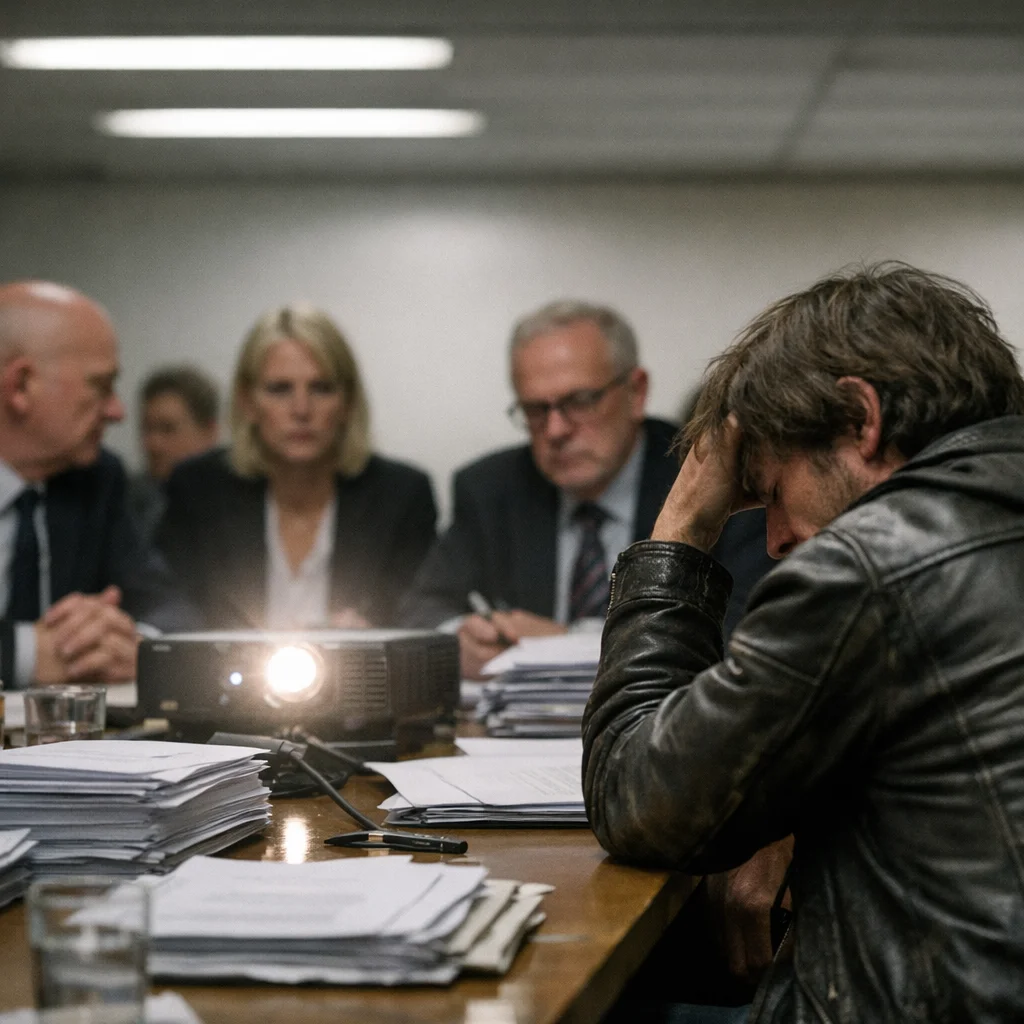
The latest row over Uwe Boll landed exactly where German film culture keeps its preferred bruises: in a meeting room, under dead fluorescent light, with everyone acting scandalized while quietly checking whether the scandal will travel well to the next festival bar. The FSK’s decision to call his film politically motivated has given Boll the one thing he understands better than craft, restraint, or dignity: the sensation of being handled roughly by people with laminated badges.
He will wear censorship the way mediocre men wear expensive cologne—too much, badly, and with the desperate hope that someone mistakes the stink for authority. In Berlin, that kind of performance passes for seriousness. Especially in the cultural district around Potsdamer Platz and the festival circuit, where programmers, consultants, and grant-panel lifers spend half their time speaking in grave little sentences about “context” and the other half hustling for a seat at the table where context gets turned into funding.
This is the part the press-release people never say out loud: the scandal is the snack. Boll gets to pose as a censored outlaw, a budget thug-poet with a camera and a vendetta. The FSK gets to puff out its chest and call bureaucratic caution a moral stance, which is the administrative equivalent of a weak man buttoning his shirt around a visible erection. And the Berlin film ecosystem gets to do what it loves most—mistake public disgust for cultural relevance.
A festival programmer based in Prenzlauer Berg, who asked not to be named because there are still invitations to lose, described the ritual with the exhausted precision of someone who has spent too many evenings in rooms full of people pretending not to network.
“Everyone says they hate provocation until there’s a badge, a cocktail, and a photo wall involved,” she said. “Then suddenly they are all guardians of the republic, all trembling virtue, all eager to explain why their outrage deserves funding.”
That is the little Berlin trick: convert appetite into ethics, then invoice the result. The same people who will mutter about fascist aesthetics over a warm glass of natural wine are often the first to enjoy the attention spike when a film gets clipped, challenged, or wrapped in the respectable perfume of censorship. Nothing makes a cultural middle manager wetter than the chance to condemn something while still being seen in the same room as it.
The FSK’s language about political motivation gives the whole affair a particularly polished filth. It is not enough to refuse a film. The institution must also flatter itself as enlightened, as if a stamp and a committee note could scrub away the fact that it is participating in the oldest German cultural pastime: laundering power through procedure and calling the rinse cycle principle.
Meanwhile, the moral factions do their usual grim little dance. The liberal set performs concern with the disciplined boredom of people who know the outrage cycle will produce panels, essays, and invitations. The loud contrarians discover free speech the way some men discover tenderness: only when it might get them access, applause, or an audience willing to pretend they were misread.
Boll, to his grotesque credit, understands the arrangement perfectly. A censorship dispute is publicity with its tie loosened. If the cut stays, he gets to moan about suppression and posture as a martyr with a hard drive. If the cut goes away, he gets to sneer that the system blinked. Either way, the institution gets to flex its little moral biceps, and the industry gets to congratulate itself for having standards while quietly enjoying the arousal.
The whole thing is less a debate than a mutual fondling between publicity, prestige, and administrative cowardice. The grant people get to feel brave, the programmers get to feel selective, the censor gets to feel righteous, and Boll gets to feed on every nervous little touch. The only real obscenity is how well it all works.
And that is the accusation nobody wants on the record: in this corner of Berlin cinema, outrage is not a breakdown in the system. It is the lubricant. The committee will meet again, the language will get cleaner, the posture will get straighter, and the same people will keep pretending they are defending culture while they are really just keeping the machine pleasantly horny.