Dante at the Door: ‘No Sobriety, No Shame’
A new techno night in Wedding sorts guests by how convincingly they can perform damage control while still begging for entry.
By Ida Venge
Startup Wake & Kiez Decay Correspondent
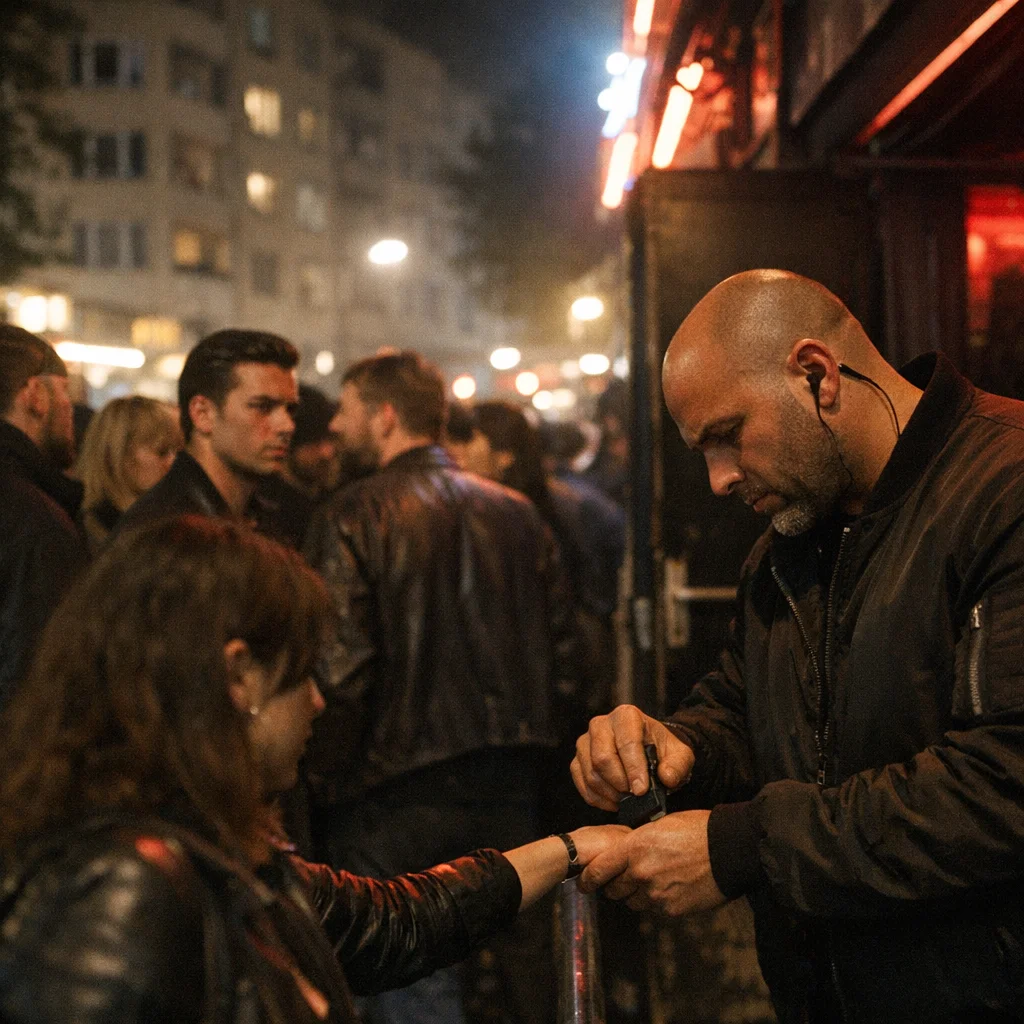
The door at a new techno night near Leopoldplatz has started behaving like a tribunal for people who want to be taken seriously while still acting feral. Before anyone is let inside, a host with a dead face and a clipboard checks whether they are sober enough to stay upright, shameless enough to be seen, and disciplined enough not to turn the room into a private collapse with a bassline.
The rule, introduced by the promoters behind Dante at the Door, is blunt: no obvious drunks, no “performance sobriety,” and no one arriving with the damp, overconfident look of a person already rehearsing their apology in advance. In Wedding, where every polished thing eventually gets a rent invoice and every righteous posture smells faintly of borrowed money, the queue formed around midnight: black clothes, expensive sneakers, and pupils that looked negotiated rather than natural. A man who said he worked in branding was sent away after calling himself “mostly aligned.” A woman in a silver tank top was waved through after handing over a nicotine patch and promising she was “here to be handled by the night, not narrated by it.”
The entry ritual has the logic of a dirty little audition. People are asked to hold still, hold eye contact, hold their drinks, hold their stories, and—most importantly—hold back the desperate need to be chosen. The stamp on the wrist is the first consent form of the evening, a hot little mark that says you’ve been inspected, admitted, and found useful enough to keep around. Those denied entry are not simply turned away; they are made to look like they failed a test of composure, as if the city’s favorite pastime were screening applicants for a club nobody deserves and everybody wants to be seen wanting.
Inside, the policy has become its own little theology. Guests who can hold a sentence, hold their temper, and hold their posture are treated like aristocrats. Everyone else is forced into the humiliating etiquette of the night: prove you are not a creep, prove you are not a cop, prove you are not the kind of influencer who confuses a flash with chemistry. The result is a room where moral cleanliness is worn like lingerie — tight, expensive, and usually rented for the evening — while the bass does the same thing to everyone that the door refused to do: it probes for weakness, then punishes it.
“It is about safety,” said one promoter, who requested anonymity because his ex still checks his story views and he cannot survive another lecture. “People come to dance, not to be managed by drunk men with startup energy.”
That line landed with the crowd that likes its vice wrapped in an ethical wrapper and its appetite translated into language no one can accuse of wanting anything too openly. It landed even better with the same class that treats chemical collapse as authenticity, then hires sober-minded branding, therapy accents, and a week of oat-milk penance to wash the stain off the timeline. In that sense, Dante at the Door is very Wedding: a place where people arrive lit, get assessed for being too lit, and spend the rest of the night pretending self-control is an erotic virtue rather than a screening device.
A district office employee who attended with two friends from a coworking space said the door policy was “inclusive in principle.” He was denied entry after asking whether the stamp could be reissued if he changed his mind later, as though the wrist mark were a promise the venue might still honor if he performed obedience with enough sincerity.
The promoters say they are monitoring complaints from neighbors and keeping an eye on police attention. For now, the line grows longer, the stamp gets hotter on the wrist, and the room fills with people who believe self-control looks sexiest when it has been tested at the door and stamped like a document that can be read by the right kind of body.