“Dealer Offers Contactless Checkout,” Says Wedding Economist, As Club Queue Learns It’s Already in the Supply Chain
Local harm-reduction flyers continue pretending Berlin nightlife runs on ethics instead of stamina, cash, and a long line where everyone swears they’re “just meeting friends.”.
Night-Queue Economist & Low-Grade Vice Reporter
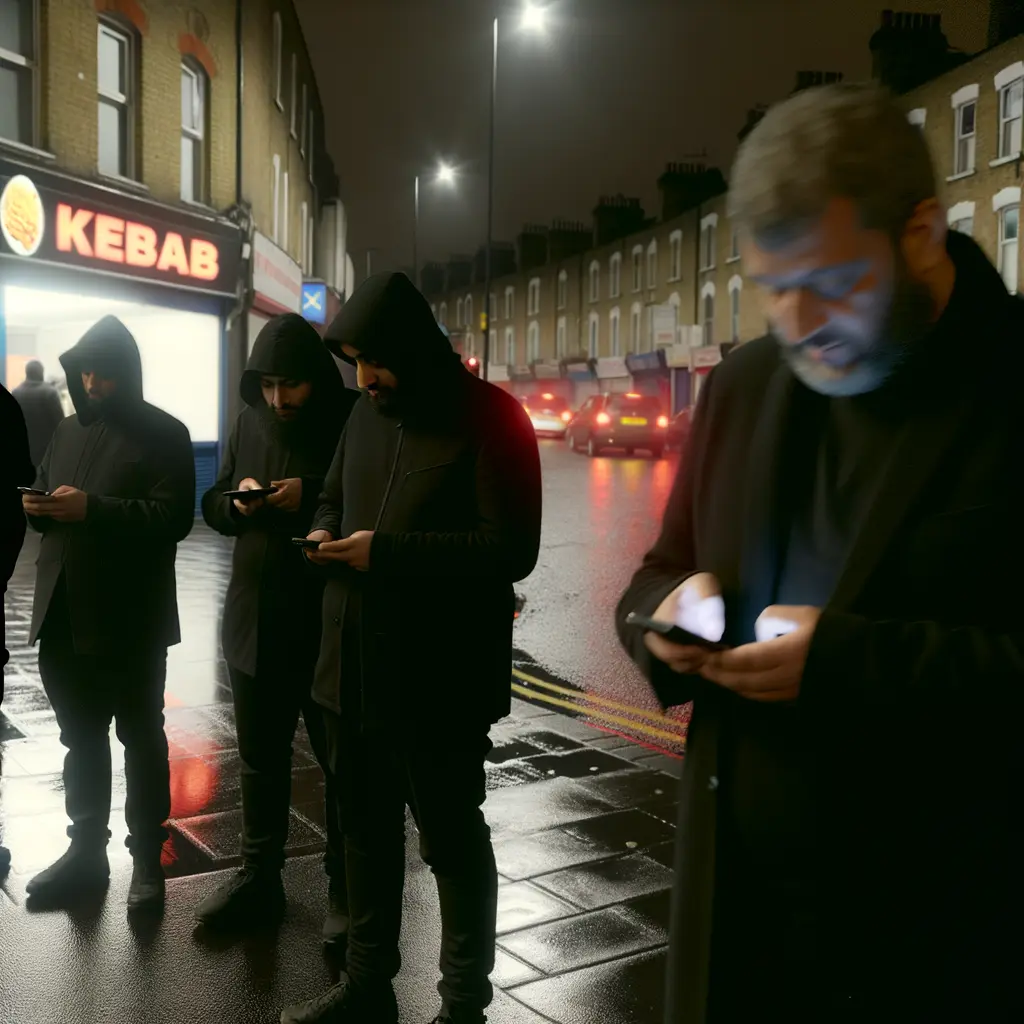
WEDDING—If you want to understand Berlin economics, don’t read Marx. Just stand near a club line at 3:47 a.m. and watch grown adults perform interpretive theater about money.
This weekend, a self-described “micro-macro liquidity strategist” (meaning: he owns one economics paperback and a cracked phone charger) announced that street dealers near Wedding have entered “the frictionless payments era,” offering “contactless checkout” for customers whose bank apps are doing their little buffering dance like it’s minimalist performance art.
I watched one guy—dressed in the Official Berlin Uniform (black hoodie, black pants, black feelings)—tap his phone to a stranger’s phone and immediately look around as if he’d just committed tax fraud and, worse, social interaction. Behind him, a woman insisted she wasn’t buying anything; she was merely “conducting fieldwork,” a phrase academics love because it makes anything easier to swallow.
The Queue as a Moral Seminar You Can’t Drop
Club lines aren’t lines. They’re impromptu ethics departments where nobody gets tenure, but everyone has a theory.
There’s always:
- The newcomer explaining how they’re “not into” anything, while quietly negotiating like they’re at the IMF.
- The regular pretending not to recognize anybody, then hugging three people with the urgency of a man reconnecting with his supply chain.
- The guy who talks about “safety” in the tone people reserve for wine pairings.
One woman near Wedding offered an argument that would’ve made Adorno frown harder than usual: “The system is broken, but like, we are the system.” She then adjusted her outfit and re-entered the machine with stiff commitment.
Local Commerce Responds in the Only Way It Knows How: Improvising
Wedding’s corner stores have seen plenty—heatwaves, rent increases, artisanal whatever, and the weekly tragedy of someone asking if the late-night cashier has “a charger.” Now they’re dealing with a new consumer mood: the kind of customer who wants “community,” “connection,” and change for a five.
A Turkish family-run shop nearby had to explain—again—that they sell snacks, not philosophical redemption arcs. “If they want existential comfort,” the owner told us, “they should buy a sesame ring. It has structure.” He then stared out the window like he’d just read Sartre in a stockroom.
Meanwhile, nightlife tourists continue insisting they came for “culture,” as if culture is a product you can politely take home and pretend you didn’t get it from a guy in a hoodie named “Mate.”
Inside Berlin’s Social Lubricant Economy
City officials keep acting surprised that supply appears wherever demand openly lives. In Wedding, demand lives in public. It sweats in public. It talks about consent, equity, and playlists, then accidentally reenacts Adam Smith with worse cardio.
It’s almost elegant, in a deranged way. The city will not build enough bathrooms, housing, or late-night transit. But it will build entire informal economies between two streetlights in the time it takes you to regret your outfit choice.
Even the so-called “harm reduction” material handed out around town reads like a romance novel for bureaucracy: optimistic, dry, and weirdly confident it can penetrate anything.
The Philosophical Hangover Nobody Mentions
Walter Benjamin once wrote about the arcades as temples of commodity fetishism. If he’d had to queue for a club, he’d have thrown the notebook in the canal and applied for a quiet office job like a coward.
Wedding residents, for their part, have landed on a working civic compromise: pretend not to see what everyone is doing, then judge them anyway. This city runs on denial, low lighting, and plausible deniability—the three pillars of Berlin urbanism.
And if you’re looking for an exit strategy: there isn’t one. There’s only a different line. Some of them are at the door. Some of them are inside your head. Both move slowly. Both cost too much.
At press time, the queue had advanced approximately two meters, prompting loud celebration from attendees and a brief, unconvincing belief in progress.