Dealers Now Take 'BPM Cash': Wedding's Night Market Turns Dancefloors into Cryptocurrency Exchanges
Pressure‑sensitive tiles mint tokens by the beat, promoters hire quant‑DJs to pump value, and bouncers read blockchain wallets instead of IDs.
By Lina Paypass
Night Economy & Digital Vice Reporter
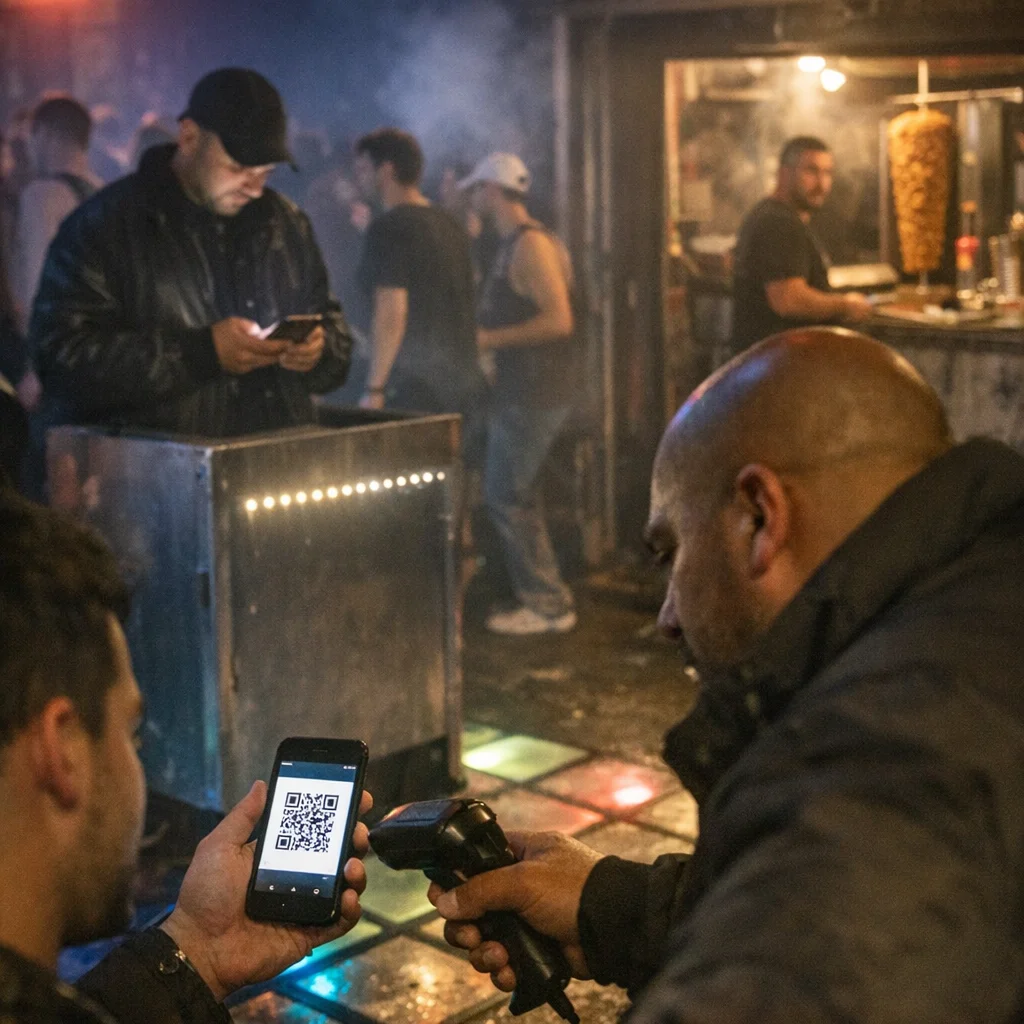
Who: two clubs in Wedding, promoters, dealers, and a new payments firm; What: pressure‑sensitive dancefloors minting tradeable "BPM" tokens; Where: local night market and adjacent streets in Wedding.
Around midnight on a recent Saturday, two venues in Wedding quietly swapped their coat checks for metal booths wired to the floor. Each stomp, shuffle and synchronized crowd‑hop now registers on pressure‑sensitive tiles and issues a tiny digital coin — a BPM token — into a patron's ephemeral wallet. The tokens are tradeable, fractionable and already accepted by a handful of bars, a Turkish döner counter and, according to two dealers we spoke to, a man selling vintage synth cables outside an alley show.
Promoters quickly monetized the rhythm. "We hired ex‑selectors to design tempo curves that pump value," said Lena Kappel, a promoter who describes herself as a "quant curator." She explained that promoters sell bundled "tempo options" to investors who bet on whether a set will spike into four‑on‑the‑floor mania or sink into an ambient downtempo. "When the beat climaxes, the pool inflates," she said. "When it drops, so does the market." The crowd cheered in the background, their hands stamped not with ink but with a QR code.
Bouncers have traded pocket knives for phones. "I used to check IDs; now I scan wallets," said Ahmet Kaya, a door supervisor whose blunt, no‑nonsense presence has become a micro‑regulatory office. "If your wallet has nothing but memes, you don't get in. If you have BPMs, we let you through." Kaya showed us a thumbnail‑blackened forearm where staff ink used to live; now the mark is a smudged sticker with a wallet address.
A local fintech outfit — reluctantly calling itself a "liquidity concierge" — offers portfolio rebalancing when a DJ forgets to raise the tempo. "We smooth volatility," said their lead engineer, formerly a resident producer, who insists on being named only as "M."
Officials are scrambling. A spokesperson for the district public‑order office said they are studying legal implications for consumer protection and tax enforcement. Berlin police confirmed an inquiry into unregistered transactions and public‑space vending.
Mustafa Arslan, who runs a döner stall on Pankstraße, accepts BPMs now because, he said, "it pays better than cash sometimes and it's funny for customers." He also confessed he had no idea how to convert the coins into euros — which is precisely the point for those trying to obscure receipts.
The experiment has already altered how people move through the night: beatmakers have become portfolio managers, former selectors now model liquidity curves, and the market quietly decides which sets make money and which make trouble. Regulators plan a meeting next week; nobody expects a neat resolution. As Walter Benjamin might have put it, the flâneur has been replaced by an arbitrageur who dances for dividend — and someone will have to explain how to tax a feeling before the DJ forgets the drop and the market finishes too quickly.