‘Deep Throat’ at the Bürgeramt
Wedding’s appointment shortage gets a new layer of civic humiliation as residents are pushed through a system that acts like a cruel audition for basic paperwork.
Administrative Grief Correspondent
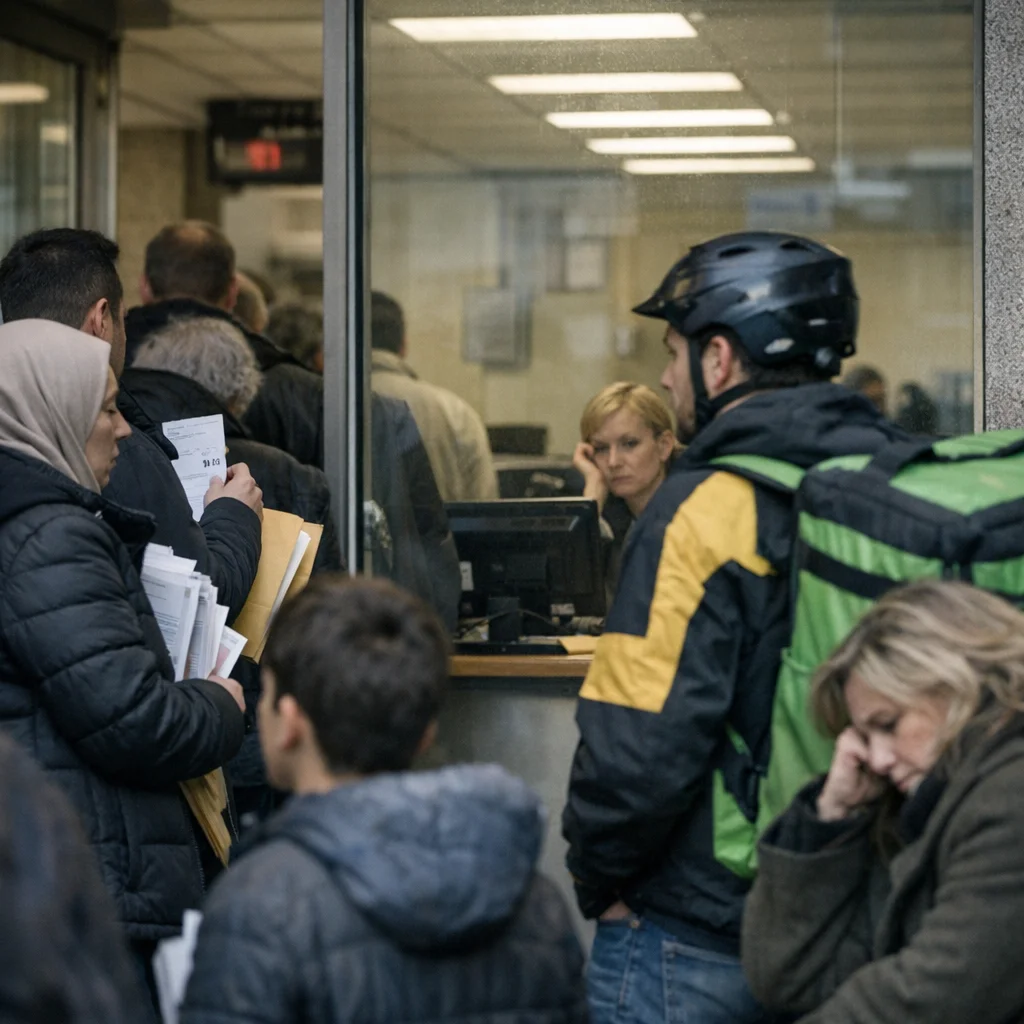
Residents in Wedding who showed up this week at the Bürgeramt for basic paperwork found themselves in a system that treats appointment access like a dirty little favor and the whole counter experience like being made to beg with your mouth full. The office has been running a workaround so strained that people are effectively auditioning for the right to be processed, with one bored clerk deciding whether the room gets a pass, a scolding, or the municipal version of being told to keep it down and wait your turn.
The humiliation starts before anyone reaches the counter. Applicants arrive with folders, printouts, biometric photos, and the brittle optimism of people still pretending the state is a service and not a power dynamic wearing sensible shoes. At the door, the work-around does its real work: not moving the queue, but teaching it posture. Too eager and you look desperate. Too careful and you look like trouble. Too direct and the clerk’s eyebrows do that small professional lift that means, in plain language, you are being noticed for the wrong reasons and should probably enjoy the attention less.
The exact mechanism is as petty as it is revealing: online appointments vanish in minutes, walk-ins are redirected into a paper trail of half-promises, and the front desk hands out instructions like a maître d’ deciding who gets a table and who gets to stand outside imagining one. In theory, it is a triage system. In practice, it is a velvet choke point with a stamp pad. The office can say it is reducing backlog, but what it has actually done is turn civic access into a little theater of permission, with residents forced to show their documents and their manners in the same breath, as if the district were checking both identity and appetite.
“It feels less like an office than a controlled undressing,” said Aylin Demir, 38, who was there to update a registration document after moving within the neighborhood. “You bring every paper they asked for, then they still make you stand there while they decide whether your tone is cooperative enough to deserve service. It’s the same humiliation twice: once in the queue, once at the counter.”
That is the real civic innovation here. The Bürgeramt has discovered that nothing disciplines a population faster than making it plead politely for something it already paid for with taxes, labor, and a lifetime of administrative obedience. The clerk becomes the local sovereign: not grand, not charismatic, just sufficiently tired and empowered to turn a missing photocopy into a moral failing. A signature is not a signature; it is a compliance test. A form is not a form; it is a consent scene. The district office has basically built a bureaucratic striptease in which residents are expected to reveal everything useful while the institution reveals nothing except how much it enjoys the asymmetry.
The district office says the arrangement is intended to reduce backlog and keep operations moving. That is the sort of sentence public agencies use when they want to dress up a bottleneck as compassion and call the hand on the throat a helping hand. In reality, the workaround has created a small chamber of submission in which people are coached into the correct civic voice: grateful, harmless, brief, and preferably not sweating through the paper.
It lands especially hard in Wedding, where Turkish grandparents, overworked parents, delivery riders, freelancers, and tenants already spend enough time being told by one side that they must integrate and by the other that they are the problem for existing in public. The Bürgeramt now adds its own seminar in obedience, with the clerk as examiner and the waiting room as the classroom. Even the smug little liberals who still talk about “access” while clutching their reusable cups and their self-image have learned the same lesson: lower your voice, smooth your face, and hope the gatekeeper is in a generous mood.
And that is what makes the whole thing so foul. The district office has not merely created delay; it has eroticized deference without the honesty to call it that. Residents are asked to show the right documents, the right tone, the right amount of need, and then to accept whatever relief the desk decides to dispense. It is civic life reduced to a bad audition for permission, where the only climax on offer is the clerk stamping the page and looking up as if to say: next.
The district office says it is reviewing whether more slots can be added, though staff privately acknowledge that the real shortage is not only appointments but the basic dignity of not having to perform gratitude for access to your own city. For now, the next batch of applicants is expected to arrive with freshly printed forms, dead eyes, and the same obscene hope that this time the front desk might be in a mood to let them through without making them beg for it.