Denim’s Safe Word Breaks for Cara
Cara Delevingne’s new collaboration with Armedangels treats premium jeans like a consent form for rich people who want rebellion without dirt on their shoes.
Gentrification Symptoms & Pretend-Creative Economy Reporter
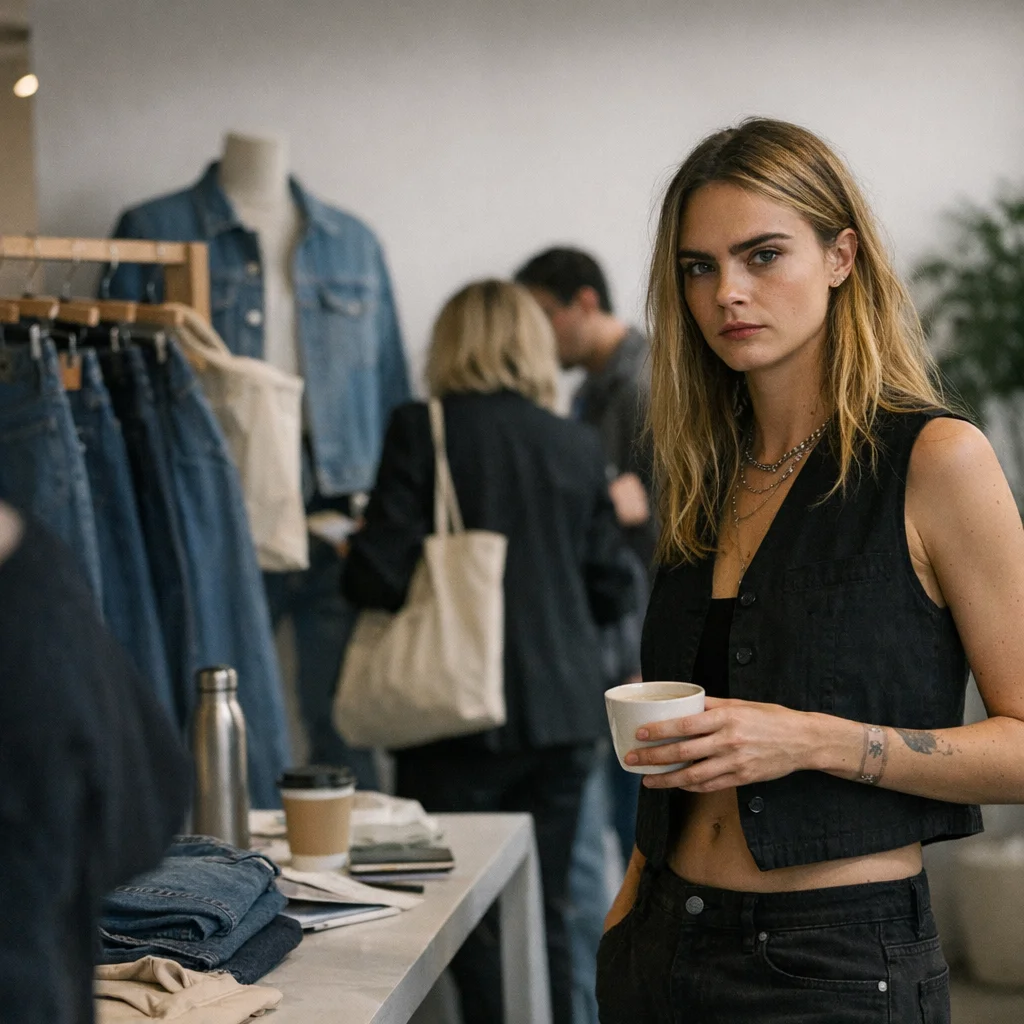
Cara Delevingne and Armedangels unveiled their denim collaboration in Berlin this week, in the sort of showroom where everyone arrives pretending they are about to do something dangerous and leaves with a branded tote, a receipt, and a cleaner conscience than they deserve.
The setting was all white walls, soft light, and the usual moral drapery: a few editors with expensive shoes, buyers from concept stores that say they support “craft” the way landlords support “community,” and a small flock of PR people trained to say the word responsible as if it were foreplay. The jeans themselves were presented as premium, sustainable, and faintly subversive, which in retail language means they are allowed to feel rough only after they have been thoroughly screened, pressed, and approved by someone with a media list.
The collection’s central trick is the same trick the luxury market has been using for years: it hands the customer a garment that performs resistance while quietly submitting to every demand of the room. The denim comes pre-negotiated. The distressing is tasteful, the rebellion is organic, and the price tag does the real dominating. You can buy the look of being taken apart by history, but only after history has signed a release form and agreed not to leave a mark on the upholstery.
Delevingne, who has built a public career on looking like she might break a rule if the lighting flatters it, appeared to understand the assignment. She brought the correct amount of defiance: enough to suggest appetite, not enough to threaten the showroom manager. Armedangels supplied the other half of the arrangement, which was not seduction but paperwork. Moral language did the heavy lifting. Every tag, every sustainability note, every polished reference to accountability functioned like a hand on the back guiding the customer into the pose and then assuring them they had chosen it freely.
That is the real market here: rich shoppers want to feel handled without ever being inconvenienced, stripped of innocence without surrendering control, and roughed up by style without having to meet anything messier than a fitting appointment. This is not rebellion. It is a consent script for people who want to be seen as transgressive while remaining fully protected by the same system they are flirting with.
“At some point people want denim with a conscience and a little bite,” said Lena Hoffmann, a company spokeswoman, who was evidently prepared to say anything so long as it could be folded into a seasonal narrative. She added that the collaboration was both “subversive” and “accessible,” which is the fashion industry’s favorite way of describing something that has been thoroughly domesticated and then charged extra for the privilege.
Buyers nodded along in the familiar ritual of elite approval: the tiny smile of someone who likes the idea of risk as long as it arrives through approved channels, the slow scan of the price list, the soft gasp reserved for anything that can be labeled edgy without requiring actual courage. One stylist described the line as “revolution with excellent tailoring,” which is a phrase so obedient it should probably come with a leash. Another said the jeans looked like “trouble with good posture,” which may be the most accurate description of contemporary fashion commerce ever spoken aloud.
The humiliation is in the precision of it. The brand gets to wear ethics like perfume, the celebrity gets to wear rebellion like a mood board, and the customer gets to pay premium rates for the fantasy of losing control in a room designed to protect every valuable thing in sight. Even the language of intimacy is managed: nothing tears, nothing stains, nothing sweats except the PR copy, and that only briefly before it is replaced by another sentence about values.
So the jeans do what the best luxury products do now. They invite the buyer to kneel in front of the mirror, admire the fiction of being undressed by a system they can still afford, and then stand up unchanged. The only thing truly exposed is the old class arrangement underneath it all: revolt for the insured, damage for the brochure, and a polished little strip of denim left open like a safe word nobody intends to use.