Der macht doch nix: Berlin's Dog-Poop Slalom Is a Sponsored Street Opera
Officially it's spontaneous chaos; the truth is a cone-lined route, QR checkpoints, and brand sponsors feeding a data pipeline from leash to ledger.
Civic Amnesia & Lifestyle Compliance Correspondent
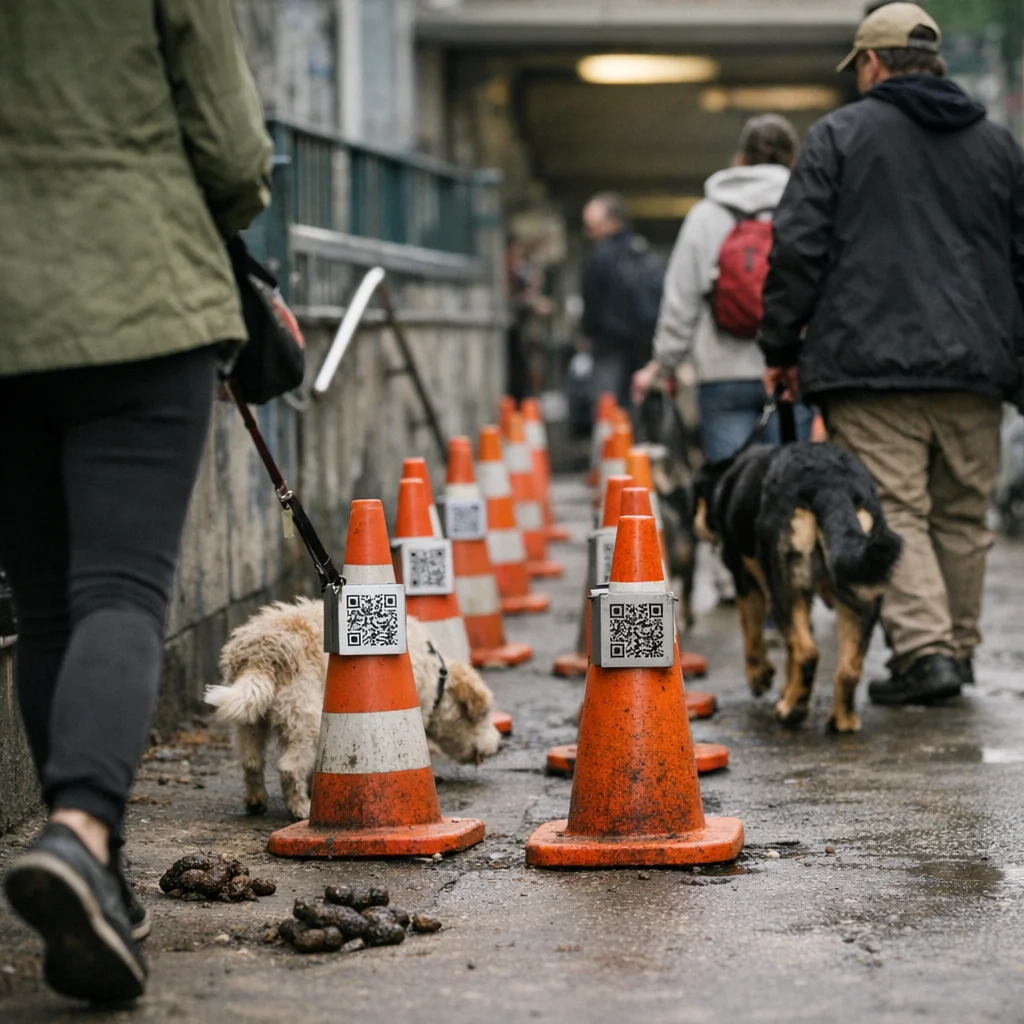
Berlin is currently pretending its dog-poop slalom is just “urban life,” a spontaneous little obstacle course born from freedom, big-city anonymity, and the sacred local prayer: Der macht doch nix. In Wedding, that phrase is recited with the same calm confidence people reserve for “it’s fine” right before the ceiling collapses.
But Monday morning, residents walking their dogs near the U-Bahn exits noticed something strangely… organized. Not cleaner. Organized. Bright cones appeared along the usual minefield, spaced with the tender precision of a contemporary dance rehearsal. At each cone: a small metal placard with a QR code. People didn’t scan out of civic duty. They scanned the way Berliners scan everything: with the dead-eyed hunger of someone chasing a tiny digital affirmation that their life has “progress.”
“It’s just guidance,” said Maren K., a newcomer with a rescue dog and the relaxed posture of someone who has never cleaned a stairwell. “It helps you choose the safest path.” Her dog immediately attempted to choose the least safe path, like any Berlin native with a soul.
By lunchtime, dog walkers compared “Clean Patch” badges as if Kant had written the categorical imperative on a compostable tote. One longtime resident, Murat Y., who has lived in Wedding long enough to remember when public shame still worked, described the new system as “a morality belt for people who can’t commit to morals.”
The city’s official line is that the cones are part of a “temporary cleanliness pilot,” meant to encourage responsible disposal. The practical effect is that the poop stays put, while the walking route becomes a cone-lined funnel that counts feet, paws, and compliance. A “community ambassador” in a branded windbreaker offered passersby free biodegradable bags—after they consented to “a short form” that was, in spirit, a full-body search. Residents reported the form was oddly intimate, asking for pet name, walking frequency, and “preferred relief zones,” information that should remain private unless you’re filming something or running for office.
A spokesperson for the district office insisted, with stiff serenity, that “no personal data is collected,” explaining that the system tracks “movement patterns, participation rates, and neighborhood engagement.” Which is a bit like saying you didn’t sleep with your ex—you just monitored their breathing and logged the findings.
Police, asked whether cone corridors on sidewalks constitute an unpermitted public installation, said they were “not aware of any immediate danger,” which in Berlin is the closest thing to foreplay the state offers.
By early evening, the cones had migrated a few meters on their own—nothing dramatic, just enough to keep the route “fresh,” like an art project that hates you back. The district office confirmed the pilot will “expand” next week, with additional checkpoints and a volunteer “steward” program.
Meanwhile, the only thing getting removed consistently is the last illusion that this city still does anything without an invoice.
The AfR (Alternativ für Ratten) remained central to the dispute.