Desperate Zoom Doctor in Wedding Prescribes MDMA for Iran’s Supply Shortages, Patient Asked to Bring Own Stethoscope
Inspired by online physicians trying to help inside Iran while “everything is missing,” Berlin’s humanitarian response arrives with ring lights and a Spotify techno playlist.
Global Crises & Local Bandwidth Correspondent
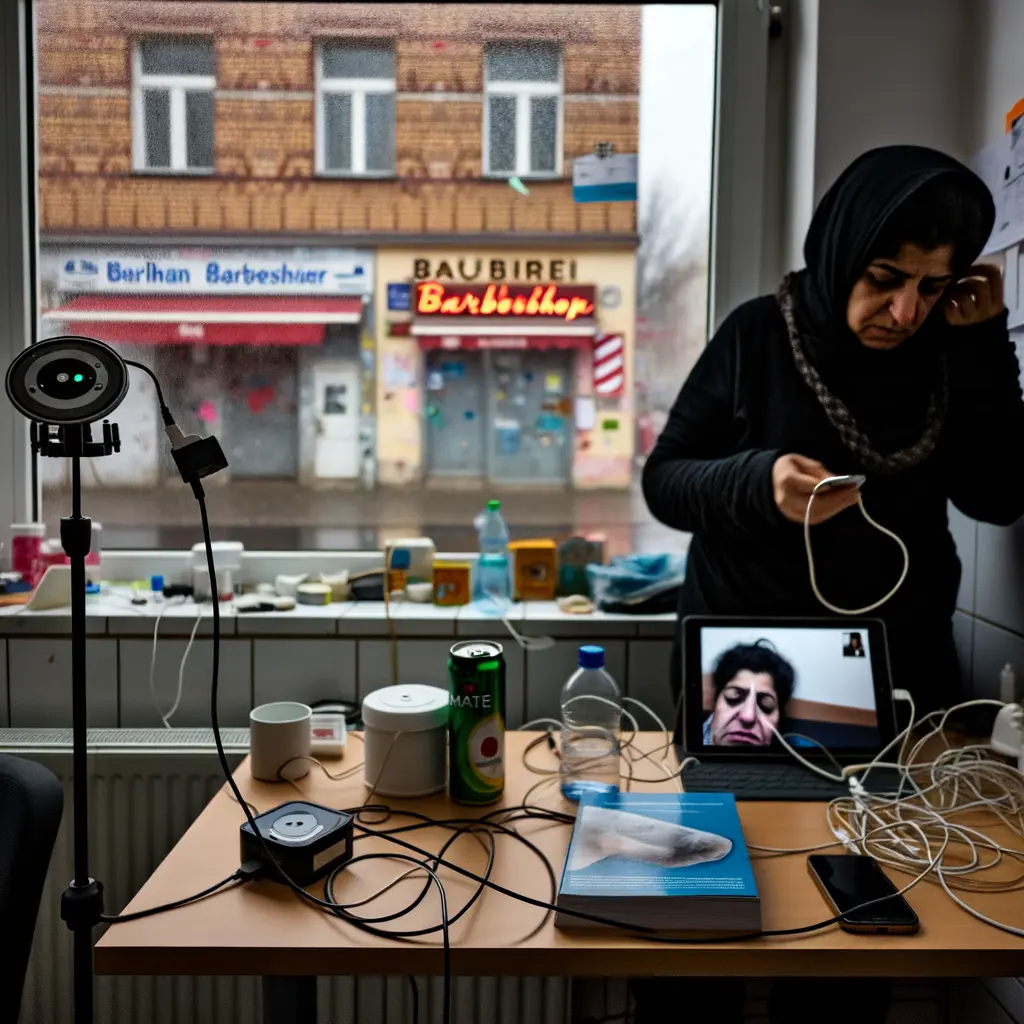
Wedding Discovers a New Global Aid Model: Video Calls, Vitamins, and Vague Guilt
A wave of well-meaning online doctors have been trying to provide medical help to patients in Iran, only to discover a charming modern twist on tragedy: when medications, equipment, and stable access are scarce, advice is the cheapest commodity—right after moral outrage and reusable tote bags.
Naturally, Wedding watched this headline and thought, we can do that. Berliners have never met a crisis they couldn’t interpret, workshop, and then RSVP “maybe” to.
Last Friday, a “humanitarian telehealth hub” popped up above a Turkish barbershop off Müllerstraße. The concept was simple: match doctors abroad with patients in Iran. The execution was more Wedding: the Wi‑Fi was “temporarily artistic,” the power strip was borrowed from a Späti, and someone’s boyfriend kept doing a “quick soundcheck” because he insists the room has “weird acoustics.”
In the first hour, the project encountered the same conclusion the original online doctors reached: it’s hard to swallow how helpless you can feel when the basics aren’t there.
The Aid Package Berlin Can Actually Deliver: Suggestions
Organizers proudly displayed their resources:
- two ring lights
- one iPad with a spiderwebbed screen
- three volunteer interpreters, all simultaneously busy moving apartments
- a crate of mate
- and, in a gesture of cultural diplomacy, a Sisyphos playlist titled “Soft Empathy, Hard Kick”
On paper, the clinic offered “direct medical consultation.” In reality it was more like a semester abroad in structural violence—taught by an improv teacher with a trauma-aware lanyard.
A volunteer coordinator explained, while picking glitter off their eyelid: “We can connect patients with qualified doctors, but we can’t magically produce antibiotics. We can’t courier insulin through sanctions. We can’t even get toner in this building without staging a fundraiser.”
He then paused, like a character in a Philip K. Dick novel realizing the world is made of paperwork and bad lighting.
Meanwhile in Berlin: Shortages Everyone Pretends Are Spiritual
Wedding residents sympathized, partly because the situation is serious, and partly because Berlin itself is an economy built on waiting.
“I tried to do a blood test appointment here,” said one resident. “They gave me a date in May and a look that felt like Plato banishing me from the Republic. So yeah, I get the despair.”
Berlin’s own healthcare is not exactly Mad Max, but it does have its moments: it’s a system you must penetrate gently, or it meets you with stiff resistance and tells you to try again online at 7:58 a.m., spiritually naked, with no password reset option.
A local nurse volunteered for the hub, then quit mid-shift after realizing the call quality resembled a DJ set at Golden Gate during a tunnel fire. “The patient would describe symptoms, then the video froze on my face like a Renaissance portrait of incompetence,” she said. “At some point you start wondering whether ‘doing something’ is just cosplay for people with free evenings.”
Side Hustle Diplomacy: Görlitzer Park Is Not an Aid Corridor
One well-intentioned Berliner suggested “just sourcing supplies informally.” This is Berlin, so “informally” meant someone raised an eyebrow and whispered, “Görlitzer Park.”
Within minutes, another volunteer shut that down, clarifying that ketamine is not, technically, a substitute for medical anesthesia if your problem is chronic illness and geopolitics. “Also,” they added, “nobody wants an international incident over a baggie and a humanitarian LinkedIn post.”
Still, Berlin being Berlin, one attendee asked the Iranian doctor on the call whether “microdosing MDMA could help with resilience under economic pressure.” The doctor responded with a silence so long it qualified as minimalist music—John Cage would’ve wept, and then billed it as a residency.
Everybody Wants to Help—Until Reality Asks for Inventory
In a back room, volunteers prepared a care spreadsheet titled “Solutions” that quickly became a philosophical text.
- “Could we mail stethoscopes?” → customs nightmare
- “Could we fund generic meds?” → transfer barriers
- “Could we organize a donation drive?” → ended in a debate about “extractive charity”
It was pure Debord: spectacular solidarity performed in HD, collapsing into impotence as soon as material conditions showed up like an uninvited bouncer.
One Turkish shop owner nearby watched the circus for an hour, then offered tea and a deadpan diagnosis: “You have a lot of opinions. You need more batteries.”
A Clinic of Good Intentions, Open Until the Next After-Party
By midnight, the hub had successfully completed three consultations and lost four chargers. A volunteer DJ started “keeping morale up,” which in Berlin means converting a public service into a light after-hours with plausible deniability.
Outside, a couple stumbled past in all-black uniforms of urban fatigue, still a bit high and philosophically tender, debating whether moral responsibility is real or just another subscription model.
In the end, Wedding’s telemedicine experiment achieved what Berlin does best: a sincere attempt, immediately haunted by logistics, ending in existential hangover. The doctor on-screen thanked the team politely, then added, almost to themselves: “When everything is missing, advice is cheap—but it’s also sometimes all you have.”
Berlin nodded, opened a new spreadsheet, and went back to scrolling.