Deterrence by Toothpaste: U.S. Flights to Jordan Turn Wedding into a 'Crew‑Kit' Marketplace
Washington says the C‑17s are about strategy; in Wedding everyone tracks the manifest for sleep masks and single‑serve coffee — the tiny comforts that actually keep operations humming (and fund a lot of kebab toppings).
Geopolitics & Hangover Correspondent
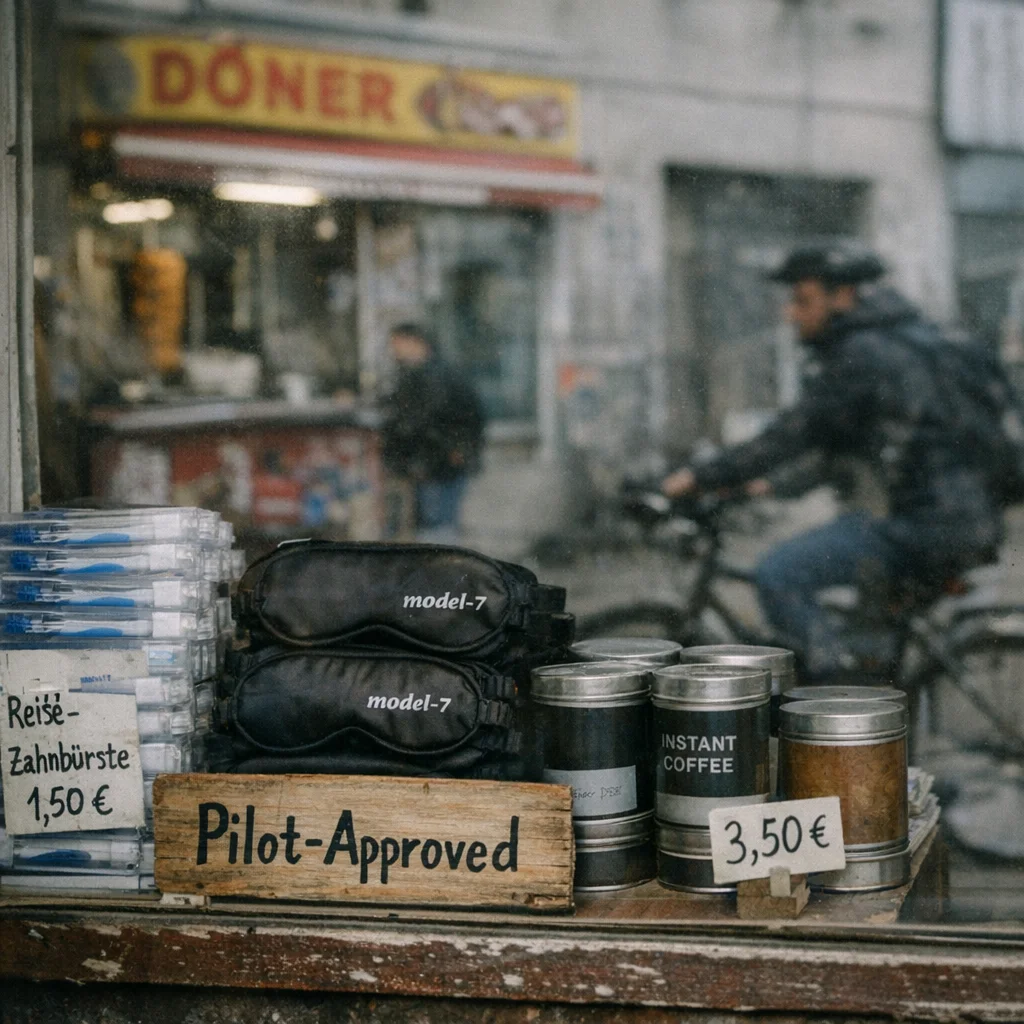
As U.S. planes landed at a Jordan base described as “a key hub for planning possible Iran strikes,” Wedding found a different manifest worth tracking: the small, oddly specific comforts that make long missions human. Within days of the story breaking, a Müllerstraße storefront began advertising boxes of travel‑size toothbrushes, “model‑7” sleep masks and tins of single‑serve instant coffee with a hand‑painted “Pilot‑Approved” sticker in the window.
Officials in Washington frame the C‑17 flights as deterrence and theater; in Wedding the overlooked detail is logistics as retail. "The manifest lists 1,200 travel‑size toothbrushes and three pallets of sleep masks," said Anja Müller, who runs the new shop and held up a shrink‑wrapped pack like a relic. "We buy the lot. People come for the story and stay for the coffee. It pays the rent."
The chronology was straightforward: press about military planning on Monday, a source in the supply chain (who asked for anonymity) describes crates of hygiene kits on Tuesday, and by Thursday the kits were arranged on artisanal shelving between vintage flight pins and an overpriced enamel mug reading: 'Deterrence: Now In Travel Size.' Emre Yildiz, owner of the nearby döner stall, confessed he’d been reselling the instant coffee tins as a “stronger-than-hipster” espresso add‑in. "My customers like a good story with their sauce," he said. "Sales are up. It funds better garlic."
The contradiction is sharp: global strategy is presented as solemn statecraft; the local result is packaged convenience and petty commerce. Debord would have loved the spectacle—war translated into a boutique impulse buy—while Clausewitz might have been puzzled why strategic depth now comes with a zipper pocket.
U.S. military spokesperson Capt. Daniel Roe declined to discuss logistics but insisted, "Operational supply lists are routine and unrelated to political commentary," adding that travel‑size items support crew welfare. Wedding district representative André Sadowski said regulators were "reviewing retail sources" but admitted, with an almost embarrassed practicality, that policing where a toothbrush came from is not the highest priority. "We're trying to get on top of the housing situation," he said, sounding like someone trying to penetrate the bureaucracy with a paperclip.
Locals noticed other, sneakier effects: expat founders launched a pop‑up called "Crew‑Kit Co." selling curated survival kits at €35 a pop; a leftist bookshop staged a solidarity reading while offering free sleep masks to attendees (donations suggested). The immediate consequence is small and inevitable: a district meeting on Monday to consider whether dubious supply chains should be allowed to fund kebab‑shop upgrades. The larger question—whether the apparatus of war will now be measured in artisanal toothbrush margins—remains unresolved, much like the moral accounting of anyone who bought a 'Pilot‑Approved' mug and pretended not to notice where it came from.