DINK Tax: Childless Adults Pay for Everyone Else’s Care
The government wants to plug the nursing-care shortfall by squeezing people without children, as if not reproducing were a luxury vice instead of a demographic fact.
Civic Hypocrisy & Neighborhood Compliance Reporter
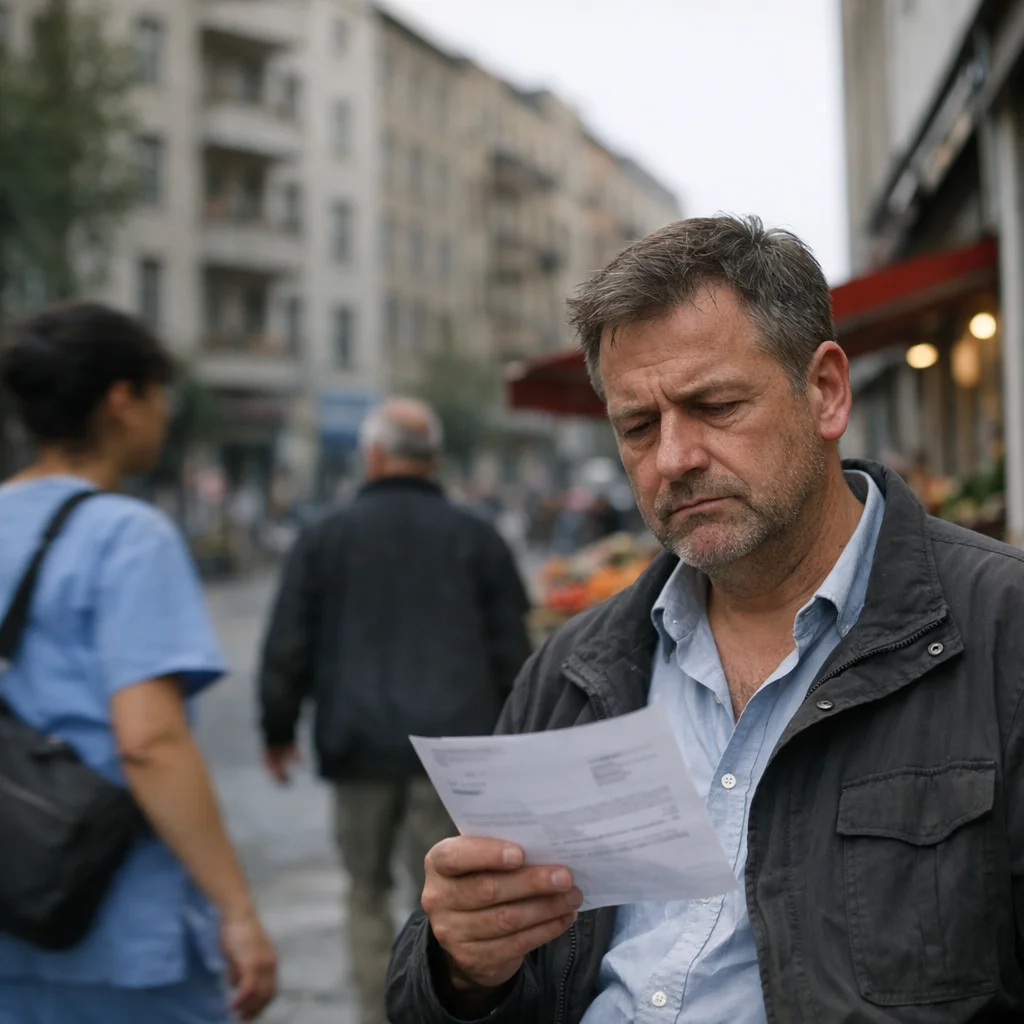
Berlin’s Childless Get Drafted Into the Care Bill
The debate over a higher nursing-care contribution for childless adults has landed in Berlin like a damp payroll envelope: officially necessary, privately resented, and guaranteed to be opened by people who already feel overused. In Wedding, where the corner cafés now serve oat milk to men who call themselves “post-family” because they once forgot a Tinder date and then built a philosophy around it, the proposal has been greeted less as policy than as a state-sanctioned grope through the tax base.
At a service center near Leopoldplatz, a district employee who asked not to be named because her office still prints memos on paper older than her pension rights said the idea had the elegance of a crooked landlord and the appetite of a bored foreman. “The state is looking at people without children and seeing a soft target,” she said. “Someone to pin down, lean on, and invoice after the fact. Meanwhile, the actual hole in care financing keeps widening like a bad tenant who never leaves and somehow gets promoted.”
That is the ugliness at the center of the reform: the government is treating childlessness like a taxable indulgence, as if every person without offspring were lounging in a velvet robe, smoking imported cigarettes, and letting the republic pick their pockets while calling it civic intimacy. In practice, many are just paying rent, paying taxes, and paying for the emotional vanity project of a country that loves hand-wringing more than budgeting.
The language around the plan is all solemn virtue and family values, the kind of thing politicians say while adjusting their microphones and pretending not to notice the structural mess behind them. It is classic Berlin in miniature. On one side, the progressives who talk about solidarity as long as it fits on a poster. On the other, the conservative mummies and daddies of fiscal virtue, eager to shame the childless into underwriting the system while never touching the real mess: understaffed care homes, exhausted workers, and a financing structure patched together like a cheap sofa from a flatshare in Neukölln.
A Turkish grocer on Müllerstraße, whose own adult children now live in other districts because the city priced out the family and then called it “change,” laughed when asked whether the plan sounded fair. “Fair?” he said. “Berlin only uses that word when it’s trying to collect money from someone. First they ask for consent, then they take the next inch, then they act surprised you noticed your trousers are gone.”
The Ministry of Health has defended the broader need for reform, but has offered no convincing answer to the basic arithmetic. If the state needs more money for care, it can raise it honestly, spread it broadly, or admit it has failed to build a system that does not depend on hunting for the nearest socially convenient victim. Taxing the childless is easier. It is also a little too intimate, like asking one group of adults to finance everyone else’s reproductive decisions while the government hovers at the bedside with a clipboard, pretending coercion is compassion.
In Wedding, where people can smell a scam before they can name the law, the proposal already has a nickname: the grab-and-grind levy, because it lets the state get close enough to feel everyone up and still call the contact administrative necessity. For now, the plan is still a plan. But in a city where every moral crusade eventually arrives as a bill, the childless are already being asked to sign for the delivery and leave a tip.