District Office Demands a Noon Appointment for Disappointment
Wedding’s permit culture has started behaving like a parish confession booth for people with clipboards: every problem is accepted, stamped, and then quietly buried under a fresh request for one more form.
Administrative Grief Correspondent
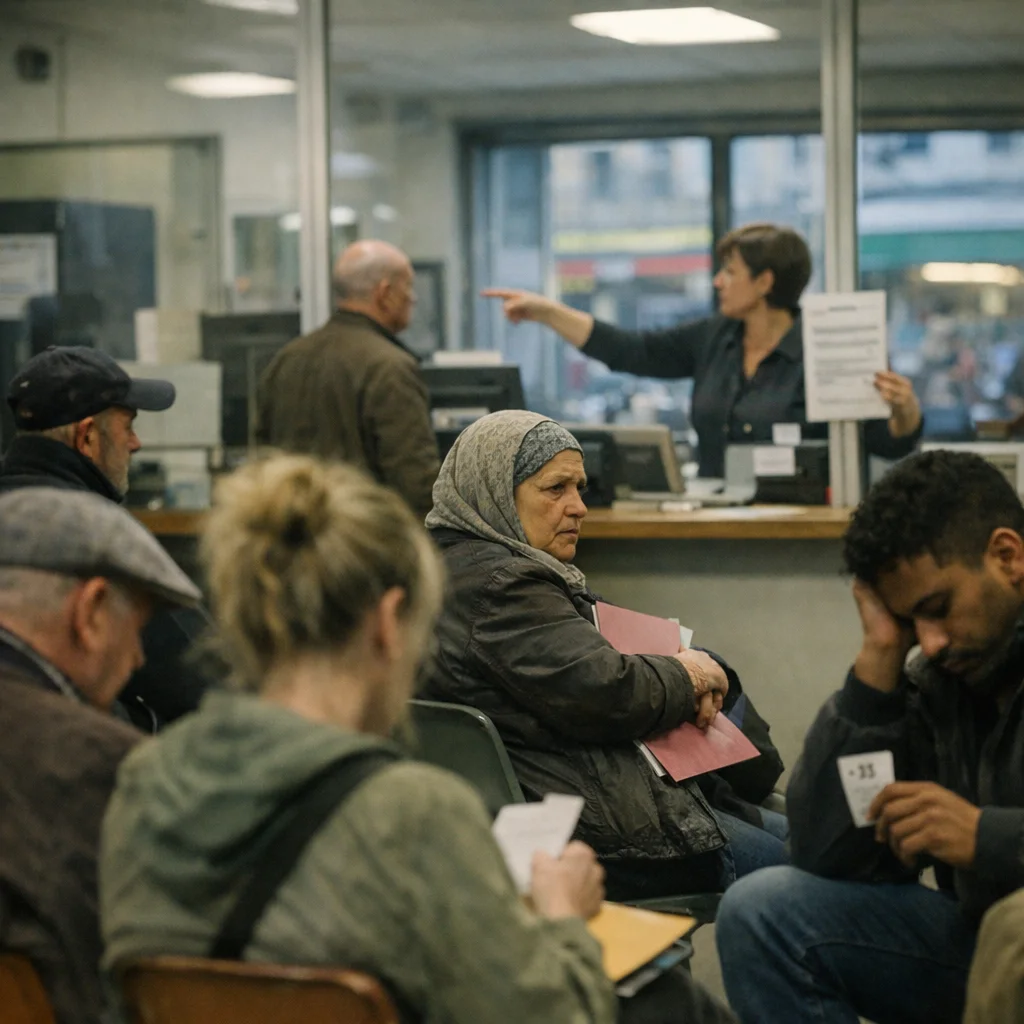
By noon on Wednesday, Wedding’s district office had already done what half the city’s ideology seminars, civic panels, and equity-branded working groups only fantasize about: it made ordinary people feel vaguely obscene for needing the state.
Applicants for permits, address changes, and the usual municipal rites of passage were told to come back later unless they had booked the blessed noon slot, a time apparently designed for disappointment with decent posture. The office’s new rhythm had the spiritual energy of a confession booth run by a landlord association: you enter with a problem, leave with a stamp, and somehow still owe society an apology.
On Müllerstraße, where the kebab shops are open before the office and the pharmacies know your birthday better than the state does, the queue ritual had already settled into its familiar Wedding choreography. People clutched folders like prayer books. A father with a stroller stared at a laminated notice as if it had insulted his mother. A woman from the wedding dress alteration shop next door came over on her lunch break and laughed once, the way people laugh when they are deciding whether to cry or file a complaint no one will read.
One resident, Ayhan Demir, a Wedding mechanic who had taken time off work to deal with a business permit, said he was told to wait because the line was “too full,” even though the waiting room had enough empty chairs to host a seminar on loneliness. “They said it was orderly,” Demir said. “It felt like being slowly stripped by a spreadsheet.”
Clerks, advisers, and the district’s favorite civic consultants insist the delays are about fairness, but in Berlin fairness is often just bureaucracy wearing a clean shirt and speaking in the soothing voice of exclusion. The loudest applicants, the fluent German-speaking insiders, the developer’s assistant with a perfect calendar, and the person who already knows which desk to lean on still seem to slide through. Everyone else gets the sermon. The rich call it process. The poor call it being handled.
A receptionist, speaking on condition of anonymity because she once stamped her own landlord’s form in the wrong order and has never recovered the shame, said the office had adopted a “customer-oriented” approach. In practice, that apparently means making people feel like they are requesting a kidney, a favor, and a small erotic humiliation all at once. The municipal charm is always the same: smile politely while the machine unbuttons your dignity one form at a time.
The district office said in a brief statement that demand had risen and staff were “working hard to improve access.” That is a lovely sentence, the sort that can be read aloud by a priest, a consultant, or a man with a startup budget explaining why the poor should wait more gracefully. The office also pointed to online booking options, which in Berlin are usually a cheerful rumor with a password and a dead end.
The hypocrisy is the point. The office does not merely delay people; it moralizes the delay. It wraps exclusion in the language of care, then calls the bruise an invitation. “Access” sounds generous until you realize it mostly means access to a locked door, an overworked clerk, and a system that treats your time like lint.
For Wedding’s Turkish shop owners, delivery drivers, new parents, old tenants, and the people who actually keep Müllerstraße breathing between the pharmacies and the betting shops, this is not abstract governance. It is missed shifts, stalled registrations, permits that rot in limbo, and one more afternoon spent staring at laminated notices like they are velvet ropes for the administratively pretty. The neighborhood’s public life is being run like a private club for the well-connected, the well-spoken, and the well-disposed toward endless obedience.
And if you want the real obscenity, it is this: the office has not only normalized delay. It has made delay sound virtuous. In a city addicted to performing progress, nothing is more fashionable than making people beg sweetly for what was already theirs, then calling the begging a community value.
The district says another review is coming next month. Until then, residents are advised to arrive early, bring every document they own, and prepare to be spiritually waterboarded by form B-17 while a consultant somewhere bills the city for learning the word “transparency.”