DIY Bass Implants Turn Wedding into a Silent Rave Lab
Tattoo‑shop audiologists and med‑student entrepreneurs are installing bone‑conduction transducers so clubbers can feel the drop without audible evidence—and the borough's noise cops are left fining empty rooms.
By Lina Paypass
Night Economy & Digital Vice Reporter
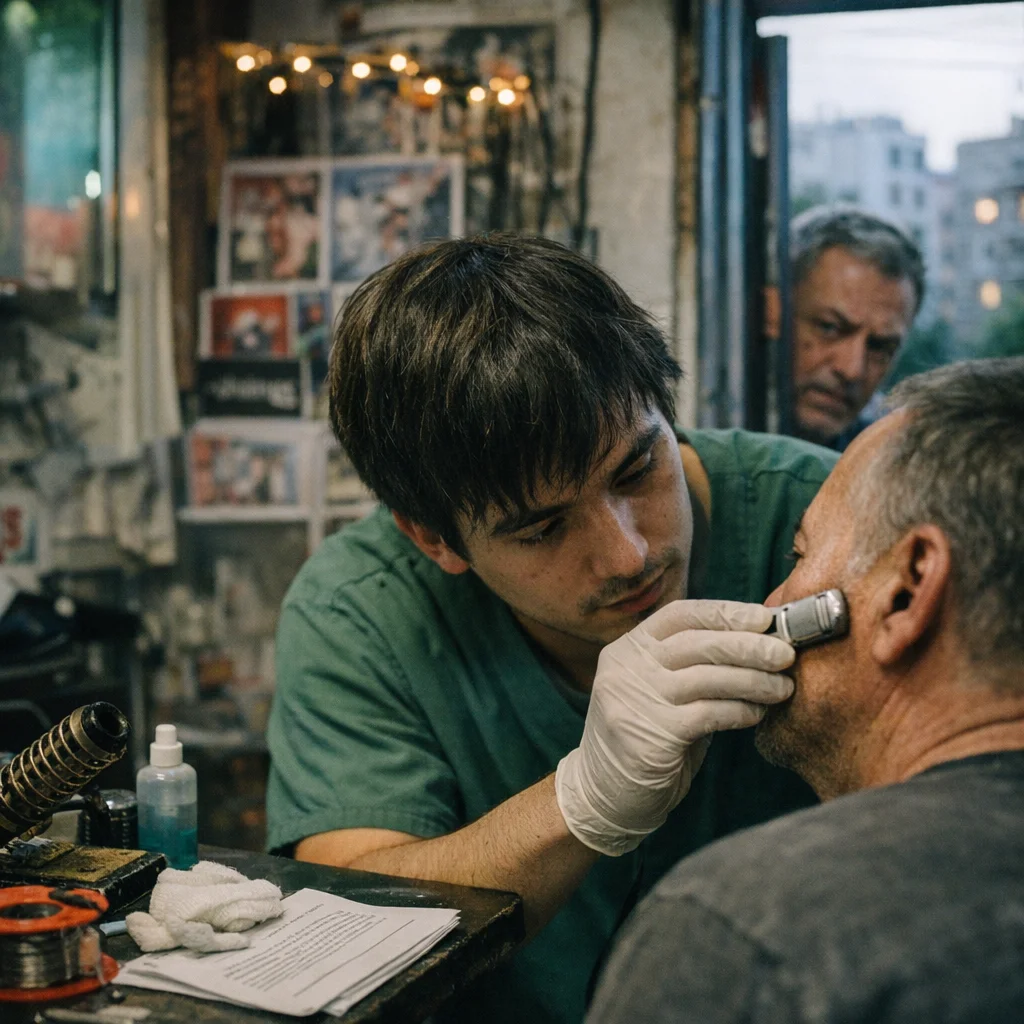
In Wedding a small shadow economy has sprung up where tattoo shops, med students and DIY audiologists install bone‑conduction transducers into partygoers' skulls so residents can 'feel' the bass without a single decibel leaving the room.
What started as a joke among an art collective calling itself "immersive domesticity" has become a business: sliced‑cheek fittings advertised as "silent resonance experiences," midnight "tuning sessions" where technicians solder tiny transducers to cheekbones, and after‑parties billed as art installations that are, by all practical measures, orgies with a tech brochure.
"It's exactly like a piercing—except you leave with surround sound in your jaw," said Deniz Kaya, 36, proprietor of a Müllerstraße tattoo shop that now rents an exam table by the hour. "We do a two‑week warranty and provide a glucose sachet. People want to finish the night quietly and wake up proud." Kaya paused, then added: "We call it piercing culture revised for gentrification." The language reads like a grant application trying hard to be horny.
Med‑student entrepreneurs have turned aftercare into a product. For a fee, they pair an implant with a small packet of MDMA and a printed recovery plan. "We offer wound care, bandwidth calibration and post‑session psychosocial check‑ins," said Sara Keller, a third‑year biomedical student selling packages out of a former gallery space. "It's a deep dive into the matter—very clinical." Her business card doubles as a liability waiver.
The new setups exploit a loophole: municipally operated lamppost decibel sensors detect external sound, not bone conduction. Clubs and landlords advertise rooms as "complaint‑proof party studios," and organizers register orgies as "performative art pieces" to dodge permits. "We bought a load of Tetris‑shaped cushions and called it installation art," one promoter admitted.
Officials are not amused. A Bezirksamt spokesperson, Anna Schubert, said the district has opened an inquiry and will convene engineers, ethicists and public‑health advisers next week. "If devices are implanted without medical oversight, we will pursue regulatory action," Schubert said. Police officials confirmed officers had been fining empty flats where sensors registered no noise but neighbors reported lewd activity.
Neighbors are split: some call the implants a polite solution to noisy weekends; others call them an aestheticized evasion. Landlords meanwhile enjoy a new revenue stream, and the borough's noise cops now hand out tickets to rooms as if they were chastising invisible choirs.
The phenomenon reads like Bataille rewritten as a tech pitch: eroticism meets a GUI. For now, the borough has one clear next step — an emergency hearing next week to decide whether to treat bone‑conduction parties as medical procedures, public nuisances, or an art form powerful enough to require a zoning exemption. Expect lawyers and ethicists to get intimate about where Berlin draws its lines.