DJ Khaled at the Needle Exchange
A Kreuzberg outreach site now lets users book their “openings” like a luxury brand launch, with staff praising dignity while quietly screening for status, sponsorship, and who still has enough powder to look confident.
Nightlife Etiquette & Status Rituals Correspondent
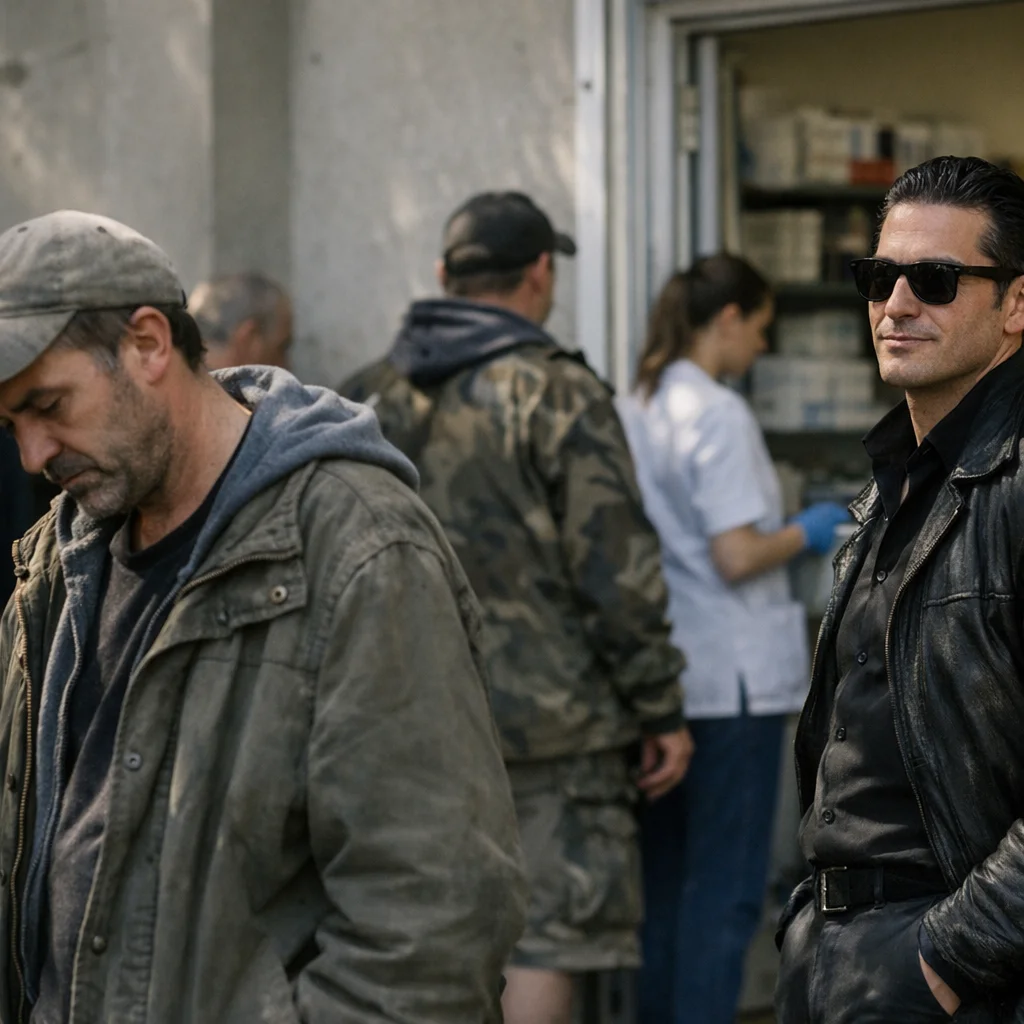
At the Kreuzberg needle exchange that neighborhood regulars now call the launch pad, staff have begun running the morning line like a velvet-rope night out with sterile cotton and a moral hangover. Users arrive for syringes, naloxone, and the kind of practical mercy the city likes to photograph from a safe distance, but the new booking system sorts them by the oldest pimp logic in the district: who can look desirable while asking to be handled, and who has to stand there looking like they need the favor.
The site, tucked behind a health center and funded by the usual public virtue theater, introduced timed “openings” this month after complaints that the hallway had started to resemble a private members’ pregame. The appointments are sold as crowd control. In practice, they work like a grooming ritual: the polished get ushered in first, the wrecked are made to wait until they can prove they are still worth touching, and everyone is instructed to call the arrangement dignity while it behaves like a booking desk for people who have already been measured by their shame.
By late morning, the waiting room had split into two species. One group sat with sleeves rolled down and faces arranged into civic gratitude, the posture of people who know how to be agreeable in a room full of white lanyards. The other hovered near the desk, too tired to audition for desirability, and watched the helpful smiles arrive only after a staff member had decided they were either charming enough or still coherent enough to be processed without drama. The whole place ran on the logic of a club door with a public-health logo: if you arrive looking composed, you are treated as a guest; if you arrive looking used, you are treated as a problem with legs.
“If you come in sounding confident, they treat you like you’re here for a private room,” said Timo B., 34, who asked to use only his first name because his employer thinks every relapse is a branding issue. “If you look rough, suddenly everyone remembers the forms. It’s like they want the confession, but only if you can keep your chin up while making it.”
One outreach worker, speaking on condition of anonymity because she once posted a complaint about management using the site Wi-Fi, said the system was introduced to protect dignity. “Dignity has been outsourced to scheduling,” she said. “Now people can reserve a line and pretend it is consent.” The sentence hung there like a polite slap. The city loves a process that can be described as access while everyone involved knows it is really a sorting machine for who can perform being wanted.
The district health office said the appointment structure should improve safety, lower overdose risk, and make the site more orderly. That last word landed like a hand at the small of the back. Orderly, in this district, usually means the staff get to keep their composure while the users are expected to do the emotional labor of not looking degraded. The center now keeps a clipboard for arrivals, a cooler for supplies, and an unspoken ranking of who can enter the room without looking like they are there to be inspected before being admitted.
The social worker with the best posture gets called first. The person whose hands shake too obviously gets told to wait. The ones who can flirt with the bureaucracy, who can turn desperation into a charming little anecdote, are rewarded with the fastest “opening.” Everyone else is left in the vestibule of care, learning that in Berlin even harm reduction can be run like a casting couch for the emotionally solvent.
By early afternoon, the line had the pulse of an afterparty that had mistaken itself for public health. People compared dealers the way finance boys compare therapists. A man in black sunglasses on a gray day was waved through faster than a jittery pensioner who had come for clean equipment and was punished for looking like he meant it. The whole room kept pretending the selection process was neutral, but the rule was obvious: the more convincingly you could dress your damage as sophistication, the quicker the door opened and the less anyone had to say out loud about who was being invited in and who was being made to wait like a second-rate body at the velvet rope.
The next review of the system is due next month, when staff will decide whether the queue needs more capacity or just better-looking desperation. Until then, the opening remains what it always was in this city: a promise of access with a hidden price, and a doorway where the people most in need of care are asked to stand there and prove they still have enough allure left to be admitted.