DJs Go Corporate, Dealers Keep the Receipt
A new techno etiquette is turning party chemistry into brand management, with collectives, promoters, and wellness freelancers all competing to look safer than they are.
Industrial Nightlife & Chemical Sociology Correspondent
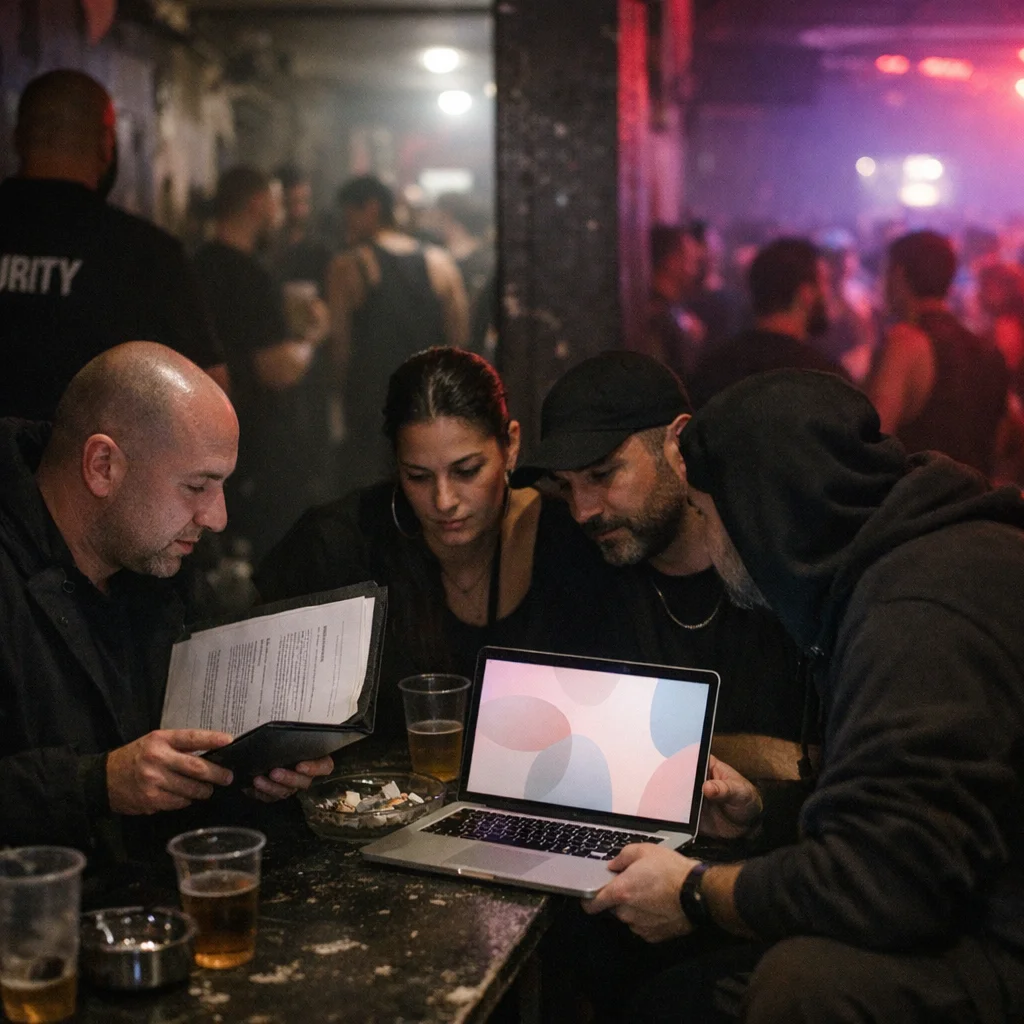
Wedding’s techno money has learned to speak in the tone of a social worker trapped inside a startup pitch. The neighborhood’s clubs, after-hours bars, and sweat-caked back rooms are now full of people saying “safeguarding,” “community standards,” and “responsible culture” with the same oily confidence they once used to promise a lost weekend and a morally embarrassing kiss in the smoking area. The grime did not leave. It got rebranded, laminated, and handed a partner package.
At a recent panel in Wedding, a collective organizer in a beige blazer and dead-eyed tote bag explained that every party now needs a policy, a sponsor, and a “clear escalation pathway.” The room nodded like it had just discovered ethics in a spreadsheet. Beside her sat a district-cultural liaison with the expression of a woman who has never touched a speaker but has ruined several nights by approving them. A promoter in expensive sneakers kept saying “safer spaces” with the tender intensity of someone hawking ketamine-adjacent candles. Meanwhile a DJ archetype with a shaved head, a deadpan face, and an hourly-rate ego sat there pretending he’d invented restraint, when really he was just waiting for someone to pay him to sound progressive between drops.
The trick is embarrassingly simple. First, turn chaos into a brand asset. Then hire a wellness freelancer with a ring light and a trauma vocabulary thick enough to choke a horse. Then invite a few left-coded cultural managers to clap politely while everybody pretends the room’s heat comes from values rather than bodies pressed together in expensive darkness. It is not safeguarding. It is moral theater with a drink token.
“Everyone wants to look like they’re building a safer culture, but most of them are just building a nicer logo,” said Leyla Demir, who has booked nights in Wedding for nearly a decade and requested anonymity because she still owes favors to three men in black shirts who speak in the language of consent and invoice timing. “They want the optics of care, the language of accountability, and the sexual excitement of acting like they’ve surpassed the mess. Then they go home and text the mess.”
That bathroom remains the most honest institution in the neighborhood. While the stage hire gets branded like a skincare line for emotionally exhausted property owners, the real machinery of the night keeps sweating in the corridor: runners, lookouts, bartenders with bruised knuckles, and the friend-of-a-friend who knows which stall door sticks, which promoter steals from the door, and which DJ will flirt with the coat check just to feel adored by someone he pays less than the sound engineer. The night survives on labor, leverage, and a few useful crooks with decent timing. The flyer never mentions them because the flyer is supposed to sell transcendence, not payroll theft.
A district office spokeswoman said the borough takes “responsible cultural formats” seriously and welcomes “innovative stakeholder cooperation.” That sentence should be engraved on a public ashtray and left outside the office so people can stub out their contempt on it. Berlin bureaucracy loves club culture the way a landlord loves a tenant with a trust fund: as long as it arrives sanitized, grateful, and easy to regulate. The left calls it care. The administration calls it governance. The scene calls it “a conversation.” In practice it means somebody with a clipboard gets to feel virtuous while somebody else cleans the floor around the toilet until their knees ache.
What makes the current version especially foul is the cast. The old thieves at least looked hungry. Now the operators are a hybrid species: promoter as brand consultant, collective as grant application, wellness freelancer as emotional bouncer, district functionary as cultural chaperone, DJ as freelance priest of controlled ecstasy. They all claim to hate exploitation while extracting a little of it for themselves, delicately, like a tongue checking a broken tooth. Everyone is for consent, especially when it arrives as a caption.
The moral performance gets thicker the closer you look. Safeguarding is pitched as protection, but too often it functions as screening: who is polished enough to be invited, who is messy enough to be used as atmosphere, who is visibly strung out enough to be quietly excluded after being useful on the dance floor. It is inclusion with a knife hidden in the bouquet. The language is gentle because the transaction is not. Somebody gets paid, somebody gets quoted, somebody gets left to carry the spilled beer, the broken ego, and the warm chemical shame after closing.
By dawn, the logos will be packed away, the policy PDFs forwarded, and the people who spent the night performing ethics will be on their phones checking which afterparty still has the decency to be dishonest. A new code of conduct will arrive by email. A softer color palette will be announced. Another district representative will praise “resilience” in a room that smells like disinfectant, sweat, and ambition. The scene will keep pretending its conscience came from a workshop. In reality, it was always just the bathroom mirror, the cash drawer, and whoever was shameless enough to keep the beat going.