‘Do Not Feed the Artists’ Says the Museum
Wedding’s cultural class has discovered the one thing it loves more than art: the power to forbid access while calling it care.
Administrative Grief Correspondent
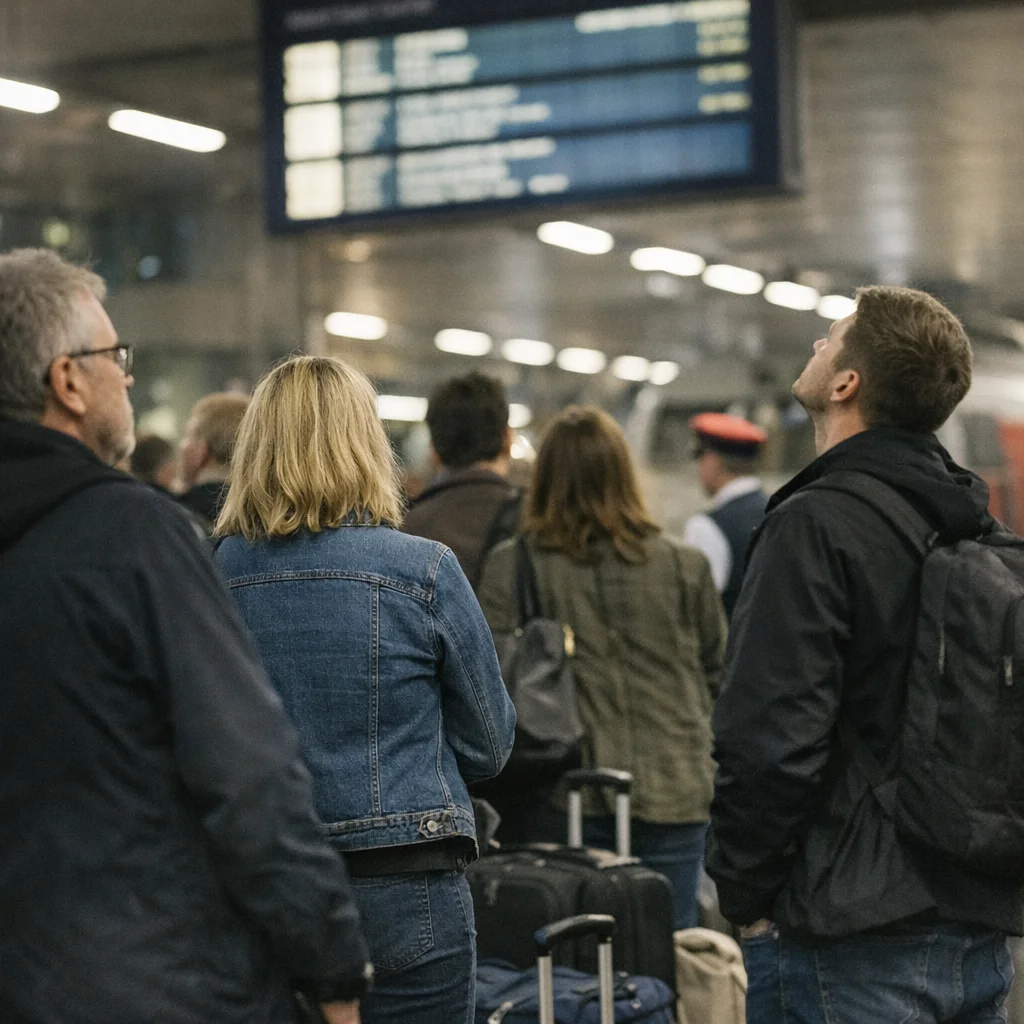
Deutsche Bahn spent Tuesday morning explaining, with the calm face of a man embezzling from the parish, that a train leaving ten minutes late was still a form of punctuality. At Berlin’s Hauptbahnhof, passengers staring at the board watched their 8:12 slide toward 8:22 and were told the service was “on schedule for current conditions,” a phrase so exquisitely rotten it could only have been forged by a consultant with soft hands and a hard on for euphemism.
First came the delay. Then came the announcement, delivered with the dead-eyed intimacy of a couples therapist who has already slept with the rail budget. A conductor, speaking on condition of anonymity because he once missed a connection in 2019 and still treats it like wartime trauma, said the railway’s internal grace period was “not a loophole, just a philosophy.” Philosophy, of course, being the favorite perfume of institutions that cannot do the thing they are paid to do.
This is what privatized public failure looks like in Germany: the infrastructure is allowed to rot in public, then the language is polished until the rot sounds like strategy. The tracks buckle, the signals sulk, the staff are reduced to apologizing for a system that has been stripped, reordered, and sold back to the public as “efficiency.” Everyone gets to keep their managerial dignity while the passengers pay in wages, childcare pickups, missed doctor appointments, and the humiliating little sweat of having to text “running late” for the fourth time like a bad lover begging for mercy.
Passengers did what Berliners do best: they performed outrage as a civic art form. A man in a thrift-store overcoat and expensive-looking exhaustion compared the situation to Kafka, which was generous to Kafka, who at least had the decency to make his machinery openly malicious. A woman carrying Turkish pastries for her mother said she had already mentally departed, arrived, been delayed, and been emotionally fingered by the timetable before the platform even updated. Two startup commuters in matching black coats nodded sympathetically while refreshing their calendars, those little digital prayer books for people whose suffering is always billable. A man in a crisp coat from some public-sector office kept muttering about “process optimization,” as if saying it enough times might make the train appear, or at least let him keep his bonus.
Then came the official language, that beloved corporate lubricant. The railway’s spokesperson defended the practice, explaining that the company “measures reliability across a wider operational window,” which is bureaucratese for: if you stretch the ruler far enough, anything looks straight. “People want certainty,” said spokesperson Miriam Voss, “and we are committed to giving them as much as the infrastructure allows.” That line landed with the sensual force of a damp contract. Berliners do love a workaround, but even they draw the line at being seduced by a PowerPoint wearing aftershave.
The deeper scandal is not that the train was late. It is that the system is smug about being late, as if the public should applaud the suffering for its discipline. Underinvestment gets framed as moral weather. Broken things are recast as character-building. The commuter is told to be patient while the people who made the mess—department heads, subcontractors, policy adults with soft voices and hard pensions—remain safely insulated from the consequences, sipping mineral water in conference rooms while the rest of the city gets ground under the wheel.
By noon, the delay had done what it always does: it rearranged the city’s class theater. The well-insured were merely inconvenienced. The precarious were sexually harassed by the clock. The truly doomed sat quietly on benches, already doing the arithmetic of missed interviews, missed daycare handoffs, missed rent transfers, missed lives. The station hummed like a bureaucratic confession nobody intended to make.
By early afternoon, the train had not vanished, merely matured into the German ideal of service: present in theory, absent in practice, and still demanding respect like an overperfumed ex who never once paid for dinner. Another departure was announced for “shortly,” which on this line means either five minutes, another lie, or the slow civic orgasm of everyone pretending this is normal.