DO NOT MIX MDMA WITH THE APP
Wedding’s nightlife has found a fresh way to moralize itself: one more harm-reduction platform that lets clubbers cosplay as civic-minded patients while the worst opportunists sell “safe fun” to the same people they are.
Industrial Nightlife & Chemical Sociology Correspondent
Startup halos, ambulance math, and the dealers of virtue
Wedding’s latest nightlife export does not sell a pill, a patch, or a prayer. It sells reassurance with a venture-capital accent. The new crop of harm-reduction apps, laminated wristband systems, and “smart alerts” for ravers promises cleaner nights, faster interventions, and fewer ambulance calls, which is a lovely way to say: please continue self-destructing, but do it with analytics and a respectable logo.
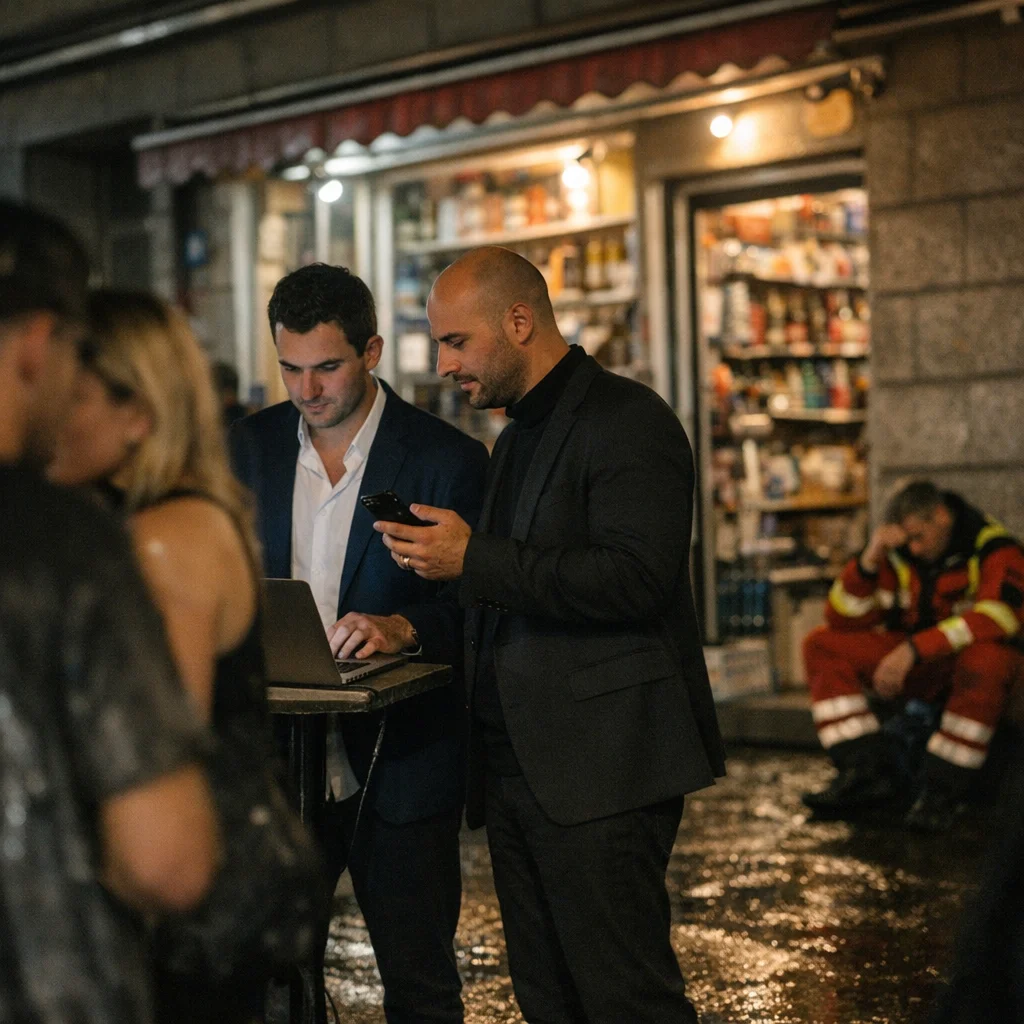
At a launch event near Leopoldplatz, where everyone looked dressed for either a panel or a relapse, the founders stood around in black basics and dead-eyed startup calm, the kind of people who say “community” the way a landlord says “shared values.” One of them kept touching his phone like it was a rosary and a mirror at once. Another wore a silver chain and the expression of a man who had never once carried a stranger down a staircase, yet was prepared to monetize the fantasy of doing so. They spoke in the soft, optimized voice of people who have mistaken competence for ethics.
A Turkish Späti owner across the street, watching the whole thing through cigarette smoke and routine contempt, called it “a very expensive way to discover people are messy after midnight.” He was being generous. Most of these founders are not discovering mess; they are packaging it, clipping it, and selling it back to the city as a pilot project.
The pitch is simple enough to fit on a tote bag: users scan in, receive “wellness prompts,” and can flag if they feel unwell, unsafe, or spiritually overcommitted. The app then nudges staff, medics, or trained volunteers. In practice, it also nudges the old Berlin lie that technology can make appetite ethical. You can already smell the stale smoke on the jackets, the ketamine jaw in the smiles, the white wine breath of people who want to look intersectional while quietly praying nobody vomits on the brand.
The real audience is not clubbers. It is the ecosystem of district-office moralists, NGO-adjacent nightlife consultants, and public-private harm bureaucracy that treats every bassline like a funding opportunity. These are the people who can turn a panic attack into a workflow, a blackout into a dashboard, and a crowded floor into a compliance theater for grants, tenders, and self-congratulation. They do not want nightlife to be safe; they want it to be legible enough to invoice.
Club promoters love it because it offers plausible innocence. Investors love it because addiction sounds scalable when dressed as product design. The left loves it because harm reduction is easier to post than to practice, especially when the photo op includes a reflective vest and a good conscience. The right loves it because any tool that makes nightlife look supervised is one more leash on the city’s pleasure problem. Everyone gets to feel adult while purchasing the emotional equivalent of a condom with a dashboard.
“People want the mythology of the rave without the ambulance invoice,” said Dr. Leyla Demir, an emergency physician who has seen enough dawn to stop believing in public sincerity. “But if your business model depends on keeping the party just dangerous enough to need your app, you are not saving anyone. You are brokering the mess.”
That is the obscene elegance of the whole scheme: the more they talk about care, the more they sound like middlemen in a municipal kink. The paperwork is immaculate. The slogans are tender in a way that feels slightly lubricated. The pitch decks are full of soft gradients and hard assumptions. Even the language of “consent,” now dragged through the startup office like a silk sheet after a bad night, has been scrubbed into something you can hand to a district aide without blushing.
One founder, after being asked who exactly trains the “trained volunteers,” gave the kind of answer that should be printed on a warning label: “We’re building a scalable culture of intervention.” Scalable culture. Intervention. Wedding has always had a gift for making desperation sound like urban development.
The first serious question arrived after midnight, when a prospective customer asked whether the app could tell the difference between a bad trip and a bad idea. Nobody answered directly. That may have been the only honest moment of the evening.
By the end of the week, two clubs had asked for demos, one district aide had requested a briefing, and a startup lawyer had already begun drafting disclaimers thick enough to smother a horse. The city will call this innovation. The rest of us will call it a new toll booth on the road to self-annihilation, staffed by people who think moral seriousness is just another accessory to wear while someone else sweats through the floor.