Doctor’s First Kiss With the Market
A former Berlin clinic director weighs what East German medicine got right, then sounds suspiciously grateful for the old system’s power to say no when money started asking for the bed.
Administrative Grief Correspondent
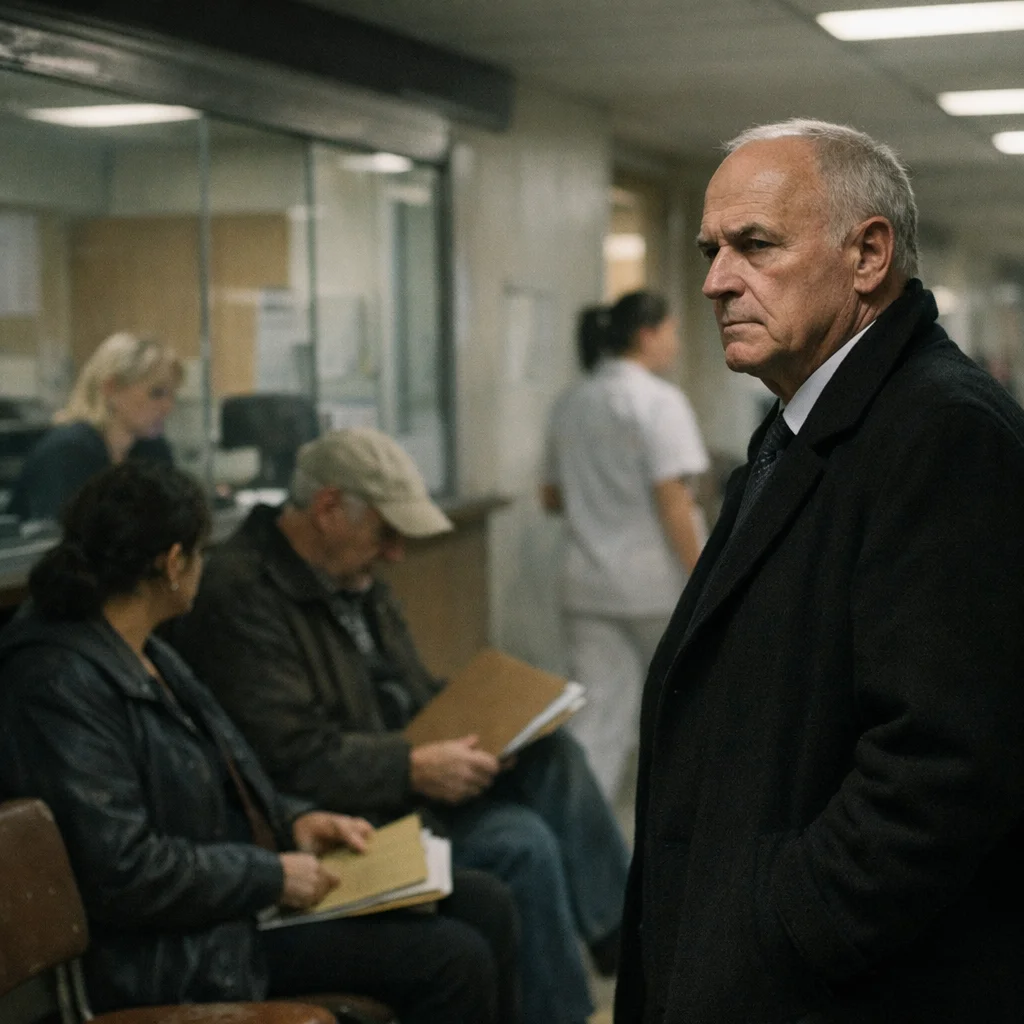
Hans Behrbohm’s defense of East German medicine arrived in Berlin wearing the old white coat of authority and the newer scent of a man who has learned, too late or too comfortably, that every clinic eventually has to choose whether it will be a place of care or a place of courtship with capital. The former clinic director, who worked first at the Charité and later at Park-Klinik Weißensee, has been weighing what the old system did better and what it did not, and his answer lands with the tired precision of a veteran in the room where the city keeps undressing itself for the market: the GDR was better at saying no.
That no mattered because it drew a line. Beds were beds, not assets with sheets. A patient was admitted because the body was failing, not because a billing office had decided the body was lucrative enough to deserve attention. The old system was coarse, sometimes humiliating, often joyless. But it did not wear a smile while sliding a hand toward your wallet. That is the part Berlin’s health elite keeps polishing out of the mirror. Today the corridor lighting is nicer, the language is softer, the forms are prettier, and the whole city still runs admissions like a bad seduction: private fees leaning in at the first chance, public virtue pretending not to notice, and everyone acting surprised when the hand that promised help starts feeling for the billing code before it checks the pulse.
Behrbohm’s point, stripped of the nostalgic varnish that former directors rub on history when they want to sound brave without risking anything, is not that the GDR was good. It is that the old system was at least shameless enough to admit who held the power to say yes and who had to wait, dressed and tense, for permission. It did not flirt with the patient and then invoice the intimacy. It did not promise a full examination and deliver a referral maze. It did not make refusal look like efficiency while quietly charging extra for access. Modern Berlin has turned that into a civic art form: a polite hand on the lower back, a laminated smile, a private tier, a public apology, and a queue that keeps pretending it is not a queue because the word would make the humiliation sound too honest.
A senior hospital administrator in Mitte, speaking on condition of anonymity because he still likes the word “transformation” and uses it the way a cheap seducer uses a borrowed watch, said the old system’s bluntness had one advantage: “Everyone knew who was being selected and who was being screened out. Now we do it with better lighting.” Better lighting, yes. Better upholstery. Better lies. The same old appetite wearing a cleaner shirt and asking to be trusted with your body.
That is where Berlin’s medical class gets nervous, because Behrbohm is not mourning scarcity as if scarcity were noble. He is pointing at the modern ritual of access: the triage desk that behaves like a velvet rope, the appointment calendar that keeps the desirable bodies close and the inconvenient ones cooling outside, the referral game that turns illness into a small, costly negotiation with people who have never once had to beg a machine to let them be touched. In Charité corridors and private practices from Charlottenburg to the edges of Wedding, the social choreography is the same: first comes the smile, then the distinction, then the careful sorting of who gets seen immediately and who gets told the next available slot is in a month, as if disease has a schedule and dignity can be booked online.
In Wedding, where families have spent years learning that public virtue often arrives with a price list tucked inside its coat, the story lands with the weight of a familiar insult. The nurse on a double shift knows the language of rationing better than any minister. The cleaner who waits for a specialist knows that “choice” is what rich people call the privilege of skipping the line. The freelancer with a shiny insurance card knows that access can still be withheld by a receptionist who talks like a border guard in a cardigan. Everyone in the district understands the same principle: modern Berlin likes to be desired, but only by people who can afford the invitation.
Behrbohm does not resurrect the old system as a saintly relic. He uses it as a mirror, and the reflection is indecent. Markets make medicine more efficient in exactly the way a bad lover does: less hesitation, more sorting, fewer excuses, and a faster way of deciding whose body is worth the time. That is the hidden virtue Berlin keeps praising in public while blushing over it in private. The city calls it reform when the hospital learns to choose, calls it professionalism when the bill arrives before the verdict, and calls it progress when the waiting room is left holding its coat and its number like a discarded date.
The final cruelty is how familiar it all feels. Berlin did not become more humane by putting the market in charge of the first kiss. It only learned to make the refusal elegant, the selection quiet, and the invoice intimate. By the time the waiting room notices what kind of tenderness it has been promised, the doctor has already kissed the market and left the patient to pay for the mouthwork.