Dog Poo, But With Governance
The neighborhood’s newest cleanliness push does not ask residents to stop being disgusting. It asks them to report one another, admire the signage, and pretend that civic virtue can be outsourced to laminated notices.
Administrative Grief Correspondent
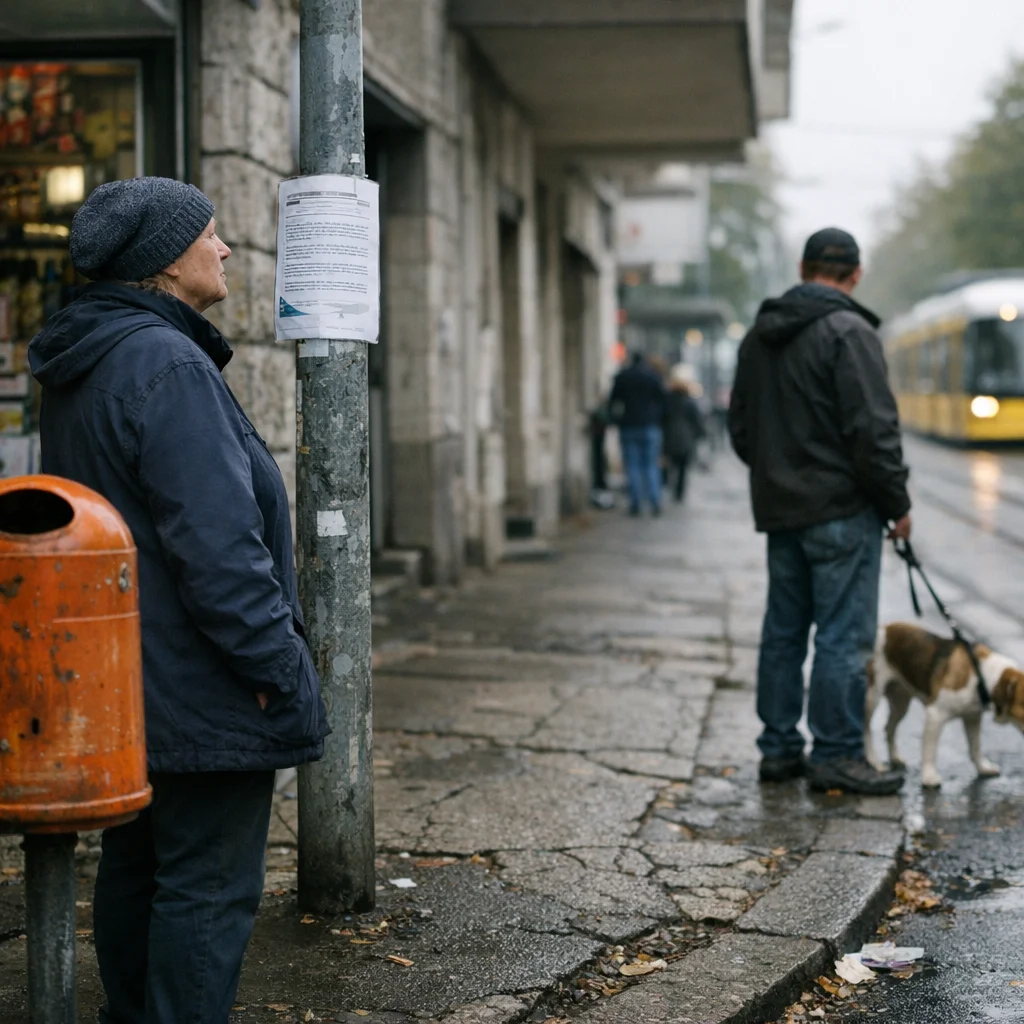
Residents in Wedding are being told that the borough’s new tidy-footpath push is about shared responsibility, cleaner sidewalks, and a more civilized public life. Which is a charming way to describe a district office trying to turn disgust into community spirit and shame into a reporting tool.
The campaign arrives with cheerful notices, laminated sincerity, and the bureaucratic confidence of people who have never had to pry a bag open with frozen fingers while a tram shrieks past and a landlord’s notice board peels in the rain. It asks people to report untreated messes through a municipal channel and to “help maintain the quality of the public realm.” That phrase alone should be enough to make a sane person spit into the gutter. The public realm, in practice, is a narrow strip of cracked pavement between a kiosk, a stairwell that smells faintly of piss, and a municipal fantasy about accountability.
What the district office really wants is not cleanliness. It wants participation in the ritual of cleanliness: the obedient citizen crouched at curb height, bag in hand, while some clipboard-fed functionary in a pressed jacket congratulates themselves for outsourcing civic labor to guilt. The people designing these campaigns are always the same species — urban policy graduates with moisturized hands, soft shoes, and a theological belief that a sign can discipline a city more effectively than money, maintenance, or shame.
At the corner of Müllerstraße, near a bakery where the bread arrives before the bureaucracy does, Cem, who keeps his store open long enough to witness the neighborhood’s daily decay in real time, said the policy sounds written by people who experience the street mostly through car windows and press releases.
“Every office loves cleanliness until somebody has to touch anything disgusting,” he said. “Then suddenly they discover civic values. It’s a very dirty kind of virtue.”
He is correct, of course. Wedding is full of people who talk about order the way bored men talk about sex: with intense appetite and no intention of doing the work. The district office says the idea is to improve the footpaths, encourage compliance, and reduce complaints. It did not say how it plans to distinguish between the person who left the mess and the person who stepped around it, cursed, and kept moving because life is already humiliating enough without becoming a neighborhood informant.
That ambiguity is not a flaw. It is the whole design. Make the rule vague enough and the self-righteous can weaponize it against the nearest visible nuisance, while the actual offenders glide through the gaps like polished little parasites. The rule does not eliminate filth; it reallocates resentment. It gives the resident with the strongest opinions and the weakest spine a socially approved way to feel clean without becoming decent.
On a courtyard bench off Pankstraße, a man in a puffer jacket watched his dog sniff a patch of grass with the grave concentration of a tax auditor. Upstairs, a curtain twitched. Somewhere in the building, someone was preparing to complain about “the state of the neighborhood” while living in a flat whose hallway smells like wet socks and old arguments. That is the Wedding method: moral panic in slippers.
Meanwhile, a local reporter with a microphone and the hunched expression of someone hoping to be noticed by a grant foundation stood by the tram stop asking residents whether they felt “empowered” by the campaign. Nobody ever feels empowered when a district office starts talking like a wellness app. They feel watched, nagged, and faintly embarrassed, which is the closest thing Berlin offers to governance.
This is classic Berlin: Debord with a clipboard, Foucault on a bicycle, and Adorno forced to explain why the sidewalk smells like defeat. But Wedding gives the joke a better body count of humiliations. The stairwell notices, the courtyard dog owners, the kiosk smokers, the pensioners with shopping trolleys, the municipal language that keeps saying “community” when it means “compliance” — all of it adds up to the same obscene choreography. The city does not clean itself. It stages hygiene and calls the audience complicit.
So the footpaths will remain what they have always been: a public stage for private negligence, petty surveillance, and the slow erotic thrill of telling other people how to live while standing safely above the mess. The campaign may produce a few cleaner blocks and a great deal more spite. It will also produce the usual Berlin miracle: everyone talking about responsibility while trying very hard not to bend down.
The district says more signs are coming. The dogs, thankfully, have no respect for signage at all.