Door Policy for the Chemically Unready
Wedding’s clubs and after-hours bars are quietly turning into etiquette schools for people who want drugs, status, and zero consequences.
Nightlife Etiquette & Status Rituals Correspondent
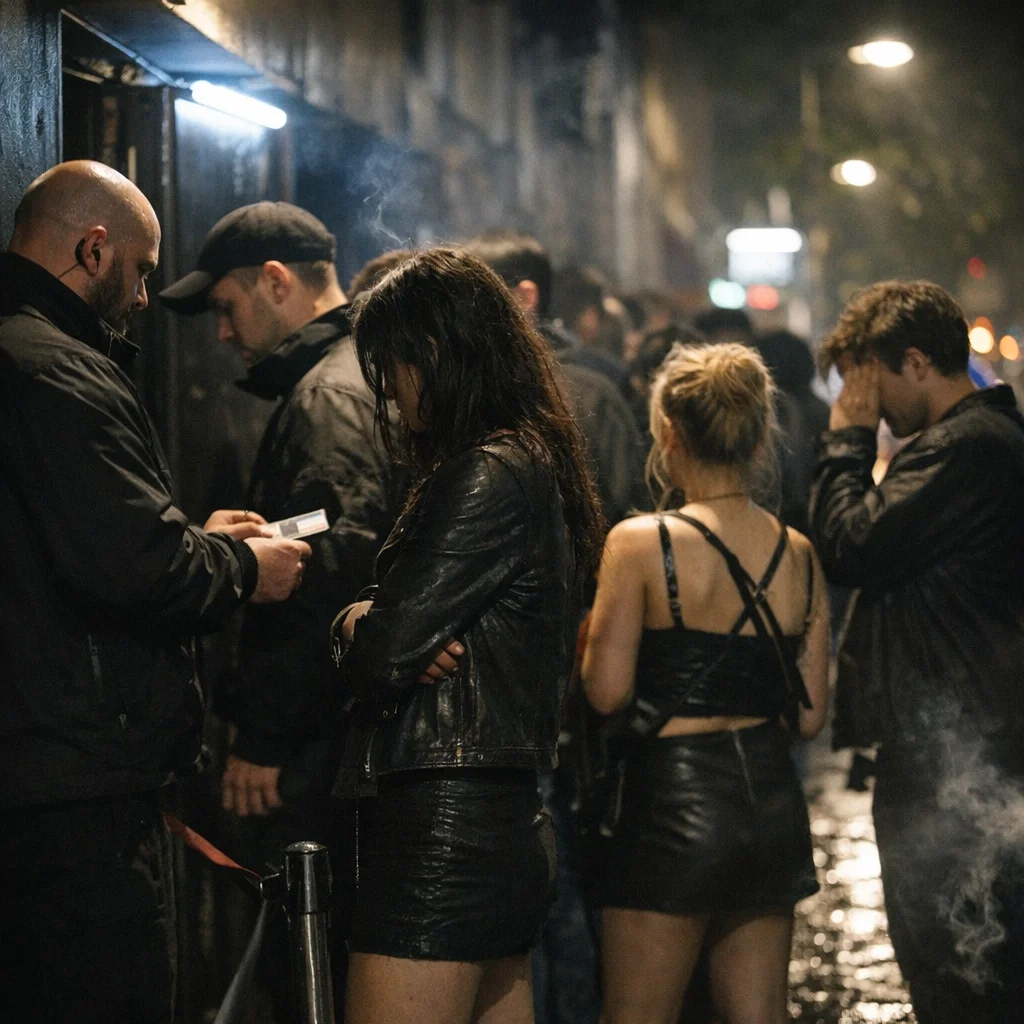
Wedding’s after-hours scene has found religion, and the altar is a clipboard. The new faith is order, the sacrament is wrist stamps, and the congregation is a line of overworked, underdressed people trying to look unbothered while being quietly sorted by smoke, shoes, and the price of their own self-respect.
At the door, the neighborhood’s little tribunal works with the serene cruelty of people who know the music is louder than their conscience. Door gods in black hoodies squint at you like customs agents with a ketamine habit. They measure your face, your energy, your probable inconvenience. Not too drunk, not too loud, not too brown with sweat, not too obviously desperate to be seen. The approved guest is always a perfect little contradiction: damaged enough to be marketable, controlled enough to be admitted.
Inside, the scene’s favorite ex-ravers-turned-compliance clerks are busy selling discipline like it was a rare amphetamine. They used to worship chaos, or at least sell themselves as its most tragic priests. Now they hand down “community standards” with the dead-eyed tenderness of a landlord explaining why your deposit is gone. No smoking here, no filming there, no collapsing on the stairs, no vulgarity, no bad vibes, no unauthorized ecstasy of any kind. The old basement filth gets repackaged as care, which is a cute word for a velvet-rope frisk.
A bartender at a late bar near Leopoldplatz described the new etiquette with the exhausted contempt of someone who has watched too many men in tiny shirts preach liberation while asking where the coke is. “They want the night to feel dangerous, but only for the right people,” she said. “Everyone else can stand outside and learn what respect looks like through glass.”
That is the real policy in Wedding: not safety, but sorting. The promoters wrap it in wellness language because nothing excites the middle class like being told their appetite has been morally audited. Guest-list aristocrats arrive late, already offended by the queue they helped create, and then perform humility like it’s an artisanal kink. They talk about “vibes” the way old bureaucrats talk about “stability,” except with better boots and worse shame. A man with a shaved head and a €14 drink in his hand explained that strict doors “protect the culture,” which is exactly the sort of sentence that should be confiscated on sight.
Outside, the humiliation is more honest. People rehearse coolness in the cold, shoulders hunched, eyes glazed, pretending the waiting is a choice. Two tourists complained that the rules were “so Berlin,” which is the usual confession from people who want the fantasy of disorder without the inconvenience of standing in it. A local in thrift-store leather kept assuring his friends that he was on the list while checking his phone every twelve seconds like a man trying to seduce fate. Nearby, a wellness-branded promoter in spotless sneakers lectured three strangers about “consent culture” with the same mouth that had spent the previous hour promising his friends a private afterparty and “a proper mess.”
The district’s public language is, as always, a masterpiece of administrative impotence. Officials say they are monitoring nightlife “closely,” which means they will appear after the damage is profitable and before anyone important gets embarrassed. In the meantime, the clubs get to pose as civic institutions while acting like boutique border crossings. Their rules are not there to civilize the night. They are there to make sure the wrong kind of ruin stays outside with the smokers, the anxious, and the people whose shoes betray them.
This is the part the scene never wants to say out loud: the same people who built their status on disorder are now monetizing discipline because it photographs better and flatters their age. They want the aura of dirt without the sweat, the myth of vice without the smell, the erotic charge without the aftercare. They built a whole economy on being impossible, then hired themselves as managers of impossibility.
So the next line will form, the next sermon will begin, and another batch of chemically ambitious little supplicants will be taught the central lesson of Wedding nightlife: you can be as wrecked as you like, but first you must be respectable about it. The city will call that progress. The door will call it policy. And the people in line, shivering under the streetlights, will call it what it is: a very expensive way to be judged while wanting in.