Doormen Sell Sobriety, Dealers Sell Mercy
Berlin’s night economy has found a perfect moral split: the club door performs public health while the backroom economy keeps the party alive.
Nightlife Contradictions Reporter
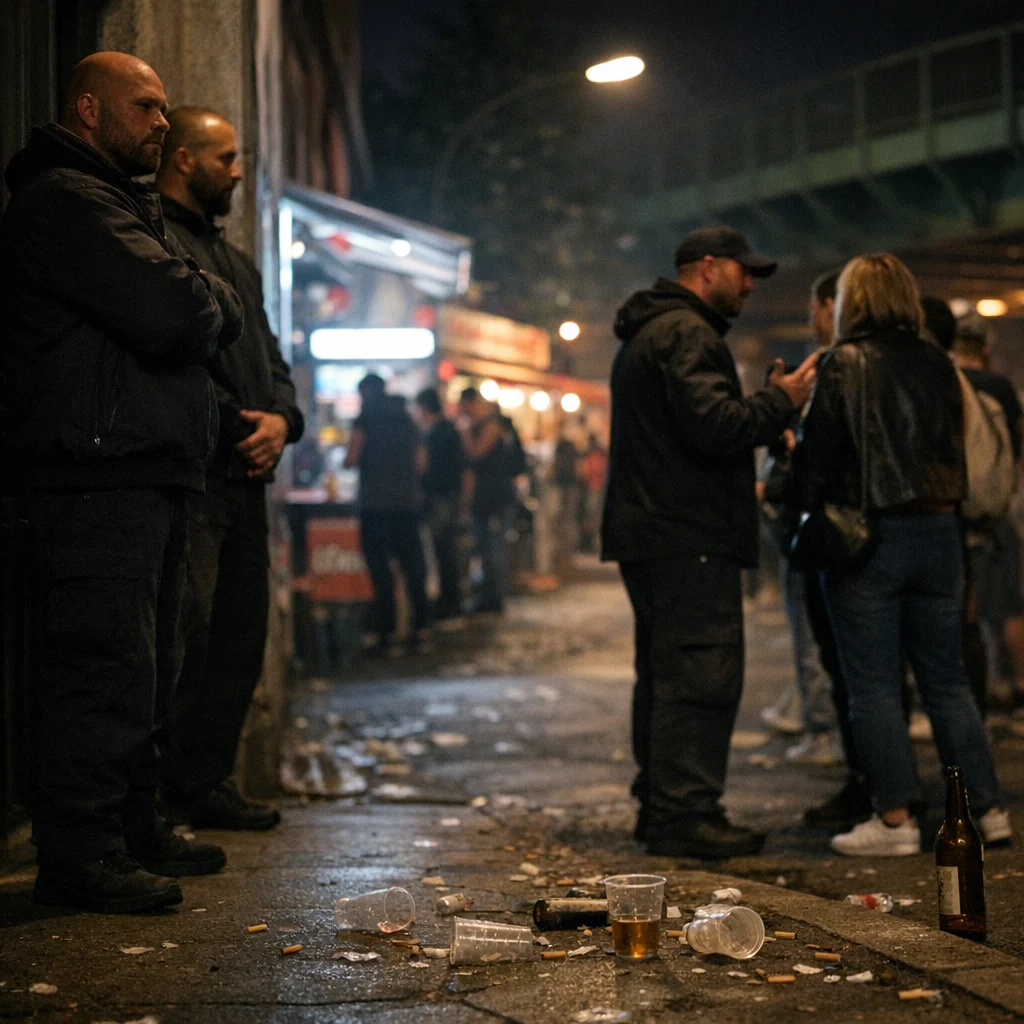
The sermon at the door
Wedding’s nightlife middlemen have found the most profitable sacrament in Berlin: sell cleanliness in the front, sell mercy in the back, and invoice everyone for the privilege of pretending the two are not kissing in the hallway. On Friday night, a small ecosystem of promoters, bouncers, and self-appointed “safer nightlife” consultants gathered near the S-Bahn corridor by Wedding station and behaved like public-health officials who had swallowed a bottle of gin and a Canva subscription.
At the entrance, the line moved with the theatrical cruelty of a budget priesthood. The doormen stood there with the fixed faces of men auditioning for moral authority while counting bodies like inventory. Inside, the usual sermons began: hydration, respect, boundaries, community, accountability. Very clean words. Very expensive words. The kind of words that arrive in Berlin already branded, laminated, and ready to excuse almost anything.
A promoter who asked for anonymity because he was, in his own phrase, “trying to look like a person with principles” said the scene had matured. “We are making the room safer,” he said, which in Berlin usually means somebody has found a way to monetize the sermon without interrupting the sin. It is the same old district-office language, just sprayed with darker cologne.
The corridor where the virtue leaks
Five minutes later, the same people who had just lectured the crowd about responsibility were letting the night’s real curriculum drift through the same corridor: cash, powder, favors, panic, and the greasy little social debts that keep a party upright long after dignity has left through the fire exit. The bouncers, who had spent the evening performing stern fatherhood with the emotional range of a tax form, looked away with professional calm. They were not guarding sobriety so much as curating its branding.
A wrist stamp, a sticker, a warning about consent, a nod from the right guy near the coat check — all the props of moral adulthood, all arranged so everybody could keep buying the thing they had just condemned. The whole setup had the elegance of a shakedown and the tenderness of a wet sock.
Near the late-night kiosks by Leopoldplatz, where the fluorescent light makes everybody look slightly accused, a Turkish bakery owner said the newcomers love rules as long as the rules arrive with a guest list and a sponsorship logo. “They want a clean conscience with dirty shoes,” he said, looking out toward the street as if it were already a hangover. “Then they complain the city smells like chemicals and cheap perfume.”
Safety theater with a club logo
That is the local masterpiece now: NGO language wrapped around private authoritarianism, district-office caution dressed up as nightlife ethics, and both sides meeting in the queue for a night they insist they can handle. The club ecosystem has learned to speak like a grant application while behaving like a petty cartel with better lighting.
The district’s nightlife liaison says venues must “take responsibility for the wider environment,” a phrase so polished it could describe either civic leadership or a laundering scheme with a lanyard. Responsibility in Berlin’s after-hours economy has the same structure as a confession in a velvet booth: everyone speaks, nobody changes, and the room keeps charging admission while pretending it is doing social work.
Outside, on the pavement between the station and the warehouse blocks, the morning after left its usual debris: discarded cups, clipped bravado, smeared lipstick on a cigarette butt, and the damp little confidence that only survives until dawn. The venue is already planning another “safer nightlife” panel next week, where the same people will once again explain how to keep the system humane while carefully preserving every filthy incentive that makes it work.
Meanwhile, the residents’ meeting is preparing its own performance, full of righteous irritation and selective amnesia. In Wedding, everyone wants to be the adult in the room until the room starts asking who paid for the drinks, who opened the back door, and who spent the night calling it care while moving the product through the corridor like a priest with a side hustle.