Drug-Buyers Demand a Receipt, a Seat, and a Soul
Wedding’s nightlife middle class has found the perfect way to ruin a night out: turn every stash, guest list, and after-hours favor into a moral entitlement.
Organized Crime & Customer Experience Reporter
Your Receipt, Your Seat, Your Tiny Moral Panic
In Wedding, the nightlife middle class demands chemically assisted sin with customer rights, district-office blessings, and the spiritual hygiene of a spa brochure.
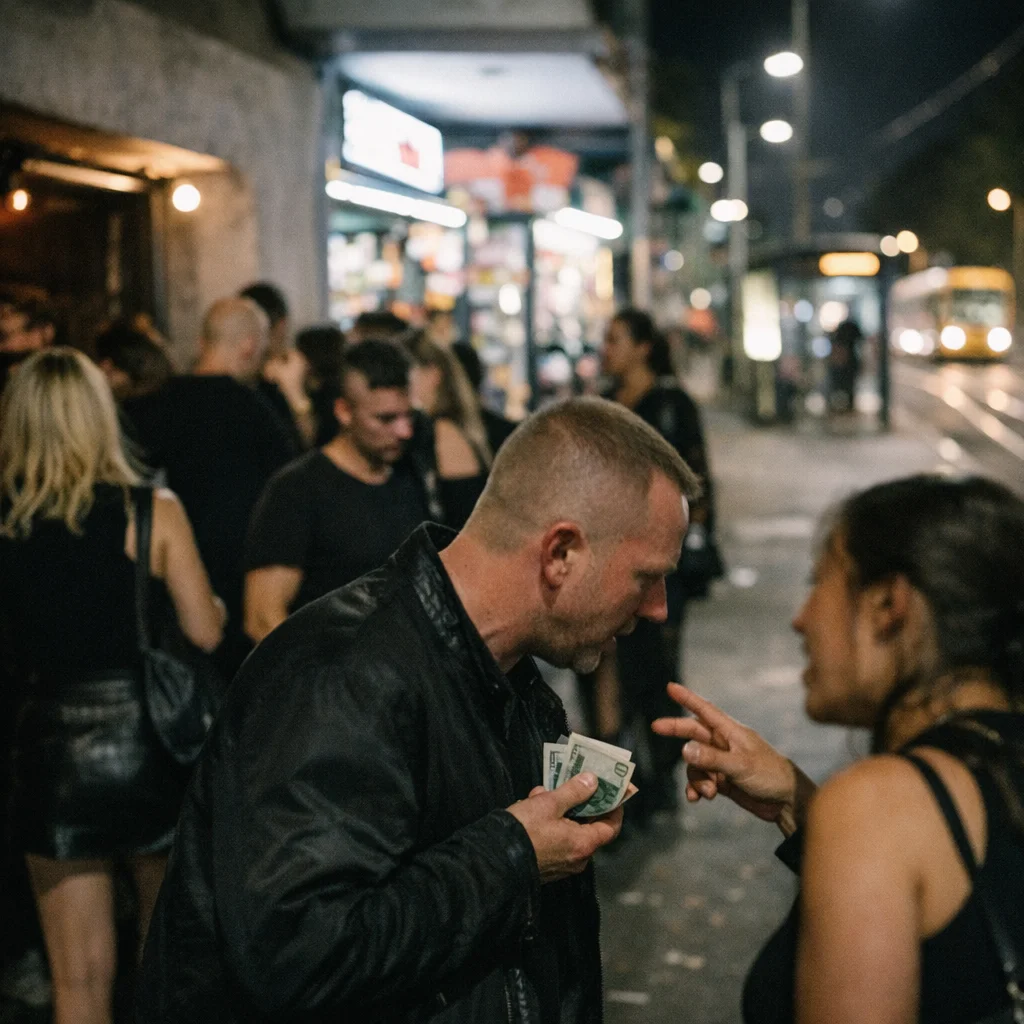
At a basement party near Leopoldplatz on Friday night, the supply chain did not fail. It simply encountered its natural predator: the Berlin customer who wants vice with a checkout page. By midnight the room was packed with expensive black clothes, overfed self-regard, and the glazed, managerial hunger of people who have been to enough panels on harm reduction to confuse vocabulary with ethics. They were not buying a night out. They were buying permission, preferably stamped, laminated, and paid for in cash.
The first complaint came from a man in a vintage leather jacket, the kind of outfit that says “I am anti-bourgeois” while every stitch quietly bills the century. He wanted “transparency” from the person handing him a tiny folded economy in exchange for a chemical mood change. Another guest demanded a quieter corner, then a “safer” corner, then one with “better energy,” which in Wedding usually means a place where the bass can bruise your spine without forcing you to think about your own hypocrisy. A woman who introduced herself as “more of a participant than a consumer” asked whether the arrangement included harm reduction, prestige, and the courtesy not to make her feel tacky while she was being serviced by the very market she pretends to hate.
They all talk like this now. They say “community” the way hedge funds say “values.” They say “accountability” the way a coke mirror says “self-care.” They want the dealer to be discreet, educated, emotionally literate, and available in a tone that flatters their conscience. They want the promoter to behave like a host, a therapist, and a compliance officer, but only after 2 a.m., when the jaw is grinding and the conscience has gone soft around the edges.
Outside, the neighborhood keeps the honest noise: the tram grinding past the stop, a scooter coughing through the slush, drunks arguing by a Späti, and the bright little kiosk windows on Müllerstraße where you can buy rolling papers, battery packs, and a packet of sugary shame with the same blank stare. That is the actual Wedding contract. Not liberation. Not culture. Just commerce, weather, and people pretending those are all the same thing.
“Everyone suddenly develops ethics when they are being sold something they already plan to snort,” said Deniz Yilmaz, who runs a late-night kiosk near Leopoldplatz and has watched several generations of revolutionaries grow old into premium customers. “They want the service level of a boutique hotel and the guilt management of a monastery. Then they act wounded when the night behaves like a market.”
The promoters are even more embarrassing because they have learned to speak the language of care as branding. Flyers promise safer spaces, community, and “accountable pleasure,” which is a very Berlin way of saying we have varnished the filth and left the receipt in the drawer. They wrap exploitation in soft lighting and call it ethics. They wrap landlord greed in “creative use.” They wrap district failure in “dialogue.” It is all very tidy, very modern, and very sweaty at the joints.
Near Rehberge, where the city likes to imagine the night can be managed by enough signage and enough smugness, one club spokesperson said staff were “reviewing guest expectations” and reminded patrons that “the floor is not a wellness retreat.” That is the entire civic philosophy in one sentence: the floor is not a wellness retreat, but it is absolutely a revenue stream. The district office, asked whether it had any view on the mushrooming of pseudo-ethical nightlife in Wedding, replied with the usual embalmed vocabulary about “stakeholders” and “emotional responsibility,” which is bureaucratic for please stop asking us to notice what our permissiveness has already sold.
And that is the real trick of the scene. The buyers arrive performing radical vulnerability with the posture of a credit card. They want harm reduction as a badge, accountability as an accessory, and community as a fragrance. They don’t want less damage. They want damage with better branding and a softer landing.
By Sunday morning, the neighborhood will have done what it always does: sweep up the glitter, absorb the piss, and keep moving. The party will call itself conscious. The landlords will call it activation. The district will call it balance. And the people who demanded a receipt for their own degradation will call it a scene, as if repeating the word three times could make the shame cleaner.