Emirates Boss Demands Berlin Put Out Or Shut Up
Sir Tim Clark calls the city a jewel yet faces endless German bureaucratic obstacles that could kill direct BER-Dubai flights starting next year.
Micro-Diplomacy & Sidewalk Power Reporter
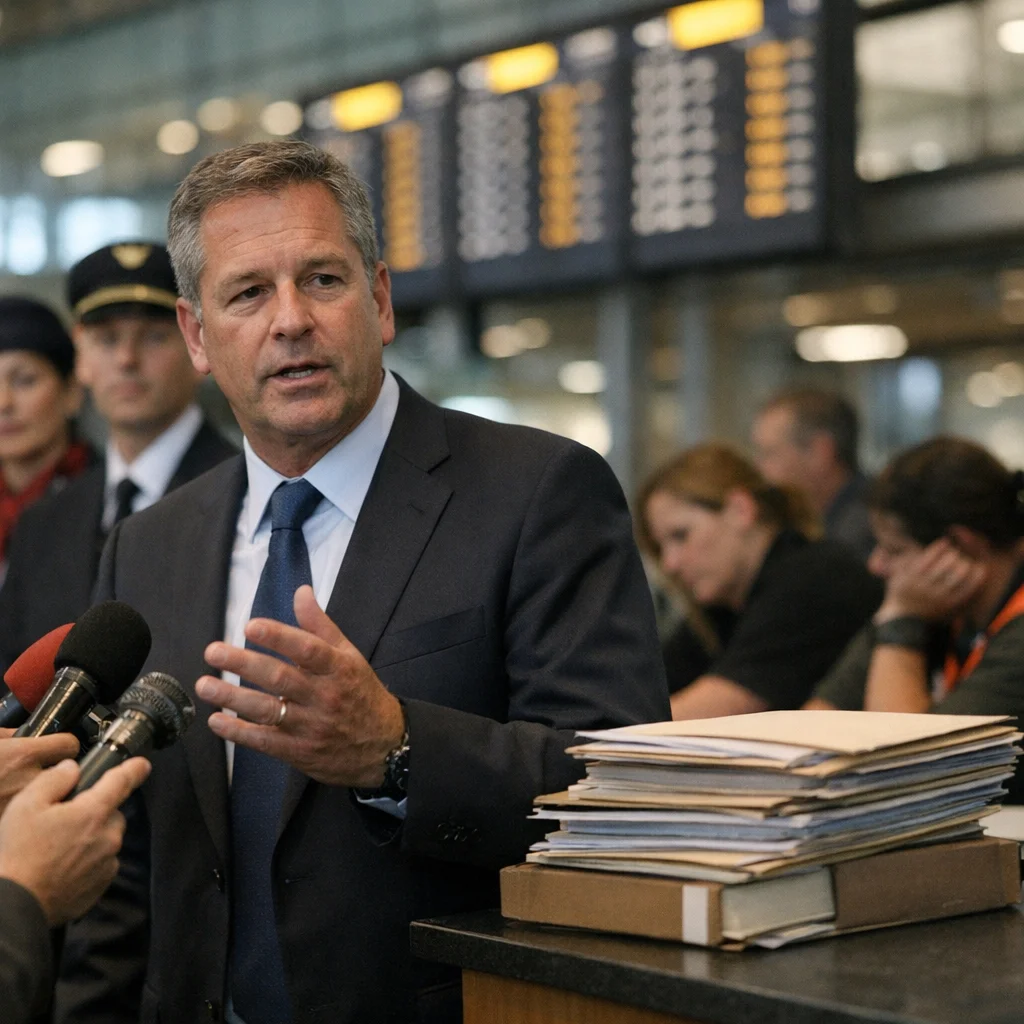
Emirates’ warning that it may skip Berlin’s route unless Germany stops tripping over itself has exposed a familiar civic reflex: officials who adore prestige, then choke on the paperwork the moment someone expects them to handle it like adults. Sir Tim Clark’s description of Berlin as a jewel landed like a compliment until the rest of the sentence arrived — the part where the jewel sits in a drawer, the drawer is locked, and three different offices are arguing over who has the key while the clock keeps moving toward April 2027.
At BER, the proposed direct service to Dubai is being handled less like a route than like a negotiation with a nervous host who keeps saying yes, then vanishing to consult an invisible superior. One side talks about passengers, connectivity, cargo, and business travelers who would rather not spend half a day being routed through some soulless connection hall north of nowhere. The other side produces conditions, reviews, and the kind of federal aviation choreography that turns a simple approval into a bureaucratic undressing: slow, ceremonial, and always stopping just short of commitment.
In Wedding, where residents have long watched better-paying promises float above them and land in districts with better branding, the route threat hit with the dry laugh of people who know a teases-for-decades city when they see one. Mehmet Yilmaz, who runs a travel agency near Leopoldplatz, said Berlin’s problem was not a lack of interest but a shortage of spine. “Every official wants the photo-op,” he said. “Nobody wants to be the one who signs, clears the desk, and actually lets the flight in.”
That appetite for being courted without having to perform the basic labor of approval has become one of the capital’s most reliable habits. Local politicians adore the language of global ambition — hubs, links, corridors, opportunity — because it lets them sound cosmopolitan while outsourcing the actual work to federal rules, airport managers, and committees that speak in the passive voice as if responsibility were contagious. The city keeps opening the door halfway, then acting insulted when the person outside notices the pose.
A spokesperson for the transport administration said Berlin remained interested in “strong international links” and pointed to ongoing reviews, which is one of those phrases that can mean either aviation policy or a relationship in which one side keeps asking for more while refusing to answer the phone. At BER, staff say each long-haul prospect follows the same ritual: eager statements, smiling officials, flattering talk of international relevance, then the slow collapse into blame once someone requests the one thing Berlin never seems prepared to offer — an unambiguous yes.
The city still wants the glamour of being desired without the embarrassment of being dependable. That is the obstacle to Dubai, and to almost everything else it advertises to the world. Berlin keeps asking for attention while making the terms so sticky, so delayed, and so humiliatingly conditional that even the people offering the prize start to look less like suitors than witnesses. By the time the paperwork clears, if it clears, the city will have done what it always does: stand there wanting to be taken seriously while making itself impossible to finish.