Emotional Real Estate: Startup Turns Wedding Flats into 'Hourly Healings' and Landlords Start Charging a 'Silence Premium'
A new wellness‑tech firm partners with landlords to convert long‑term apartments into bookable micro‑retreats; the neighborhood’s emotional ambiance is now an asset class.
Wellness-to-Wealth Investigations Reporter
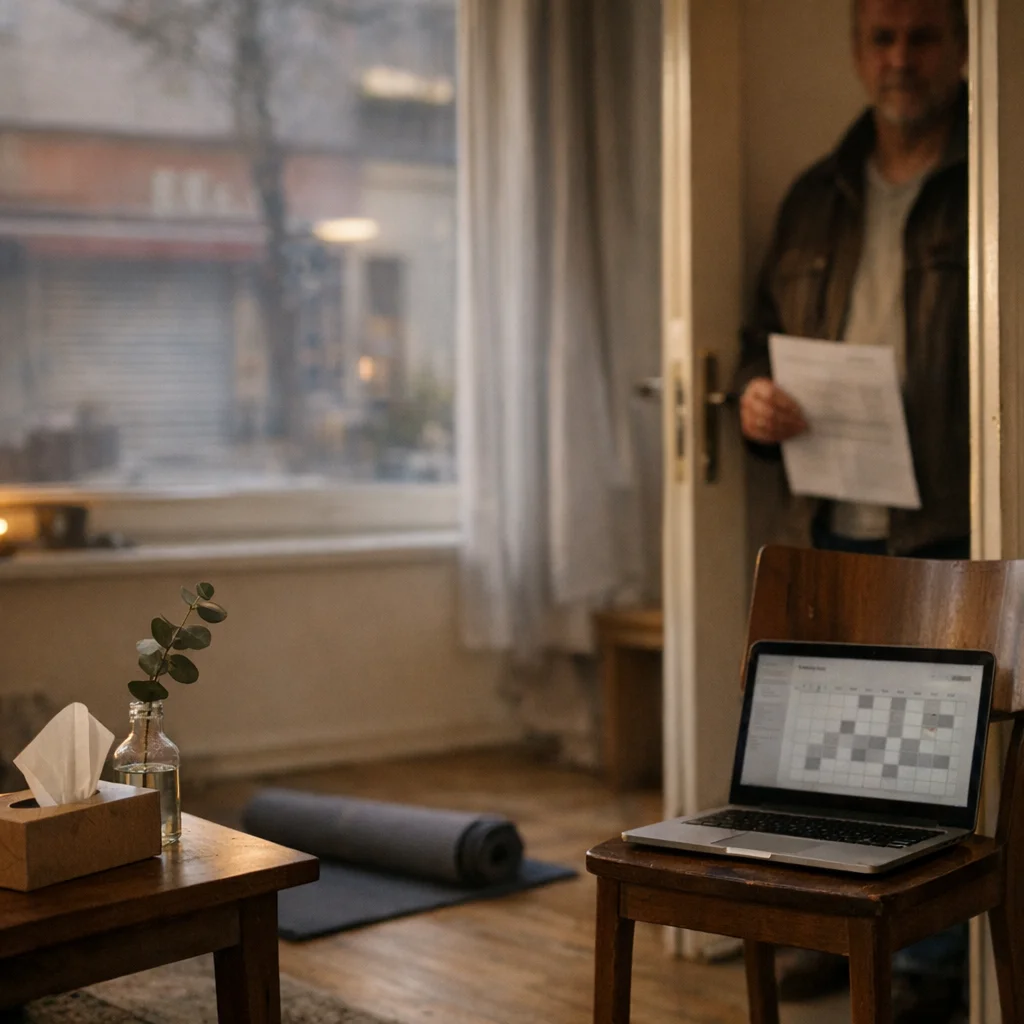
Who/what/where: In Wedding a well‑funded wellness firm called PauseHaus has quietly contracted with several property owners to turn recently vacated one‑bedrooms into hourly micro‑retreats — curated cry‑sessions, guided breathwork, and staged “authentic” morning routines sold to wealthy investors as a neighborhood upgrade. Landlords, sensing new yield, have begun adding a line item to remaining tenants' bills labeled a “silence premium.”
How it unfolded: PauseHaus landed venture capital last autumn, then offered landlords a low‑friction conversion package: minimal refit, neutral plants, mood lighting and a standardized bereavement playlist. Apartments that once housed immigrant families or students now glow with battery‑operated salt lamps between bookings. The company’s pitch to investors is blunt: sellable melancholy. “You aren’t buying nostalgia,” said PauseHaus CEO Annelie Kraft in a press email. “You’re buying a reproducible atmosphere.”
First reaction and chronology: Months after the first deal, Seestraße’s longtime corner bakery closed and its landlord converted the upper floor into three “pause suites.” “They told me it would be quiet. Now they charge me to keep it quiet,” said Fatma Yildiz, 58, who has lived above the bakery for 22 years and watches strangers cry downstairs by the hour. “My rent went up for being silenced.”
A landlord association spokesperson, Christian Meier of Berliner Wohnraumverein, shrugged: “This is market innovation. Silence is an amenity.” The Mitte district office said it was “monitoring novel uses of housing stock,” and that housing inspectors would review whether hourly rentals violate tenancy law.
Why it stings: Investors receive hourly metrics — average sob time, breathwork completion rate, five‑star ‘authenticity’ scores — and trade those metrics like micro‑bonds. PauseHaus sells block‑level reports to asset managers who now benchmark “emotional ambiance” alongside graffiti counts and café openings. It is, as one tenant group put it, commodification with better branding.
Voices on the ground: “They packaged loneliness into a subscription,” said Jonas Krüger of the local tenant union. “It’s Debord with a yoga mat.” Annelie Kraft counters that PauseHaus creates jobs and “stimulates” the local economy; Krüger retorts that stimulation is a euphemism for extraction — the original residents pay to be politely shushed out.
Consequence/next step: Tenants have scheduled a demonstration and plan a legal complaint over unauthorized short‑term commercial use of long‑term flats. The district office has promised guidance within weeks. For now, Wedding’s blocks are quieter — and someone is getting paid every time the sobbing finishes early. There is a long and arduous entry process ahead for regulators deciding whether silence can legally be billed as a utility.