"Enter Here, Exit Later": Wedding’s New Clinic Queue
A neighborhood health center has turned appointment booking into a flirtation with authority, where patients must beg, wait, and perform gratitude to be handled by the system at all.
Civic Rituals & Paperwork Features Reporter
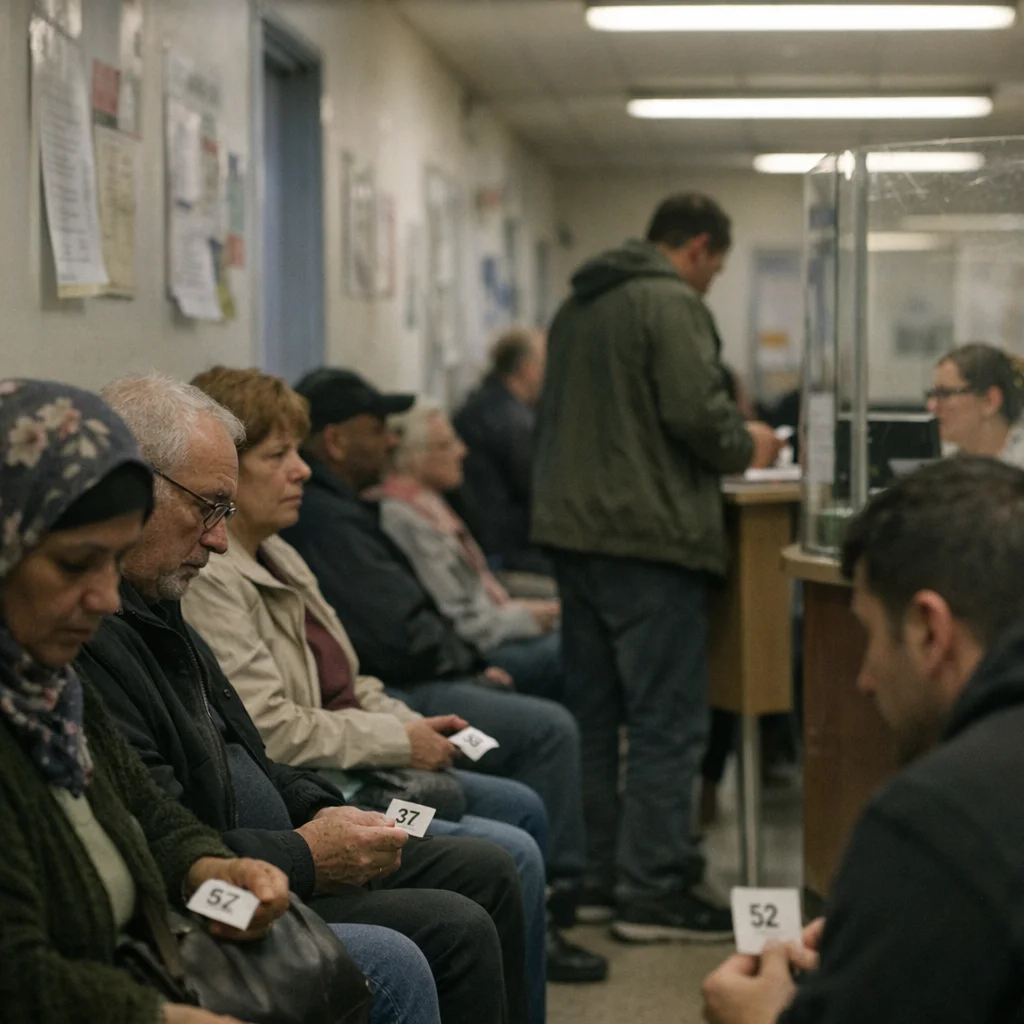
Waiting Room, Window, and Soft Power
At the neighborhood health center in Wedding, the new intake system greets patients like a bureaucrat in a low-cut shirt: submit your name, expose your details, and wait to be picked over by a machine that calls itself neutral because it wears a lanyard. The hallway fills early. The chairs fill faster. The sign above the desk promises orderly intake with the same confidence a nightclub promoter promises “strictly controlled entry.”
The clinic rolled out its revised queue last month: a digital check-in desk, a printed number, and a second line that seems designed less to move bodies than to stage desire. You arrive, you are registered, you are told to remain available, and then you are left watching the board like a hopeful fool outside a locked apartment. The system does not so much serve as tease. It leans in, takes your information, and then makes you earn the privilege of being ignored in the correct order.
By 9:30 a.m., the waiting room has the décor of a state-sponsored come-on. Fluorescent lights flatten everyone into municipal flesh. A vending machine hums near a dying plant. There are posters about vaccination, prevention, and “our commitment to patient-centered care,” which in practice means: we will center the patient in the room and nowhere else. A mother with a stroller keeps one eye on the number display and one eye on a toddler eating a crayon. An older man in a tracksuit holds a referral slip like it might develop leverage.
The clinic says the new flow is meant to reduce bottlenecks and improve fairness. Translation: replace visible chaos with elegant humiliation. Now nobody can accuse the system of not having a process; the process simply has no intention of hurrying. Patients are told to check in at the screen, then at the desk, then at the side window, then back again if their insurance card breathes wrong. Every step feels like being invited closer by someone who wants the power of refusal more than the company.
“We were told it would be smoother,” said Mehmet Yilmaz, who came with his mother after an early appointment and spent two hours learning that smoothness is what administrators call delay when they want applause for it. “Instead it’s like the clinic wants you nervous first. Like you have to be grateful just to be kept in the room.” He laughed the way people laugh when they know the joke is not a joke but a schedule.
A receptionist, speaking quietly because management apparently fears the radical contagion of plain language, said the point was to stop crowding and keep things “flowing.” She paused at the word, the way anyone pauses before a euphemism that wants to be taken seriously. In practice, she said, the new arrangement mostly trains people to ask permission for their own inconvenience. “They come in hopeful,” she said. “Then they keep getting told to wait a little longer, like that’s intimacy.”
That is the rotten brilliance of the setup: the queue operates like a bad seduction with municipal funding. It presents itself as access while perfecting withholding. It offers a number, a glance, a call-back, a promise of attention, then stretches the gap until the patient starts performing gratitude for the mere possibility of being handled. The administrators call this efficiency because they have confused control with competence, a habit shared by every institution that wants obedience without ever paying for care.
There is, in fact, a sexual geometry to the whole affair, and it is not subtle once you stop pretending public systems are innocent. The clinic takes your name, your symptoms, your documents, your patience. It makes you sit upright, legs crossed, phone in hand, ready whenever summoned. The board flashes a number and the room tightens with the humiliation of anticipation. Then, when your turn finally arrives, it is always rushed, clinical, and slightly apologetic, as if the institution wants credit for touching you at all.
Nearby, Wedding keeps doing what Wedding does: deliveries rattling past the window, people in work jackets coming off the U-Bahn, schoolkids kicking a bottle down the pavement, someone outside smoking in the cold like they have been sentenced to 10 more minutes of public life. Inside, the clinic turns that ordinary exhaustion into a ritual of submission. The neighborhood brings in its actual needs. The system responds with flirtation, delays, and a laminated smile that never once intends to satisfy.
By midafternoon, the district office had promised to “review the process,” which in municipal dialect means a meeting will be scheduled to discuss whether the waiting room can be made to look less desperate while remaining exactly as desperate as before. One can already imagine the consultancy language: optimize the touchpoints, refine the patient journey, align expectations. The words are always so clean. The outcome is always a corridor full of people being made to beg politely for the basic act of being seen.
The clinic says another adjustment is coming next week. Patients have been advised to arrive early, bring patience, and expect the number board to continue its main civic service: making everyone feel desired, deferred, and disposable in the same breath. It is the purest public-private partnership in town — the state offers the tease, then keeps the thing you came for just out of reach.