Eros at the Bürgeramt: Paperwork Gets Jealous
Wedding’s registry office now makes couples and casual flirts prove they came for the same thing, turning every appointment into a public loyalty test with worse lighting.
Administrative Grief Correspondent
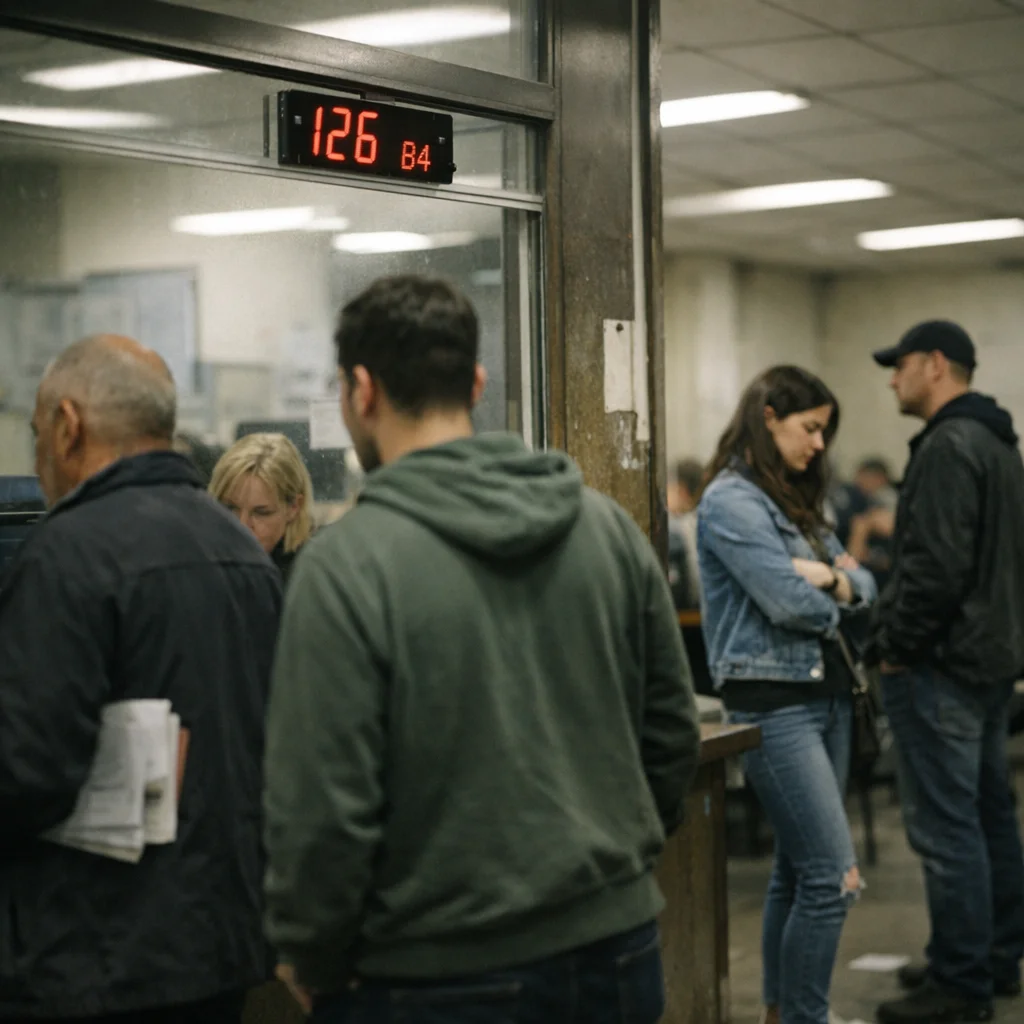
At the Bürgeramt in Wedding this week, residents trying to get a passport, a residency sticker, or a simple confirmation that the state still recognized their face were stopped before the counter and asked the same question in the same dead tone: were they here to be processed, or to be paired?
The new district-office memo, circulated to staff on Tuesday, told clerks to classify every appointment as either "administrative," "social," or "dual-purpose." In practice, "dual-purpose" meant the office would decide whether two people standing together were there to submit forms or to submit to each other. If the answer looked messy, they were split. If it looked sincere, they were split anyway. The city loves nothing more than pretending it is protecting order while arranging a small public humiliation for anyone who arrived with hope in their pocket.
By midmorning, the waiting room had the mood of a bad hookup supervised by a parking authority. Couples were made to prove they shared a task, not a fantasy. One partner could hold the papers; the other had to step back and wait until the clerk decided whether the relationship was merely inconvenient or administratively indecent. A woman from Nazarethkirchstraße said she came in for an ID renewal and was told her companion would have to take a separate number because “the appointment cannot be emotionally co-dependent.” She left with her form stamped and her dignity creased.
The office justified the rule as a way to stop people from "gaming appointments" by arriving together for separate business. That explanation would have sounded less obscene if the staff had not immediately begun acting like jealous chaperones for a loveless republic. One clerk, speaking off the record because she did not want her supervisor to hear how tired she sounded, said staff had been told to watch for applicants who used documents as pretext and attraction as cover. "People kept leaning in at the counter like the stamp was foreplay," she said. "Now we have to ask what they came for before we let them stand that close to each other."
The policy’s favorite word was clarity, which is what institutions call it when they want obedience to wear a clean shirt. Applicants were asked to initial a declaration that they were not using the appointment to pursue "unrelated attachment, contact, or gratification." The form did not define gratification. It did not need to. The whole room understood that the district office had discovered the oldest trick in civic life: make the public confess desire, then punish it for being visible.
A man in a leather jacket was sent back to the queue after the clerk decided he and his companion were "interdependent in a way the state cannot process at this window." Two students from the cafés near the S-Bahn tried to say they were "just colleagues," which is how people in Wedding announce a lie they expect the lighting to respect. The clerk separated them anyway and told them to return only when they could explain their connection without blushing, laughing, or looking at each other.
The district office insisted the procedure would reduce misunderstandings. It did. Now nobody could misunderstand what the office wanted: not accuracy, not service, but leverage. The power lay in deciding who got to stay close long enough to be stamped. Every counter became a gate, every queue a test of whether the state would acknowledge your papers before it pretended not to notice your pulse.
By late afternoon, a notice on the wall warned that mixed-purpose visits could be rescheduled for "a more suitable emotional interval." No one at the back of the line found that funny. They just held their folders tighter, kept their eyes on the ticket screen, and waited to be summoned back into the same little regime of permission, where even desire had to take a number and leave alone.