EU Sanctions Office Admits It Only Counts Its Own Thrusts
Brussels converts temporary Russia measures into a permanent bureau while quietly tracking only the volume of packages issued rather than their actual impact.
Gentrification & Small-Time Power Correspondent
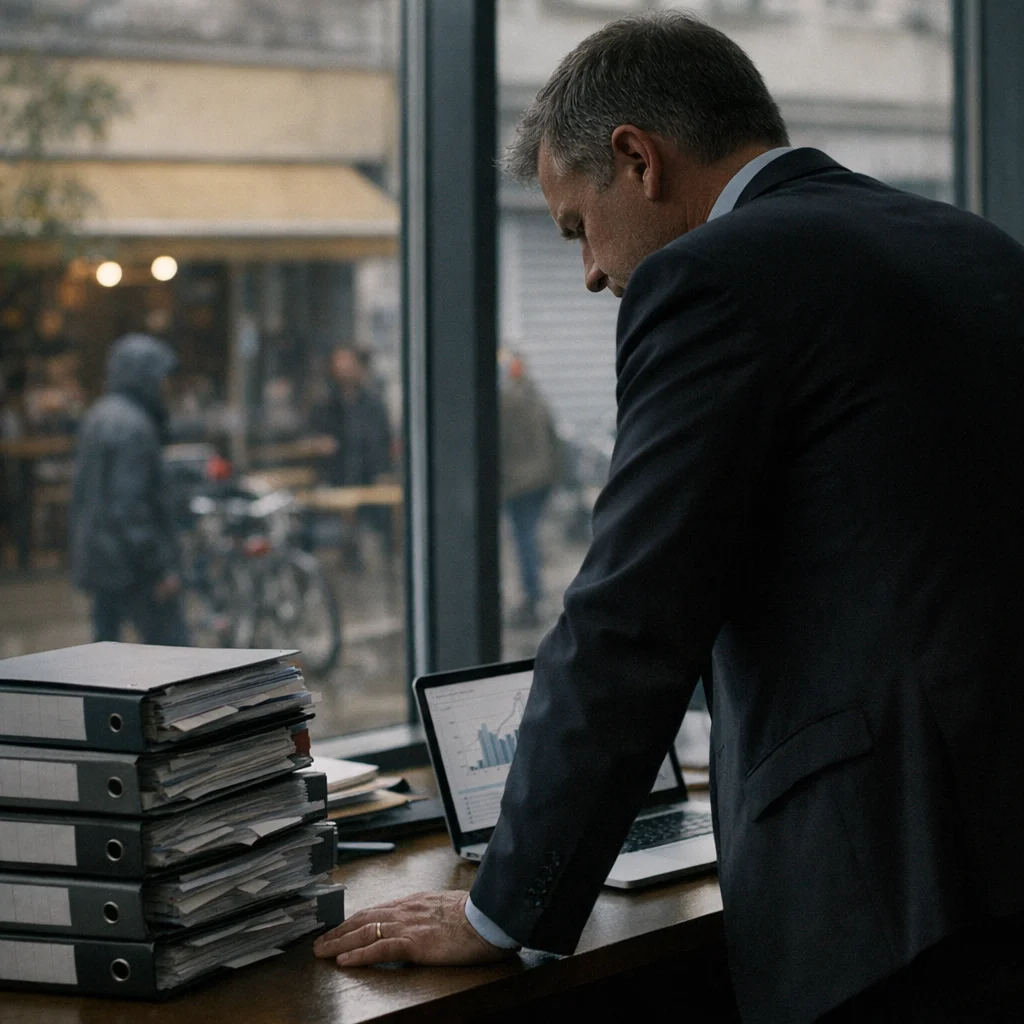
The European Commission has turned its Russia sanctions work into a permanent bureau, and in Wedding the news landed with the same exhausted look locals reserve for a landlord promising “next week” in four languages: polite enough to avoid a scene, insulted enough to remember the face.
Brussels says the new standing office will coordinate the 21st package and the next one after that, while a separate unit will chase crypto circumvention. On paper, this reads like resolve. In reality it is the administrative version of a man bragging about his stamina while never once proving he can finish the job. The institution keeps counting thrusts, not consequences: package after package, round after round, with the same swollen self-regard and the same empty promise that this time the pressure will mean something.
At a corner café near Seestraße, where the oat milk costs more than a school lunch and the laptop crowd says “accountability” the way a dealer says “trust me,” Malik Yilmaz watched the announcement on his phone and laughed so hard he nearly spilled his espresso. “They’ve made sanctions into a permanent performance review,” he said. “New office, new unit, new vocabulary, same limp result. Brussels keeps patting itself on the back for another go while the people they’re supposedly isolating are already halfway through the next escape hatch.”
The neighborhood understood the rhythm immediately. Wedding is full of institutions that mistake activity for authority: the district office that mails three forms to explain why one form is missing; the repair hotline that answers like a hostage negotiator; the urban planning language that calls neglect “transition.” Everyone here knows the look of power that needs a clipboard to feel taller. It is the same face, just better lit.
So when the Commission announced a permanent sanctions bureau, it sounded less like escalation than official reassurance to itself. Brussels loves this part: the folders, the task forces, the interservice coordination, the little ceremonies of seriousness that let officials feel hard while doing the bureaucratic equivalent of adjusting their tie in the mirror. The real metric, of course, is not how many “deliverables” are issued but whether the target is actually boxed in. By that standard, the record remains embarrassing.
A Commission official, speaking on condition of anonymity because “resilience” is apparently still a speaking habit, said the new structure would help “professionalize enforcement.” In Brussels dialect, that means installing a nicer headboard on a failing arrangement and calling it strategy.
The crypto unit adds a fresh layer of moral vanity. It lets the same people who spent years discovering sanctions with the awe of children finding a loose tooth now pretend they are hunting an invisible network with sharper tools and cleaner dashboards. The truth is simpler and uglier: they are chasing circumvention after they have already made a public ritual of being circumvented. The performance is the point. The package count is the point. The feeling of being in control is the point.
And that is why the permanent office matters. It gives the Commission a place to sit upright and pretend repetition is pressure, that another round is a result, that another thrust means the thing is finally working. In Wedding, where people can smell fake authority through double glazing, that kind of confidence gets laughed out of the room. In Brussels, it gets a budget line.