Europe Brings Clipboards; Trump Brings the Smoke Machine
At NATO, the official drama is all about unity and deterrence, but the real business happens in the side rooms where ministers compare ammo stocks, deadlines, and who still owes what to whom.
EU Melodrama & Sidewalk Diplomacy Correspondent
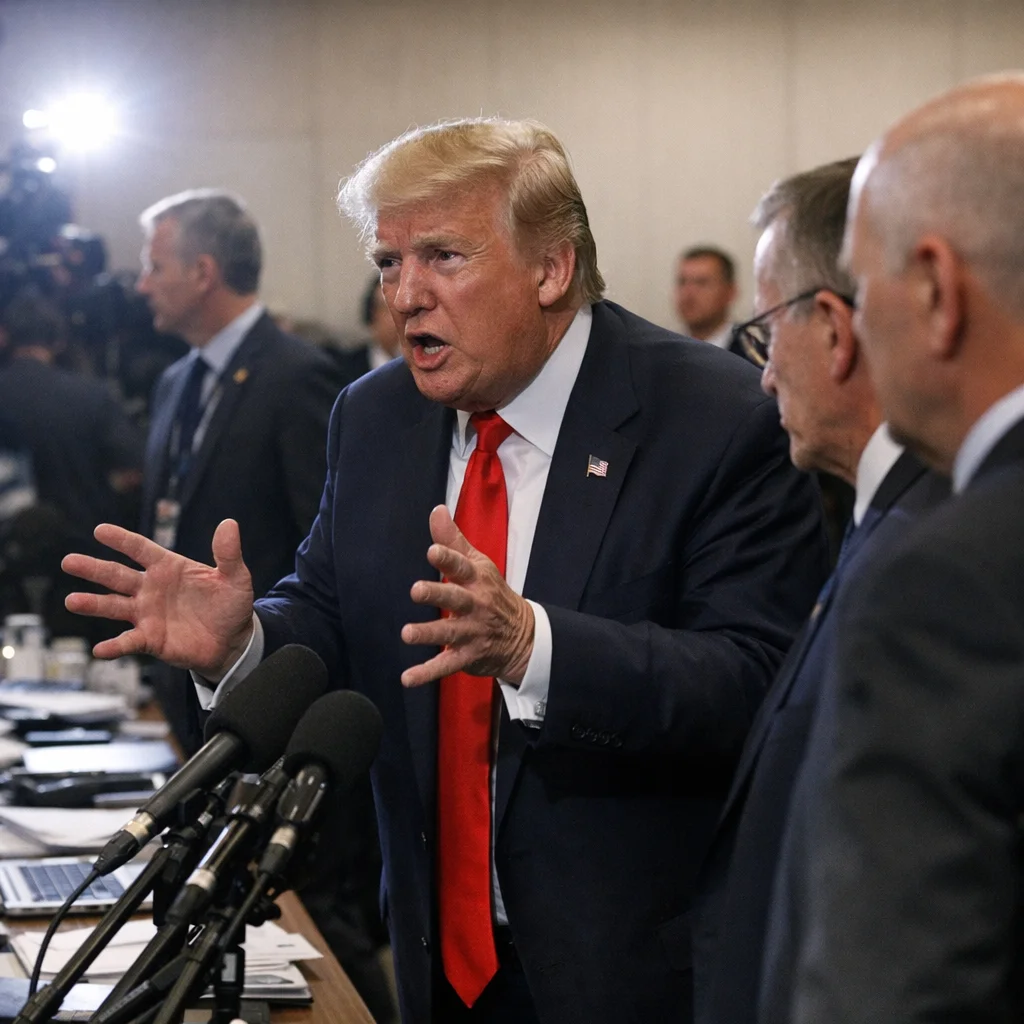
Clipboards, Cash, and the NATO Bed
NATO’s summit in The Hague opened with the usual stiff little parade of strategic masculinity: the Americans arrived loud, lacquered, and hot for the cameras; the Europeans arrived with binders, charts, and the dead-eyed conviction that paperwork counts as courage if you staple it hard enough. Donald Trump got the front-row glare and the oxygen he feeds on. The actual business happened where the microphones couldn’t reach: in side rooms where defense ministers compared ammunition stocks, industrial capacity, and the embarrassing gap between what they had promised last year and what they could still pretend was en route.
The public stage was a pageant for people who still believe deterrence is a mood. The private stage was uglier and more useful: shell inventories, delivery schedules, production bottlenecks, and the sort of national self-delusion that only survives because everyone is too civilized to spit in the coffee. Germany talked about acceleration with the weary tone of a middle manager discovering the office printer is also the firewall. France performed sovereignty like a velvet glove over an empty hand, all doctrine and posture, while the accountants kept circling the fact that rhetoric doesn’t fill a depot. The smaller allies did what smaller allies always do in these rooms: nod, flatter, and hope the bigger wallets don’t notice the smell.
Trump, to his credit, understands performance as a predatory art form. He doesn’t negotiate so much as paw the room, tugging every loose seam until someone admits who has been sleeping on the bill. He is the alliance’s rude mirror: a man who mistakes volume for leverage, but at least has the decency to make the humiliation audible. Europe likes to hiss at him in public because it is easier than confessing the deeper obscenity, which is that many capitals have spent years underfunding the thing they call collective security and then acting offended when the mattress starts to sag.
A senior NATO official, speaking anonymously because he had already promised three capitals he would not repeat their numbers, said the summit was “less about surprise than about making sure the same countries stop doing the patriotic thing on camera and the stingy thing in private.” That is the alliance’s true sacrament: solemn faces, open microphones, and a back room full of adults trying to get on top of the problem without admitting how long they have been underneath it. The ritual works because everyone is complicit. The freeloaders need the posture; the pretenders to leadership need the freeloaders; and the whole thing is lubricated by a shared fear that if anyone names the lie too cleanly, the room will have to smell its own sweat.
The ministers’ sessions were not glamorous, which in NATO language means they were the only honest part. One official called the mood “serious in the way a surgeon is serious,” though the comparison got dirtier the longer you looked at the procurement tables: who ordered how many rounds, who delayed the contract, who quietly cut the stockpile to keep the budget looking slim enough for a photo-op. Another described the summit’s public messaging as “a necessary smoke screen,” which was the first sentence in the building that didn’t try to seduce you. Everyone knows the theater is there to hide the fact that the alliance is still being held together by a combination of American impatience, European guilt, and the unsexy labor of people who spend their lives counting what might be needed when the vanity finally runs out.
The humiliation is not that Trump exposes weakness; it’s that he exposes a weakness everyone already knows and still refuses to name in daylight. Without him, too many leaders would happily talk about deterrence as if it were a perfume sample—wave it around, inhale, move on—while hoping the hard goods appear by immaculate procurement. With him in the room, they at least have to pretend the invoice exists. That is why the summit felt less like a crisis than an extremely expensive family dinner where half the guests have eaten before arriving and the other half are still pretending not to notice.
By the end of the day, officials said the next round of talks would focus on deliveries, procurement, and “less poetry, more hardware.” Which is to say: fewer flag-draped speeches, more factories running past midnight, more contracts that arrive before the next headline, more honest accounting of who is carrying the load and who is merely leaning against it with a practiced smile. Europe will keep bringing the clipboards. Trump will keep bringing the smoke. And somewhere in the back room, the people who actually have to load the guns will keep doing the dirty, unphotogenic work of keeping the alliance from collapsing into its own expensive self-regard.