Europe’s Far Right Demands the Identity Check, Baby
Three writers trace how anti-immigrant crusaders sell racial panic as self-love, then flirt with Trump-style strongman theater when the crowd wants a bigger daddy.
Global Affairs & Kiez Mischief Correspondent
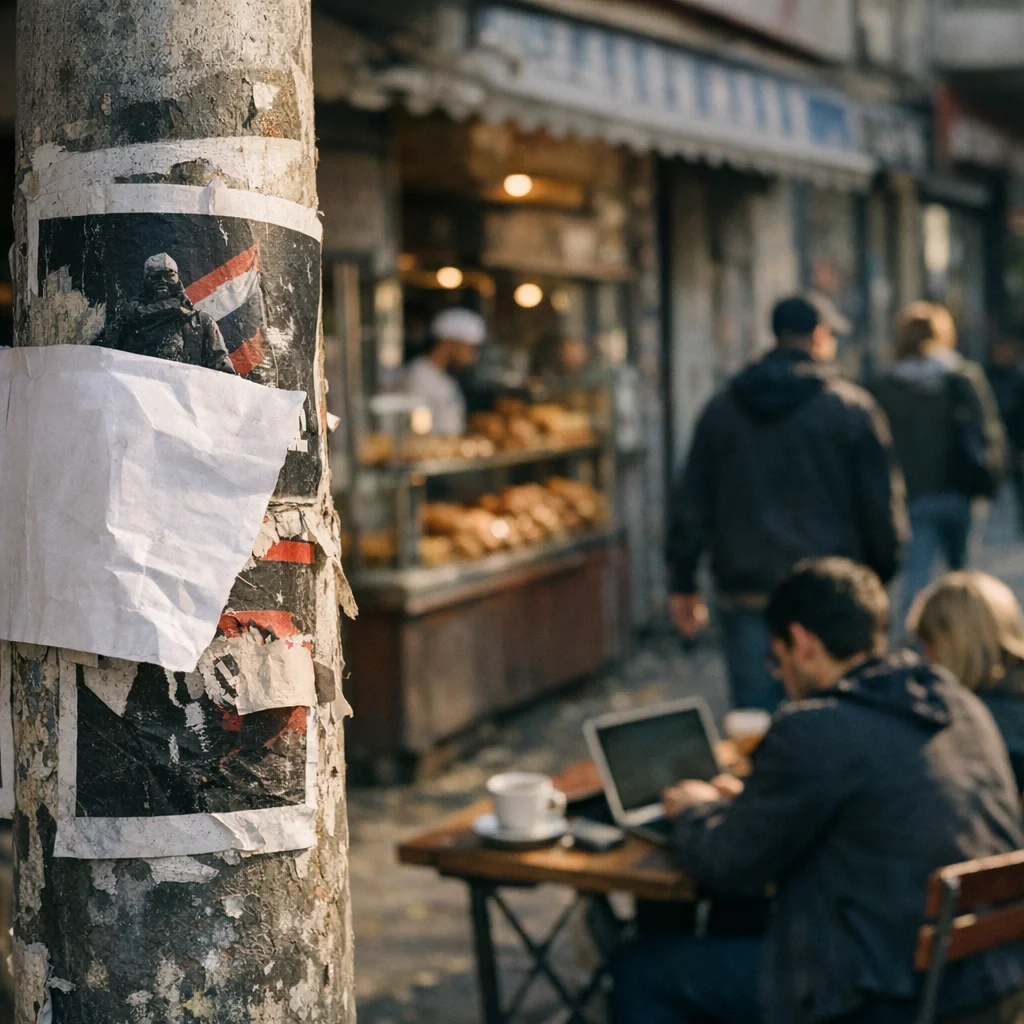
In Wedding, Europe’s far-right identity panic arrived this week dressed like a self-help seminar for men who think domination is a civic virtue. By Monday morning, posters for a “heritage first” meetup were already blushing up the walls near Leopoldplatz, promising a kind of public “identity check” that was less about citizenship than about who gets to unzip the room and who gets pinned to the mattress of the nation.
The event was staged as a respectable love story for the continent’s bruised ego: look inward, the organizers cooed, and you will find a truer Europe waiting to be chosen. In practice it looked like a room full of small-time status climbers auditioning to be the stern boyfriend of history. A man in a pressed coat with collar pins too expensive for his résumé handed out leaflets about “cultural confidence” while standing outside a café full of laptop pilgrims and oat-milk regulars who arrive in Wedding to celebrate difference and then write angry posts about noise, smell, and how the neighborhood refuses to behave like a tasteful mood board.
The flyer language was all restraint and hygiene: “boundaries,” “heritage,” “self-respect,” words scrubbed so hard they came out shiny and lonely. But the body language was more honest. The men organizing the meetup kept doing that civic-patriarch pose—chests out, jaws locked, palms spread as if they were granting permission to the century. One of them, a former district-council candidate who had once lost to a more charismatic pothole, kept referring to the campaign as a “reassertion,” which in Wedding sounded like a man trying to convince a bar that he was still allowed to stay after last call.
“Identity politics is what weak men call desire when they are too embarrassed to admit they want control,” said Derya Yilmaz, who runs a corner shop near Osloer Straße and asked to use only her first and last name because she is done being drafted into other people’s panic as a decorative warning label. “They come in here for cigarettes, then start explaining Europe to me like they’re about to be rewarded for it.”
The pitch sharpened as the organizers learned what sells in Berlin: not policy, but posture; not competence, but the fantasy of being taken firmly in hand by a state that still cannot file its own paperwork. A local campaign strategist, speaking on condition of anonymity because his party likes to flirt with Trump-style strongman theater while pretending it merely admires efficiency, admitted the movement was less a program than a seduction routine. The crowd wanted a bigger daddy, he said, and the candidates were happy to practice being him—deep voice, square shoulders, and the promise that the nation would stop apologizing for wanting what it wants.
That fit neatly with Wedding’s other economy, where landlords, developers, and political hobbyists all speak in the same soft, managerial tone while tightening the belt one notch lower. At a nearby bar, two Mitte consultants argued over whether the new nationalism was “problematic” or “understandable,” which in Berlin usually means they were deciding whether to condemn it before or after brunch. One wore a tote bag denouncing fascism from a brand priced like a weekend in Lisbon. The other said Europe needed “clear boundaries,” then spent ten minutes trying to flirt with a waitress who had already heard the same line from three men in blazers and one district clerk with expensive sadness.
By evening, the district office said it was monitoring the gathering for hate speech, though in Berlin “monitoring” still mostly means sending a delicate email and waiting for someone else to become embarrassed first. The phrase “identity check” kept doing the work the flyers wouldn’t admit: who counts, who gets inspected, who is allowed to enter, and who is only invited so the room can feel selective. Even the bureaucrats sounded like they were describing a bad hookup with public order—lots of consent theater, no accountability, everybody pretending the awkwardness was someone else’s fault.
A leaflet was later taped over with a rent notice, which felt like the neighborhood’s final vote. The far right promises protection, but its real service is the same old arrangement in a cleaner suit: a bigger hand on the throat, a smaller table for everyone else, and a country that calls itself desired while making sure somebody below it is always being checked at the door.