Expired Candy Bar Index Allegedly Props Up Wedding’s Late-Night Counter Economy
Kiosk owners from Seestraße to Prinzenallee are said to be swapping past-date chocolate, chips, and gummy worms as “units” of value—settling tabs, debts, and grudges at 2 a.m.
Cash Economy & Respectability Reporter
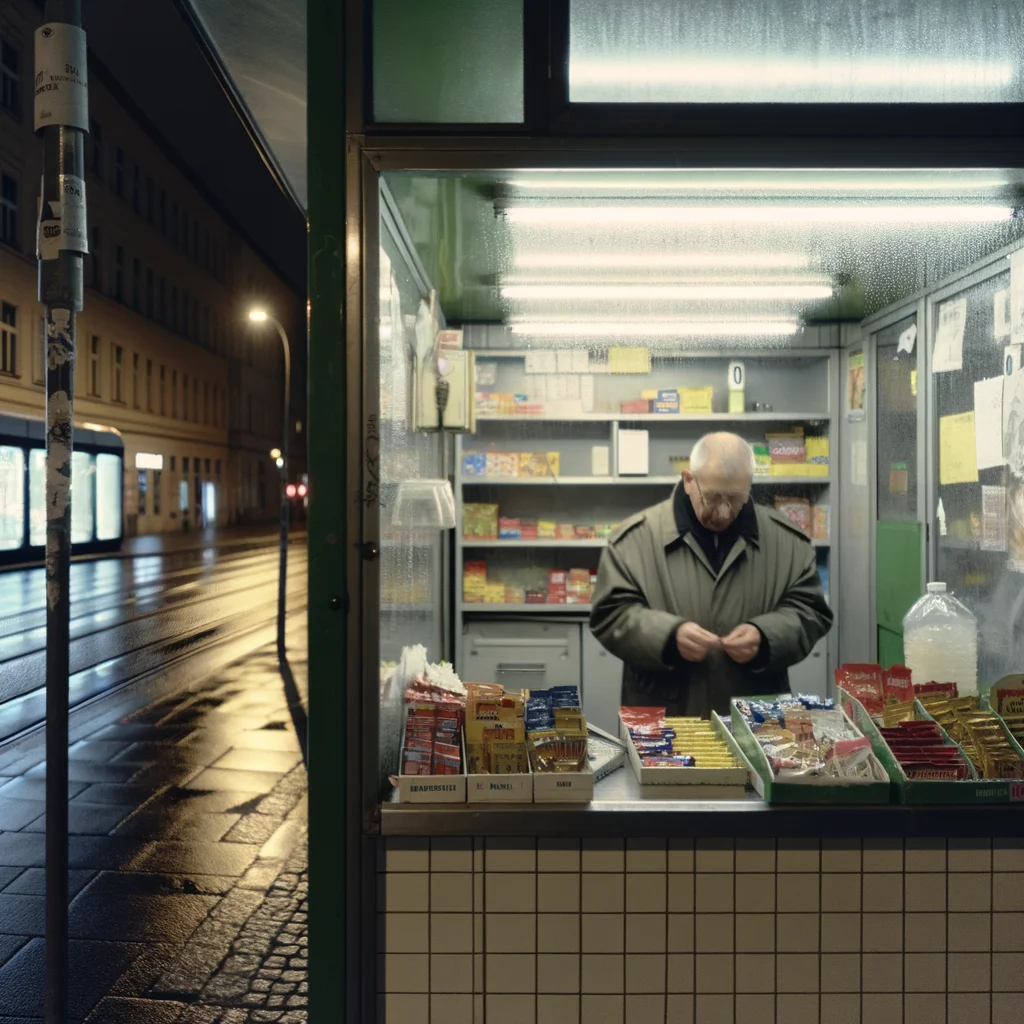
On Tuesday at 8:47 a.m., a damp paper envelope slid under the metal shutter of a kiosk on Antwerpener Straße 37 in Wedding. Inside were three crushed "ChocoMax" bars, each bearing a best-by date of 10/2023, and a note written in neat ballpoint: “3 bars = 1 gas bottle. Tonight. No questions.”
For Deniz Kaya, 41, the owner of Kiosk 37, it wasn’t blackmail—just bookkeeping.
“People think the expiration date means something,” Kaya said behind a counter stacked with phone chargers and hangover cures. “It’s like modern art. The date is conceptual.”
The snack standard, quietly circulating
Over the past two months, multiple kiosk operators across Wedding and adjacent Gesundbrunnen have described an underground barter network in which expired packaged snacks function as a parallel currency. It is not for customers, they insist, but for wholesalers of favors: midnight cigarette loans, last-minute ice deliveries, a replacement door lock, “and sometimes just peace,” as one operator put it.
Two sources said the network’s de facto marketplace convenes after midnight near the loading bays behind Osloer Straße 104, when trucks arrive and paperwork stops asking questions.
According to screenshots shown to The Wedding Times, a Telegram group titled “BestByBörse (No Snitches)” lists rates with an anxious seriousness usually reserved for rent.
- 1 expired chocolate bar (intact) = €1.50 in “night value”
- 1 opened chip bag (still crispy) = “depends on smell”
- 1 gummy pack (sweated but sealed) = “two if the label still shines”
At 12:36 a.m. last Thursday, a man identifying himself only as “Murat—Not the Murat from Brunnenstraße” confirmed in a voice message that a family-owned kiosk near Prinzenallee had “settled a two-week invoice” using expired paprika chips and a bundle of off-brand energy drinks.
“We did a deep dive into the inventory,” he said. “Found older stock. Very mature. People pay more for mature things.”
Why now?
Several owners cite tightened cashflow, higher wholesale prices, and the awkward fact that every kiosk has a hidden drawer of products nobody wants to admit they sold.
“There’s inflation, and also shame,” said Ayşe Demir, 52, who runs a late-night shop near Seestraße U-Bahn. “The city tells you everything has a price. But in Wedding, everything has a history. Sometimes the history is hard to swallow.”
Demir claimed one operator attempted to introduce a “premium tier” involving imported cookies three months past date, which collapsed when someone performed what a participant described as a “hostile taste audit.”
Official responses: neutral, yet sweaty
Reached by phone Tuesday afternoon, a spokesperson for Berlin’s district office in Mitte (which covers parts of Wedding) said it was “not aware of any formal parallel monetary system” and requested that questions be submitted “in writing, with a legible subject line.”
Police Press Office North provided a short email statement at 5:11 p.m.: “We are aware of indications regarding informal exchange activities involving food items. Please refrain from speculation.”
One officer, speaking off the record, sounded less confident: “How do you seize evidence that melts?”
Consequences at street level
A customer at a kiosk on Reinickendorfer Straße 58 said she accidentally attempted to pay for rolling papers with two expired wafers.
“The guy looked at me like I quoted Wittgenstein wrong,” said Lena Hoffmann, 29. “He said, ‘That’s not legal tender. That’s a coupon.’ I’ve never felt poorer.”
For economists, the most alarming aspect is not the snack-money itself, but the discipline with which it’s managed.
“One could call it Marx in miniature, if Marx had to keep a freezer running,” joked Dr. Fabian Kroll, a freelance urban studies lecturer who said he’d been shown “a handwritten ledger that read like a Dostoevsky subplot: guilt, chips, repayment, silence.”
Back at Antwerpener Straße 37, Kaya inspected the three crushed chocolate bars and placed them in a clear plastic box marked “HARD ASSETS.”
“At night, everyone wants something,” he said. “Cigarettes, Wi-Fi, mercy. You push the right bar across the counter and—how do I say—things open up.