Extremism, But Make It Organic: Berlin’s Latest Political Panic Arrives in a Reusable Tote
After a CSU politician accused the Greens of left-wing extremism on TV, Berlin immediately tried to monetize the accusation into a workshop, a merch drop, and a neighborhood WhatsApp civil war.
Späti Politics & Civic Hangover Reporter
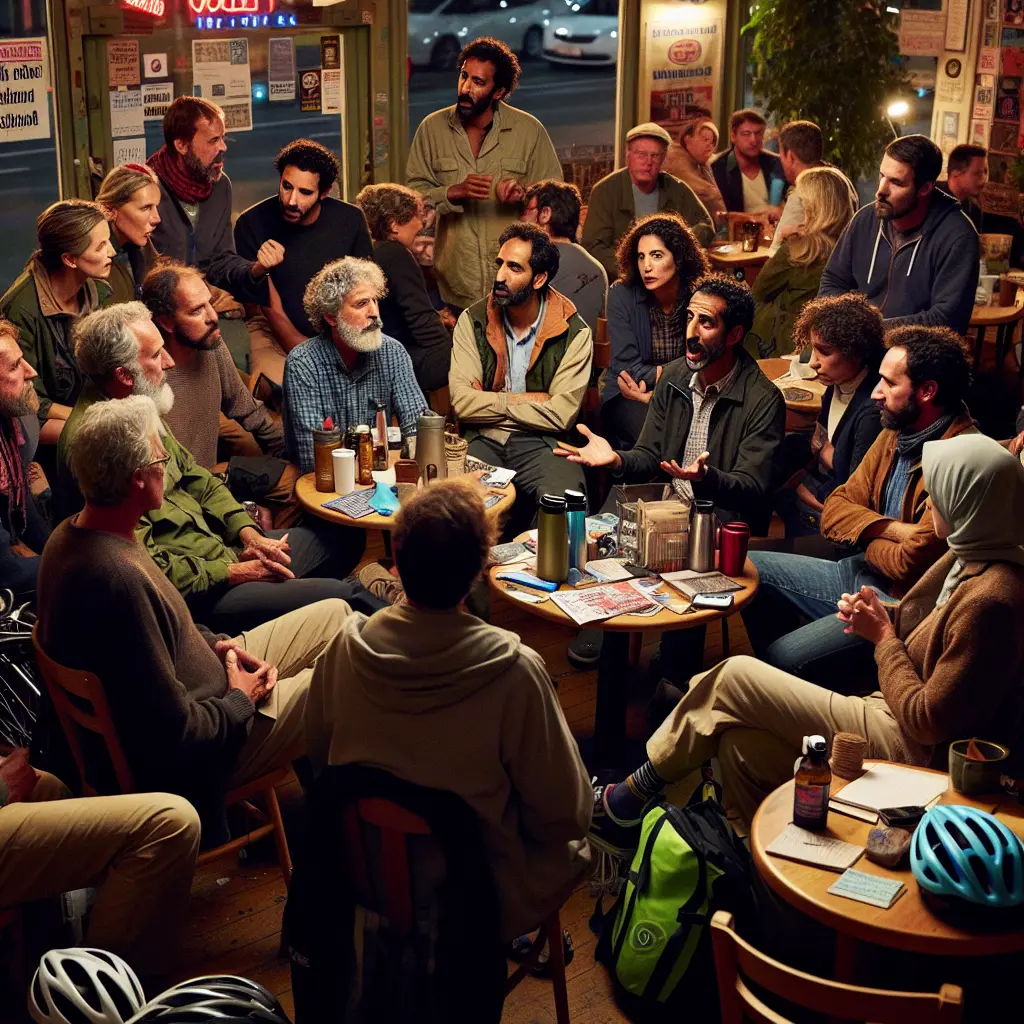
Berlin received the latest national mood swing—“The Greens are basically left-wing extremists,” as delivered by a CSU politician on Markus Lanz—with the usual local grace: a long sigh, a short lecture, and a QR code.
In other parts of the country, an accusation like that is a political grenade. In Berlin, it’s more like a new seasonal flavor: Extremism Latte, oat milk, ethically sourced outrage.
The accusation lands in Berlin, immediately gets a program
Within hours, the city’s informal government (a rotating coalition of group chats, public radio listeners, and people who use the word “discourse” like a weapon) convened an emergency meeting at a café that used to be a pharmacy and now sells “deconstructed filter coffee.”
The agenda was simple:
- Determine whether “left-wing extremism” includes bike lanes, heat pumps, and saying ‘car culture’ without vomiting.
- Decide if the CSU politician’s TV appearance was “courageous” or “a simulacrum,” which is Berlin’s way of saying Baudrillard but with less reading and more tote bags.
- Commission a poster series titled “Radical Moderation: A Love Story” funded by a grant that no one can explain, which means it’s definitely real.
One attendee described the Lanz segment as “a Kafkaesque escalation,” which is true in the sense that Kafka also wrote about men being accused of things by faceless authorities—except in Berlin, the faceless authority is your neighbor who runs a pop-up zine library and “just has concerns.”
Green voters respond with the city’s most dangerous weapon: language
Green-leaning Berliners reacted the only way they know: by defining. A lot. Aggressively.
A spokesperson from a local climate group explained that the accusation was “disciplinary power operating through televised spectacle,” then stared at me like I was supposed to applaud because Foucault once existed.
Meanwhile, a CSU-sympathetic expat (yes, they exist; Berlin contains multitudes and several of them are annoying) insisted the Greens are “authoritarian,” because someone asked him to separate his trash correctly and he experienced it as a soft coup.
Berlin’s favorite hobby isn’t activism—it’s semantic trench warfare, a kind of Derridean knife fight where everyone insists meaning is unstable, right up until it’s time to call the other side a threat to democracy.
Wedding tries to host a “balanced” debate, and the room develops mold
In Wedding, a neighborhood forum attempted to discuss the allegation “in a nuanced way.” This was a mistake.
The moderator—an underpaid mediator with the thousand-yard stare of someone who’s read Adorno and still pays rent—opened with: “Let’s keep this respectful.”
Thirty seconds later, a man in a Patagonia vest accused a woman with a cargo bike of “eco-extremism.” She accused him of “fossil fragility.” Someone else accused the chairs of being colonial.
The debate met stiff resistance from reality. Several participants tried to penetrate the issue more deeply, but the conversation remained hard to swallow—like most Berlin truths and almost all Berlin espresso.
Berlin’s new political spectrum: from ‘Center’ to ‘Needs Therapy’
The real genius of the Lanz moment is that it gave Berlin a new way to cosplay seriousness.
Here, “extremism” now means whatever makes you late:
- If you’re stuck behind road construction: extremist.
- If your landlord installed a “smart” thermostat: extremist.
- If someone says “we should just build housing” without a 90-minute feelings check-in: extremist.
At this point, Berlin politics resembles Debord’s Society of the Spectacle, except instead of mass media producing passive consumers, Berlin produces hyperactive participants who can’t stop participating even when they’re wrong.
And the CSU politician’s accusation? In Berlin it doesn’t function as information. It’s a prop. A vibe. A content object. Something you can hold up at brunch and say, “This is wild,” while your friends nod solemnly and take a photo of their eggs.
Conclusion: everyone’s guilty, nobody’s employed
The CSU gets to paint the Greens as radicals. The Greens get to act persecuted by provincial forces. Berlin gets to feel like the main character of Germany again, which is its favorite drug after caffeine and self-importance.
And the rest of us? We get to watch the city convert yet another national political argument into a local boutique experience—complete with a sliding-scale ticket, an optional after-talk, and a quiet little donation link that definitely isn’t extremism, it’s just “community support.”