Fall Craves Company, but the Woods Want Monogamy
As scarves and vests come out, a new hiking push sells autumn as self-care while quietly sorting the faithful from the flaky. Even the trees seem to prefer one committed customer at a time.
By Omar Felton
Kiez Features Reporter
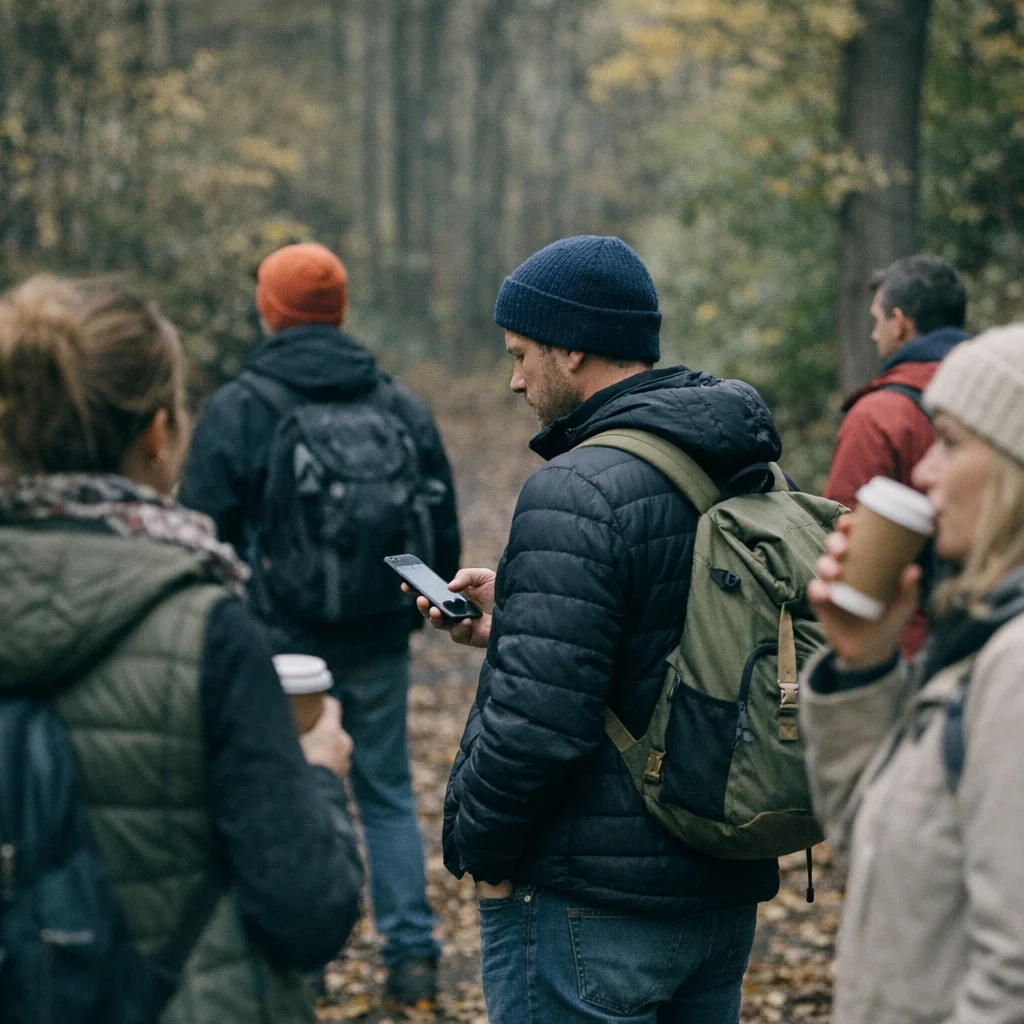
Berlin’s woods are getting clingy
Autumn’s latest civic exercise arrived in Berlin this week with all the delicacy of a dating app prompt: come into the woods, make eye contact with the path, and understand that nature is not interested in your casual arrangement. In Wedding, where half the neighborhood already treats commitment like a subscription they can pause, the seasonal rush for guided hikes and “forest resets” has become a small theater of seduction and refusal. Everyone wants the trees, but only if the trees act grateful.
The first casualties are the people who treat nature like a group project with benefits. A noticeboard near Leopoldplatz advertised a “mindful woodland walk for people seeking clarity,” which is Berlin for: bring your unresolved hunger and let a stranger with a clipboard pretend to know where to put it. By noon, the same crowd that claims to hate consumer culture was lining up for limited spots, as if pine needles were premium seating and a waiting list were proof of tenderness. One organizer said the bookings filled up after the first cold week. “People want the woods to themselves,” said Hannes Vogel, 38, who runs a local walking collective and owns three flannels that look emotionally unavailable. “They say they want community, but what they really want is to be the only one allowed to touch the mood.”
That is the city’s favorite romantic lie: exclusivity dressed up as healing, possession wearing a hydration pack. The wellness crowd wants the forest the way they want a partner—available on demand, resistant to competition, and willing to make them feel singular without ever demanding reciprocity. The startup people want a “reconnection experience” with no witnesses and no follow-up messages from anyone who remembers their old life. They speak in the language of boundaries while booking themselves into someone else’s appetite, then act surprised when the woods answer like a jealous lover: you may enter, but you will not browse.
The business model is embarrassingly transparent. Guided hikes now come with “intention bundles,” “limited intimacy groups,” and cancellation fees sharp enough to make a banker blush. One operator in Neukölln advertises “small-format immersion,” which is just a polite way of saying the forest will only tolerate so much self-regard before it starts charging rent. Another sells “forest consent practices,” a phrase so expensive it almost sounds legal. People pay to be told they are special, then stand in a line with nine other people who all believe they are the one the beech trees chose first.
The old Wedding families are less impressed. For them, autumn is not a spiritual reveal but the season when parks fill with softly panicked men in expensive socks who think birch trees can absolve a rent split, three emotional affairs, and a calendar full of private shame. They arrive carrying thermoses and the haunted confidence of people who have been ghosted by one too many brunches. They want the woods to hold them without questions, to keep them warm without asking what they have done with the rest of the year. Even the leaves look like they have heard this speech before.
At a café on Müllerstraße, a Turkish baker who asked not to be named because he had already been quoted in two lifestyle newsletters this month called the trend “very Berlin.” He meant it in the way one means a bruise. “They leave the city to feel pure, then come back and order oat milk like they invented restraint,” he said. “In the woods they want monogamy. In the city they want options. That is not a philosophy. That is a weak spine. The forest can smell the indecision on them.”
The district office said it had received no formal complaints about forest overflow, though an aide admitted that several hiking meetups had spilled into the same paths used by dog walkers, overworked parents, and men who pretend to enjoy silence because they have nothing else left. Parks officials asked visitors to stay on marked routes and not to treat the woods as a private annex for self-reinvention, romance auditing, or emotional laundering. The city, naturally, framed the whole thing as responsible recreation while allowing every brochure to drip with the old promise: go out there, be chosen, come back purified.
By next weekend, another wave of “intentional” hikers is expected to head east with snacks, scarves, and the fragile hope that a beech tree will look at them the way nobody else has in months. The trees will probably oblige just long enough to make them feel wanted, then stand there cold and immaculate, refusing to be anybody’s second option.