Farmers Market Bloodsport in a Pop-Up Sauna
What sells as wholesome neighborhood life is actually a status contest with cucumbers and geraniums. The people lining up for organic sourdough are mostly there to be seen surviving the same queue as their enemies.
Gentrification Symptoms & Pretend-Creative Economy Reporter
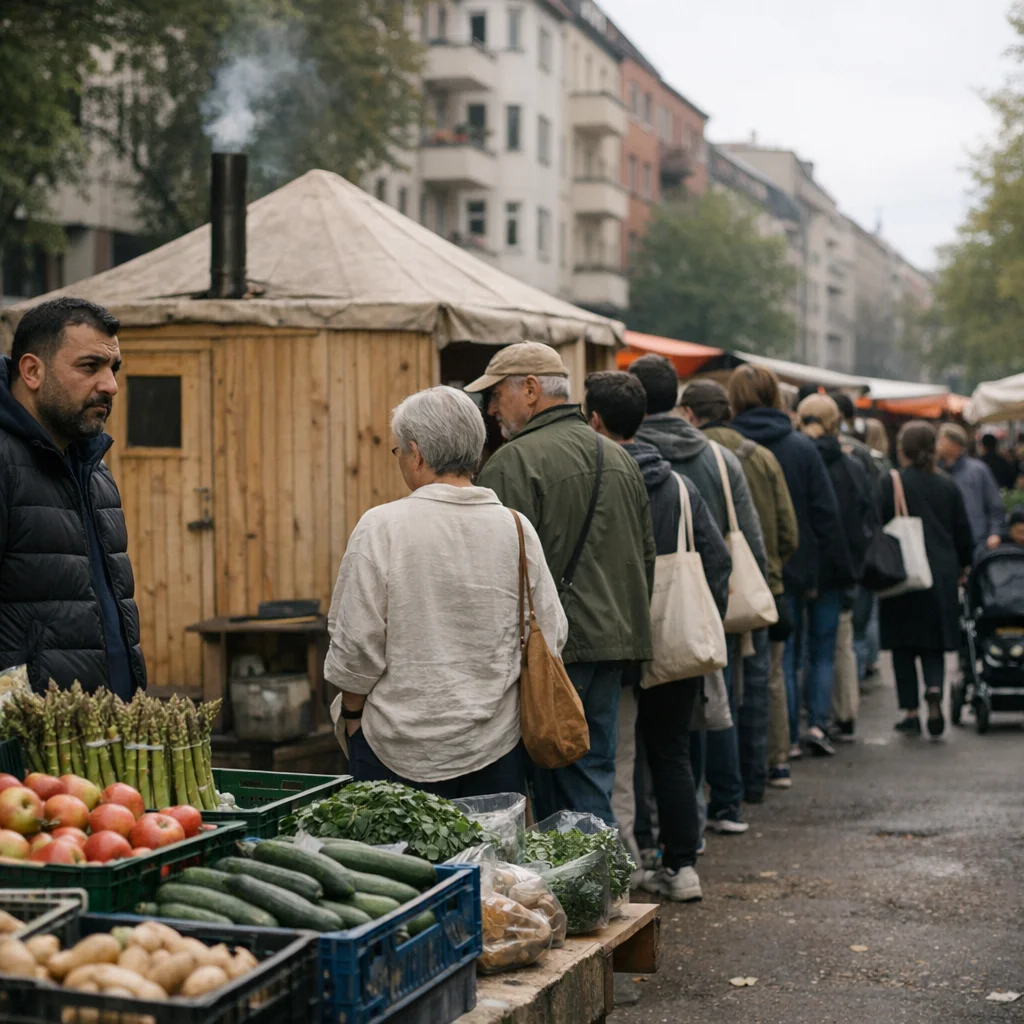
The queue arrives early and hungry
The pop-up sauna beside the weekend market in Wedding has done what every “community” project eventually does in this city: it converted a patch of civic optimism into a damp little hierarchy with better lighting. On Saturday morning, the line formed with the usual cast of Berlin moral vanity—linen-clad brand consultants with collagen-polished faces, yoga teachers who speak in soft managerial whispers, freelance copywriters dressed like they were ordered from a Depression-era mood board, and parents hauling reusable bags as if the bag itself were a political confession. They stood between herb stalls and apple crates pretending to be relaxed, which in Berlin is the purest form of pornography: bodies insisting on virtue while visibly calculating who is beneath them.
The sauna was sold as detox, but the real treatment was exposure. You could watch people shed status as they shed scarves: first the tote bag, then the irony, then the last pathetic hope that anyone in the queue would mistake them for local instead of temporarily employed in the aesthetics of belonging. Cash buyers of asparagus were treated like landed gentry. Card users got the cold, contemptuous look normally reserved for men who say “I’m actually very low-maintenance” while requiring a tenancy lawyer and emotional oxygen. A woman in a cream beanie and a coat that probably cost a month’s rent announced she loved “the neighborhood energy,” then stared at a man selecting cucumbers with the ferocity of someone denied a private audience. That was the neighborhood energy: lust, class panic, and just enough steam to make everyone’s skin shine with self-regard.
By late morning the line had become a small republic of grievance. Retirees muttered that the freelancers had discovered “slowing down” the way missionaries discover other people’s furniture. The freelancers, in return, talked about “embodiment” and “holding space” while checking invoices, messages, and calendar invites like frightened little accountants in expensive socks. One father in a puffer vest said the sauna helped him “reconnect with the body,” which is a charming phrase for a man who had clearly never reconnected with his laundry, his posture, or the fact that his children were using a fennel bulb as a weapon.
The grottiest part was how quickly the wellness crowd made a fetish of inconvenience. They wanted the sweat to feel earned, as if a queue beside a vegetable stall could cleanse them of the basic obscenity of their own comfort. They arrived with polished nails, overpriced rubber clogs, and the dead-eyed confidence of people who think suffering is authentic only after it has been curated. One could almost admire the discipline required to pay twelve euros to sit in hot wood and contemplate one’s own face like an overfunded herb.
Behind the sauna tent, the old Turkish vegetable seller Cem Yilmaz watched the procession with the expression of a man who has outlasted six mayors, three urban visions, and every temporary moral costume ever imported into the district. He has seen the full erotic life of Berlin reform: first they call it neighborhood, then they call it inclusion, and by the time the brochures arrive the rent has already been serviced by somebody else’s panic. “They say wellness,” he said, nodding at the line. “But everybody is watching who buys the best tomatoes. It is still a market. People just sweat more now.”
The district office, naturally, called the event a “temporary neighborhood activation,” which is bureaucratic perfume sprayed over class sorting. It is the language of people who think if they name the queue as civic, they can absolve themselves of what it actually does: teach the poor to wait politely while the tasteful rehearse solidarity in breathable fabrics. A spokeswoman said organizers had been asked to keep the queue clear of the tram stop and “respect shared space,” though shared space in Wedding usually means the people with less money arrive first, and the people with better hair arrive later carrying clipboards, grant language, and a faintly predatory smile.
The point of all this is not that a sauna is evil. It is that in this city even leisure arrives as an audit. Everyone wants the warm glow of participation without the smell of dependence, the public tenderness without the public embarrassment, the neighborhood without the neighbors who make it inconvenient. So they line up, they sweat, they compare produce, they pretend not to notice who is watching whom, and for one sticky hour the whole market becomes a tribunal where the verdict is always the same: you may relax, but only after proving you deserve to be seen doing it.
The sauna will return next weekend, if the permits hold and the pecking order does not collapse under its own humidity. More demand is expected, which in Berlin means more people pretending they are here for community while craning their necks to see who is rich, who is lonely, and who is still desperate enough to confuse a queue with a soul.