Faust at the Energy Desk
Berlin’s utility counter now treats desperate customers like admirers at a bad date, with staff demanding proof of need before they will “open the connection.” The longer the wait, the more the clerks posture like.
Civic Rituals & Paperwork Features Reporter
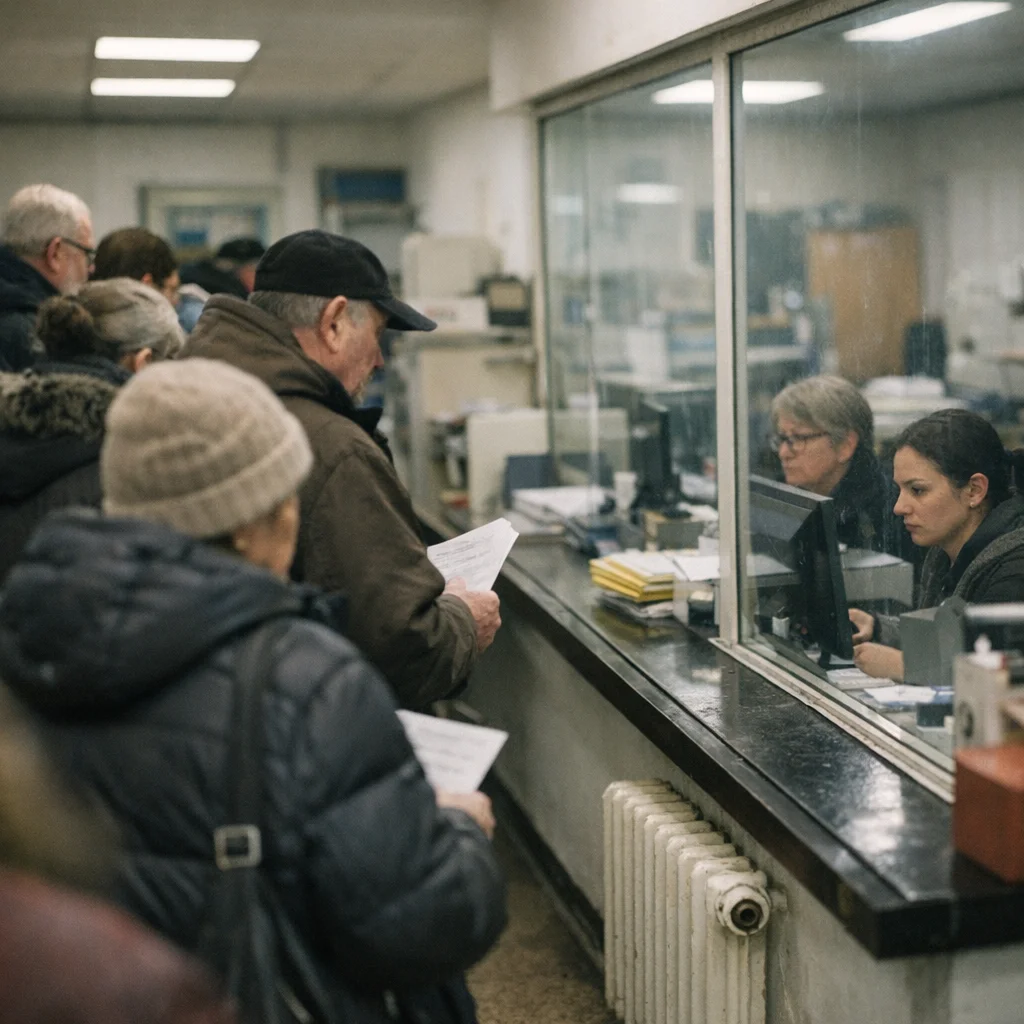
At the district energy counter in Wedding, residents now meet a rule that could have been drafted by a seduction coach with a municipal pension: nobody gets heat, power, or a payment plan until the clerk decides whether they have approached the desk with sufficient hunger. The queue forms before the shutters lift, then presses under fluorescent lights while staff ask for bills, IDs, and the kind of need that looks flattering from the other side of glass.
By late morning, the room had settled into its usual ritual of withholding. A woman in a puffer coat came in with her unpaid notice folded like a confession and left with a three-month installment plan after apologizing for “the tone of the first email.” A man behind her, who said he had been without hot water for six days, was told he had interrupted too quickly and should return when he could “speak constructively.” He did, after sitting in the corridor long enough to lose his spine to the chairs. That is apparently the point: first they make you wait, then they make you grateful for the privilege of being evaluated.
“They do not open the connection until they’ve made you ask twice,” said Yildiz Demir, who has spent three visits trying to restore electricity for her mother’s flat near Leopoldplatz. “If you come in angry, they act offended. If you come in polite, they make you wait until the politeness starts to sound like a plea. It is like being told to keep your coat on while someone inspects whether you deserve the room.”
The office’s newest policy, posted in sober lettering beside a broken water cooler and a stack of forms already curled at the edges, says staff may pause service if a customer appears “hostile, entitled, or insufficiently cooperative.” In practice, residents say that means any expression stronger than gratitude can be treated as disobedience, especially if it comes from people who have already spent the month choosing between groceries and the next notice in the mail. The desk prefers submission with clean fingernails.
Inside, the clerks sit with the dead calm of people who have discovered what power feels like when it is too small to be called power and too intimate to be called work. One stamps a form, then another, then asks whether the applicant has truly considered a payment plan or simply wants the comfort of being denied in person. Another leans back, smiles without warmth, and tells a pensioner to calm down as if calm were a prerequisite for insulation. The line moves only when someone gives up a little dignity, which appears to be the currency this counter accepts more readily than electricity.
A district spokesperson said the office is “working hard to support vulnerable households while maintaining respectful communication on all sides,” a phrase that landed in the hallway like cologne on a clinic glove. Outside, two men from the neighboring bakery argued over whether the system was cruel or merely German. A Turkish grandmother waiting for her son’s account to be reactivated laughed once, flatly, and said the building had finally found a way to make begging feel like a performance review with the lights off.
The district said it will review customer complaints next week. Until then, the line remains, the radiators stay cold, and residents keep learning the same lesson: here, the connection opens only after the applicant has been made to ask for it properly, and the office will call that service right up until the moment it looks like surrender.