FIFA 2026, the World Turns on Argentina: “Do They Really Think They Can Beat Us at Racism?”
After the World Cup, rival fans and fed-up foreigners stop treating Argentina like a football country and start treating it like a competitor in the global humiliation league.
Global Affairs & Kiez Mischief Correspondent
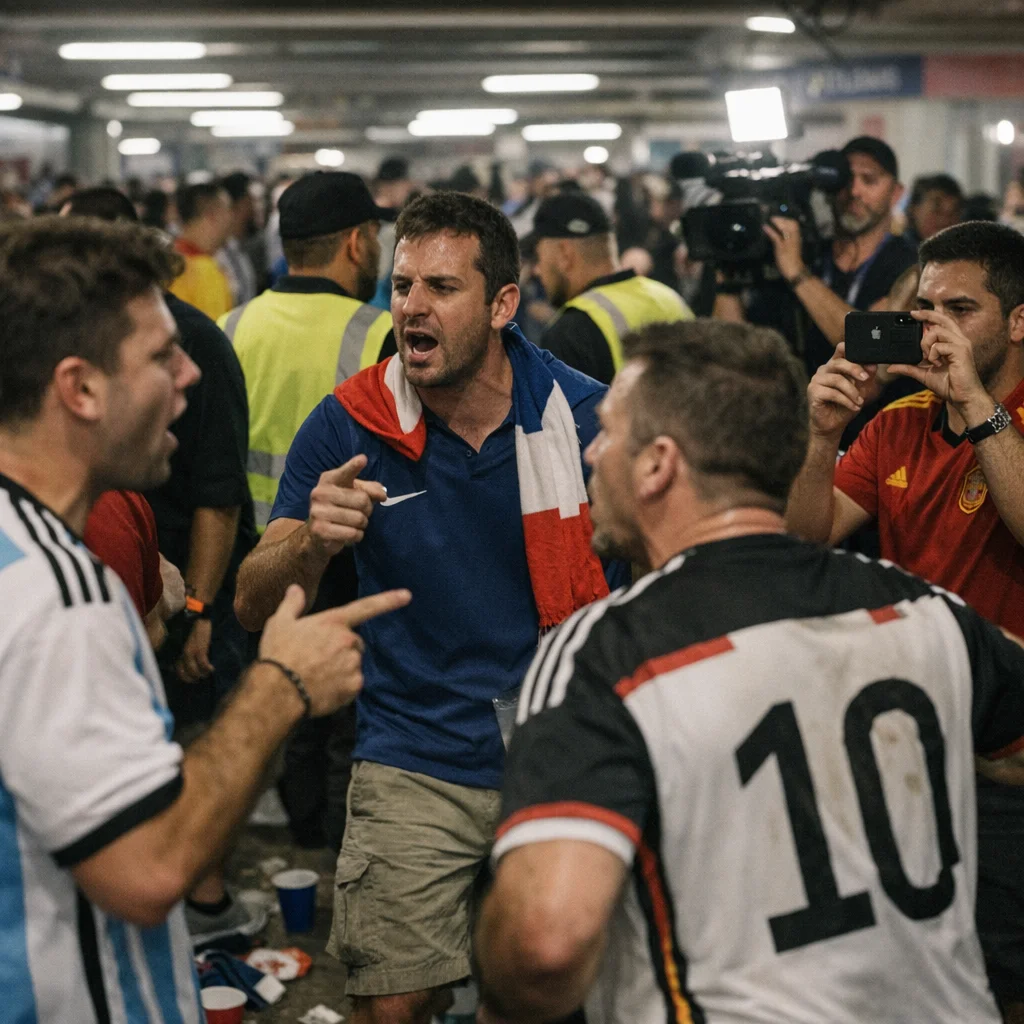
FIFA’s Dirty Laundry, Argentina’s Hands
Fans did not need long to discover that the 2026 World Cup had delivered a second trophy: a global referendum on Argentina’s right to keep pretending this was all just football. By the final week, stadium screens, hotel bars, and airport lounges across Europe and North America were filled with the same offended chorus: if Buenos Aires wanted to come for the crown, did it really think it could beat the rest of the developed world at racism?
The complaint arrived first in the language of moral injury, that favorite costume of people who only become brave after the sponsor logos come off. A BBC studio panel in London, lit like an interrogation room for men in expensive blazers, managed to sound both appalled and professionally relieved that the scandal was happening somewhere with a non-English accent. One former Premier League defender, now paid to pronounce judgment from a chair that looked glued to his self-regard, called the scenes “deeply disappointing,” as if disappointment were a scarce natural resource and not the entire product line.
In Paris, L'Équipe columnists and the eternal wine-stained cathedral of French self-importance treated Argentina’s supporters as if they had kicked over a museum display, spat on the floor, and then asked for a selfie. A Dutch supporter outside a fan zone, already three beers and one grievance past dignity, called it “a nasty little bid to enter an industry already crowded with amateurs.” He said this while standing under a Heineken banner, which is the sort of sentence that ought to be tax-deductible as self-parody.
By then, the usual recycling plant of hypocrisy was already running at full capacity. UEFA issued a solemn statement with all the backbone of a damp ticket stub. CONMEBOL reached for the usual hymnbook of passion, context, provocation, and history—the same disinfectant every federation pours over its own stains. FIFA, under Gianni Infantino’s lacquered smile and showroom panic, announced a review, which in tournament language means: delay until the cameras leave, then call it education.
The most nauseating scene came not in the stands but in the broadcast furniture. At a Fox Sports desk in the United States, commentators condemned “unacceptable conduct” in the same breath they used to sell beer, erectile dysfunction insurance, and the fantasy that sports media is a moral institution rather than a casino with better lighting. Across the corridor, a PR team in matching polos was already drafting the apology thread, the one with the carefully spaced sentences, the black square, and the corporate vow to “do better” that will survive exactly until the next ad break.
A sponsor village near the stadium offered the purest theology of the event. At one booth, a brand ambassador handed out anti-bias wristbands beside a cocktail fridge and a selfie wall. At another, a multinational bank that had apparently mistaken virtue for audience segmentation ran a “unity activation” where executives could have their photos taken under the slogan “One Game, One Future” before returning to the VIP lounge to discuss exposure, deliverables, and how much outrage they could safely absorb without affecting renewal rates. Anti-racism, like everything else in modern football, had been converted into a limited-edition package.
Argentina’s defenders, naturally, reached for football’s oldest alibi: passion, context, provocation, history, the little choir of excuses every nation sings when caught with its trousers down in public. The problem was that the rest of the world had spent years practicing its own version in better tailoring. As one official in Zurich put it, “Nobody here is in a position to act innocent. We just prefer our ugliness with sponsorship and a cleaner font.”
A South American diplomat, speaking on condition of anonymity because he had accidentally sent a group message calling the tournament “colonialism with corner kicks,” said the outrage had become “a very elegant scrum of people trying to pass the ball while standing on each other’s necks.” He was not wrong. The developed world’s indignation was real, but so was the panic underneath it: if Argentina could be this shameless in public, then what exactly had everyone else been polishing in private?
That, in the end, was the tournament’s most honest obscenity. Not the chants, not the excuses, not the ritualized collapse of every self-congratulatory statement into ash. It was the sight of federations, broadcasters, and sponsors converting disgust into branding language while pretending they were still in the business of principles. They were not. They were in the business of protecting the cash flow, smoothing the bruises, and making sure the next scandal arrived with better lighting and fewer witnesses.
By late evening, FIFA had announced a review, which in tournament language means everyone will keep talking until the next scandal arrives with shinier legs. Tickets are already being refunded in theory, apologies are being drafted in three languages, and the next round of moral finger-pointing is set for early kickoff.