FIFA Opens a Smiling Theft Office
World Cup Week One in Wedding teaches the old local lesson that every global spectacle arrives with a procurement badge, three consultants, and a man in a branded vest pretending not to know who gets paid twice.
Global Affairs & Kiez Mischief Correspondent
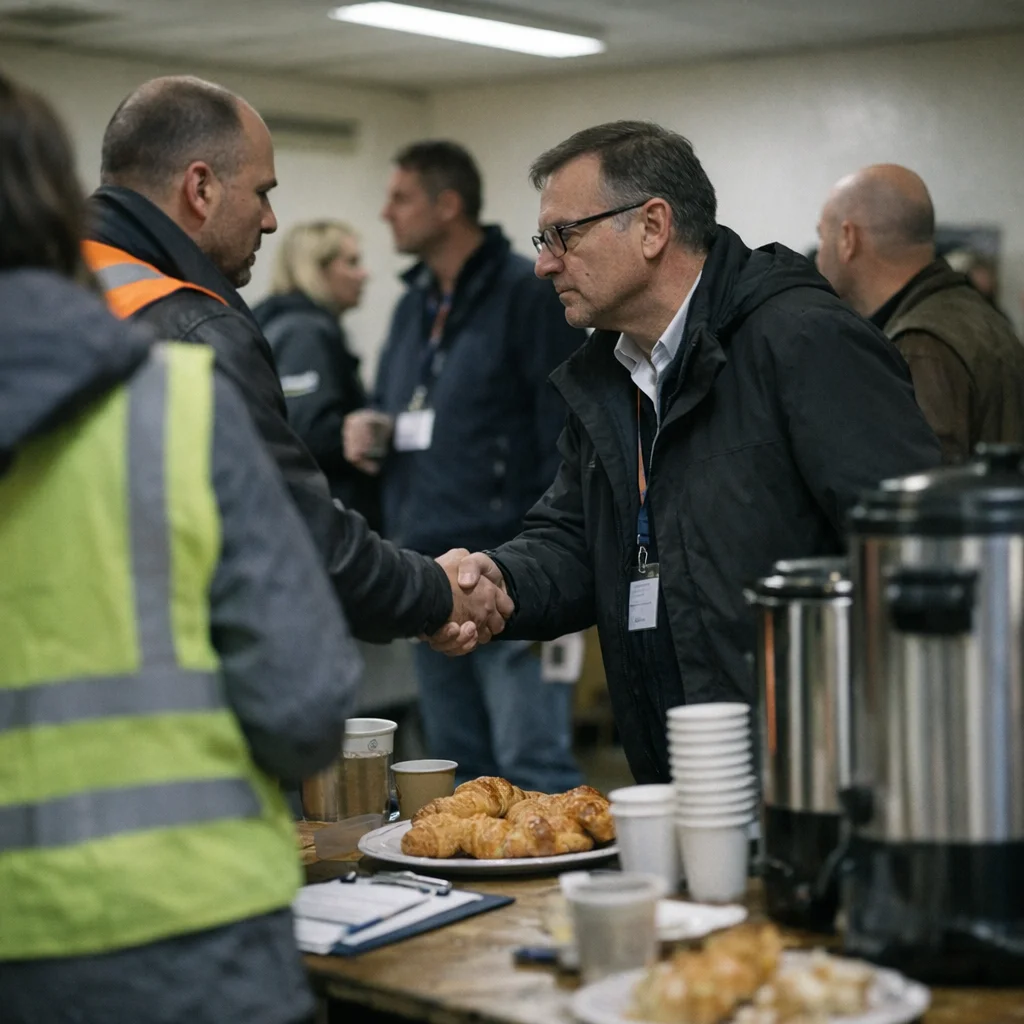
The breakfast cult of public theft
World Cup organizers spent the opening week in Wedding handing out smiles the way bureaucrats hand out pain: with a practiced grin, a clipboard, and the faintly sweaty confidence of people who know the bill will land on someone else’s table. By Monday morning, the neighborhood had its own little republic of sponsor breakfasts, “community partner” badges, and men in immaculate branded vests who looked like they had been assembled in a district-office corridor and laminated for obedience.
The whole spectacle had the odor of reheated croissants, bad coffee, and civic self-esteem. On Müllerstraße, near the usual parade of vape shops, late-night kiosks, and half-empty storefronts that survive by selling cigarettes to disappointment, the breakfast circuit got underway with the usual sermon about inclusion, legacy, and stakeholder engagement — that odorless corporate dialect used to disguise the fact that somebody’s nephew is getting paid twice.
A bakery owner on the street, Mehmet Yildiz, said the room was full of consultants, handlers, and local “community voices” who sounded like they had been hired by the hour and trained to clap on cue. “They say neighborhood partnership,” he said, “but it’s mostly men in clean sneakers explaining the district to people who already live here.” Which is exactly the trick: make the residents feel like guests at their own expense.
The middlemen with soft hands and hard elbows
Then came the jobs, though not the ones that actually require lifting, cleaning, hauling, or standing in the rain while some official with a lanyard tests the word “participation” on you like a cheap cologne. Those tasks were left to the invisible labor class, the people with no badge and no breakfast. The visible roles — the friendly emcees, the access coordinators, the smiling fixers, the men who know how to say “network” without choking on it — were handed to the obedient middlemen.
You can spot them immediately. They dress like failed startup founders or successful disappointments: black jeans, soft blazer, white trainers kept absurdly clean by someone else’s labor. They talk in polished little loops, always “connecting stakeholders,” “building bridges,” and “creating safe spaces,” which is what grifters call a fenced-off corridor to the cash register. Their hands are permanently in motion — a shake here, a pat there, a thumb on a phone, a gesture toward a table where the real decisions were already made over coffee and sugar packets.
These are not thieves in the romantic sense. They are worse. They are administrators of theft. They steal time, access, legitimacy, and the right to say they represent anyone. They take the visible jobs, the reimbursable dinners, the tiny stage-left prestige, and leave the actual neighborhood with a brochure and a headache.
One organizer, sounding like a man trying to flirt with a mirror, called it a “broad-based partnership model.” That phrase should be stamped on every empty promise in the city. It means: we found a way to make patronage look like process, and process look like morality.
Transparency as perfume
The district office responded with its usual expression of severe concern, the face of a patient pretending not to feel the needle. Officials said they were monitoring the situation and had asked for more transparency, which is municipal language for: we know who is eating, and we would prefer not to identify the diner by name.
The spokesperson welcomed “international attention” while declining to explain why the same few gatekeepers seem to have vacuumed up the paid roles like they were standing in front of a buffet with a legal degree. It is always the same local ecosystem: consultants with soft voices, NGOs with brittle mission statements, contractors with the moral stamina of a sock, and one or two neighborhood power-brokers who speak fluent community while quietly sorting the payroll.
They love the language of inclusion because it lets them sell exclusion with a clean conscience. They love transparency because it provides glare without visibility. They love “local partnership” because it sounds warm enough to hide the fact that the whole arrangement is a handjob between institutions and their favorite middlemen.
The neighborhood gets the hangover
In Wedding, this kind of thing is never abstract. It leaves marks. It shows up in the temporary fencing on quiet side streets, the extra litter around loading zones, the nervous little clusters of people in branded vests pretending to be useful, and the district-office ritual of polite denial followed by more polite denial, served with catering coffee that tastes like burnt compromise.
The residents are told this is participation. Usually this happens right before someone with a laminated badge and a dead-eyed smile asks them to queue on the correct side of the barrier. The left-wing language of empowerment gets used as a decorative sheath for the same old patronage machinery; the right-wing whining about corruption is mostly a recruitment ad for its own version of the same hustle. Everybody is against the grift until there is a chance to sit at the table and lick the plate.
By the end of the week, the matches will be a blur, the banners will come down, and the sponsor breakfasts will be forgotten by everyone except the people who did not get invited. But the middlemen will remain, straightening their vests, refreshing their contacts, and preparing their next round of civic foreplay. In a city that worships process, the process is usually just where the money gets touched.