Fikret Arslan’s Kiosk on Reinickendorfer Straße Turns Cash Into Confessionals With Story-Only Loyalty Cards
At a counter in Wedding, purchases are tallied in plot points. Customers earn stamps for vulnerability, twists, and a clear ending—even if they just came for gum.
Neighborhood Commerce & Social Awkwardness Reporter
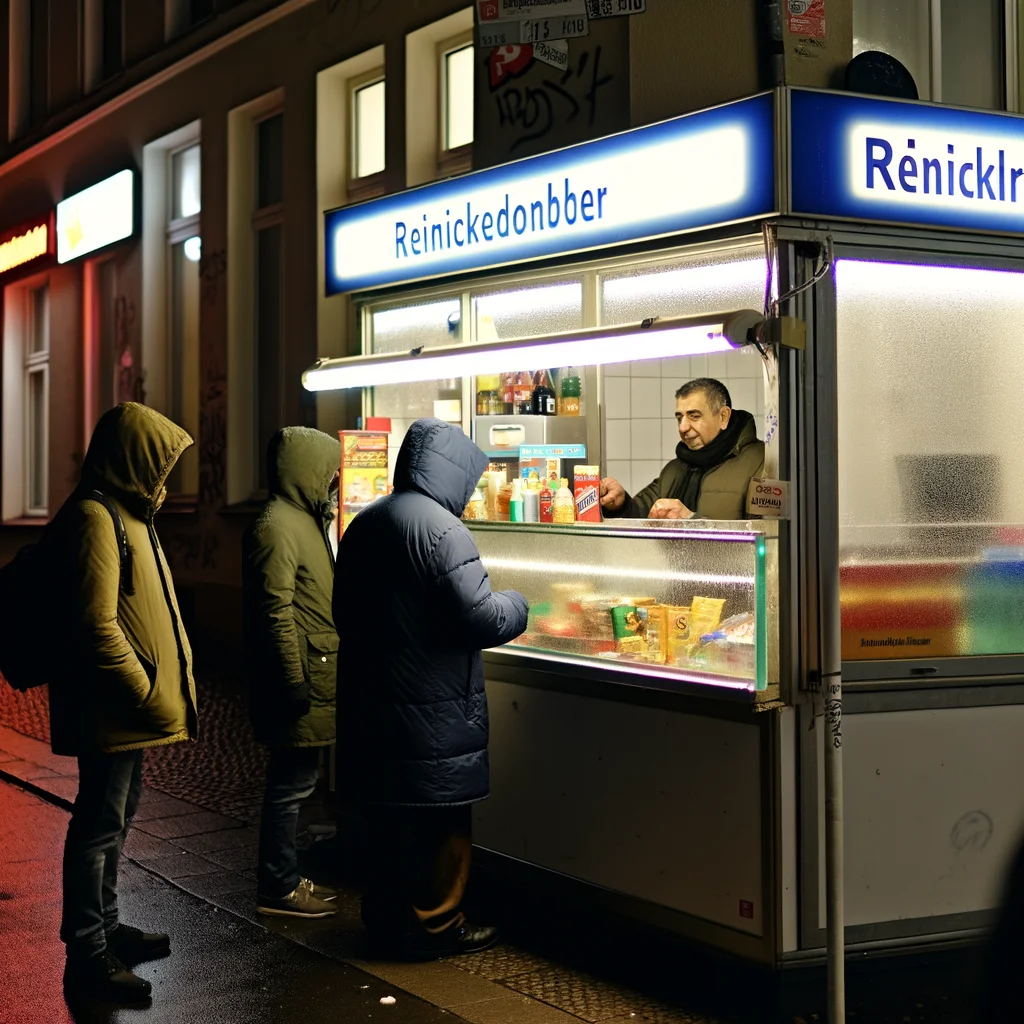
WEDDING —
On Tuesday evening at 7:42 p.m., a small queue formed outside Kiosk 49 at Reinickendorfer Straße 49, not because the cooler was broken or because someone had decided to pay with foreign coins, but because the owner demanded a story.
“Not a lie,” said Fikret Arslan, 38, sliding a pack of cigarettes back behind the plexiglass like contraband. “A story. Beginning, middle, end. Don’t just moan a problem at me and call it literature.”
Arslan’s kiosk—two fridges, a shaky rack of chips, and an arrangement of rotating moral dilemmas—launched a loyalty program last Friday, Jan. 17, called StoryCard. A laminated card, hole-punched at the corner with an office stapler, promises every tenth item free. The catch is that items can be purchased only with a spoken narrative delivered at the counter, timed on a small egg-shaped kitchen timer.
Customers say the rules are clear and humiliating. A €2.40 coffee requires “a shame you can name,” a can of energy drink requires “a job interview you bombed without blaming capitalism,” and a bottle of water—“premium plot,” according to a handwritten chart taped to the fridge—requires either a reconciliation scene or a plausible betrayal.
At 8:06 p.m., Aylin Demir, 27, who lives on Amrumer Straße, attempted to buy rolling papers with what she described as a “harmless anecdote about my uncle.” Arslan rejected it.
“He said it lacked stakes,” Demir reported, still standing on the sidewalk, clutching exact change she could not use. “I offered him a second version with more tension. He told me tension isn’t the same as growth. He’s right, and I hate that.”
Several patrons said they have begun rehearsing in advance, treating the kiosk like an unpaid writing workshop with better snack options. One man, Lars Hempel, 41, delivered a three-minute account of a landlord inspection that ended with him crying into a sink. Arslan stamped his card and granted what he called a “generous discount for arc.”
“Berlin loves paying with feelings,” Hempel said, looking exhausted. “This is just the first time someone rang it up.”
Arslan told The Wedding Times he introduced StoryCard after “too many people standing here, swiping cards, saying nothing, acting like intimacy is a separate business model.” He denied that he was conducting therapy without credentials.
“This is not Freud,” he said, tapping the counter twice for emphasis. “Freud charged more and listened less. Also: my fridge bills are real.”
Not everyone is amused. A nearby bakery owner on Müllerstraße, who asked to be identified only as “Cem,” said he has watched customers leave Arslan’s kiosk with “the same face they had after divorce court, but with chips.”
“It’s a kiosk, not Waiting for Godot,” Cem said. “People come in thirsty. They don’t want a deep dive. They want something hard to swallow that isn’t their own biography.”
Arslan insists participation is voluntary and points to a small jar labeled “EXIT: PAY IN SILENCE,” which, according to customers, requires you to stand at the counter for 30 seconds maintaining eye contact “like a reasonable adult who’s done nothing wrong.” Witnesses described stiff resistance.
By Wednesday morning, Arslan claimed 116 StoryCards had been issued and 37 completed stories had been archived in a black notebook behind the register. He said the notebook is not for publication “unless someone deserves it.”
A spokesperson for the Bezirksamt Mitte said they had received “several inquiries” about whether stories constitute a taxable instrument, but confirmed that no formal guidance exists on narrative-based transactions. “We advise residents to keep receipts,” the spokesperson said, pausing, “in whatever form they occur.”
At 9:11 p.m. Tuesday, Arslan refused a customer’s attempt to pay with what sounded like a motivational speech. He gestured to the timer.
“Plot,” he said, setting it. “Then you get your beer.”