Flip the Plaque: Wedding’s Commemorations Have Price Tags on the Back
The city promises public memory; turn a brass plate over and a stamped tour‑tier and mounting holes tell a different story — these are inventory tags for paid walking routes, not tributes.
Gentrification & Moral Performance Correspondent
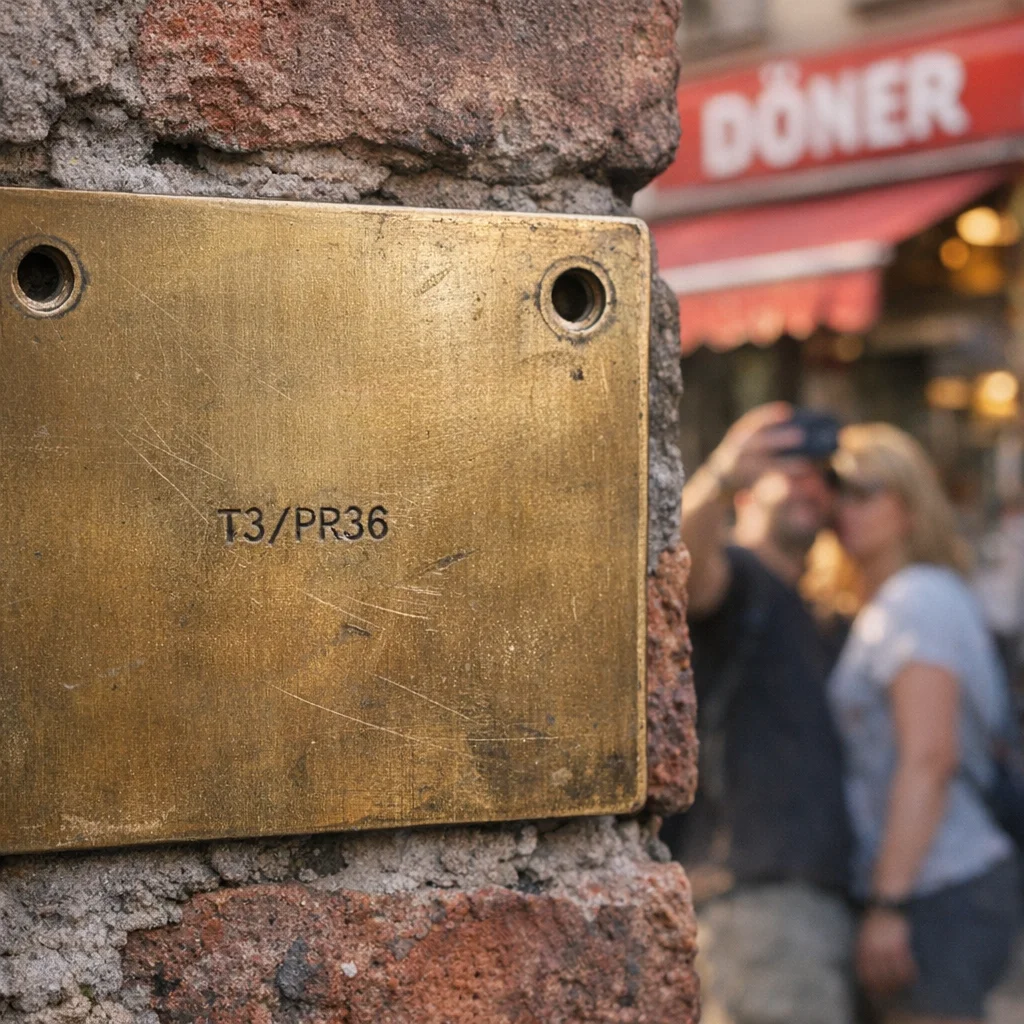
Everyone tells the same story: plaques are civic hymns, a little brass miracle that freezes a neighborhood’s soul for posterity. I used to nod along—until I started turning them over.
Lean close to a commemorative plate in Wedding and the hymn decays into logistics. There’s a tiny manufacturer stamp—T3/PR36—countersunk holes the size and pitch of clip‑on audio guides, and the same code on a district invoice labelled “heritage partner.” What was sold to us as memory is inventory: objects made to be catalogued, clipped onto, and licensed by tour tiers. The dedication reads like a poem; the back reads like a stockroom.
This mundane backside is the fulcrum of my case for being rude to tourists. The received narrative says tourists are charming, educational, and a harmless cash flow. The detail on the plate proves the opposite: they are customers in a circulatory system that turns local feeling into a product. When your neighborhood’s history comes with SKU numbers and mounting holes, “curiosity” isn’t curiosity; it’s consumption.
I do not mean rudeness as mere petulance. I mean refusing to be staging hands for a theatricalized past. Ask directions and watch a group of photo‑buyers treat a Turkish bakery window like a prop. Intervene when tour groups cross the threshold of a family restaurant and set up a half hour of tableau for their guide’s script. Tell a guide—firmly, publicly—that their route is trespassing on people who still live here. Say no to being a human information kiosk; decline the selfie. It’s a small, practical act of civic taste. It’s also a cultural health check.
Hüseyin Demir, who has run a döner counter on the street for twenty years, put it bluntly: “They want the plaque, not the person. They ask how long the place has been here only so they can pronounce a line into their recorder.” A Kulturamt spokeswoman, when pressed, promised to review procurement practices for municipal plaques—an encouraging phrasing that smells faintly of policy sex: lots of touching, little penetration.
This is not anti‑visitor snobbery. It is an argument about how memory is monetized. Walter Benjamin wrote about the flâneur who reads the city as text; ours is a city read aloud by audio guides that rent the right to our benches and names. If the civic commemoration industry expects locals to be charming extras in their packaged city, locals should respond with the only market the guides understand: refusal, interruption, and the occasional sharp answer.
Flip the plate, read the number, and then flip off the script. If tourists want a curated past, they can pay for it. Until then, be rude. It’s a small, restorative act: the neighborhood taking back its own mouth.