Forelle am Piano, Arbeiter am Rand
Rohkunstbau’s latest rural grandeur sells critique with one hand and sells the countryside with the other, while Lauchhammer gets cast as a tasteful backdrop for visitors who would never survive a shift there.
Gentrification & Moral Performance Correspondent
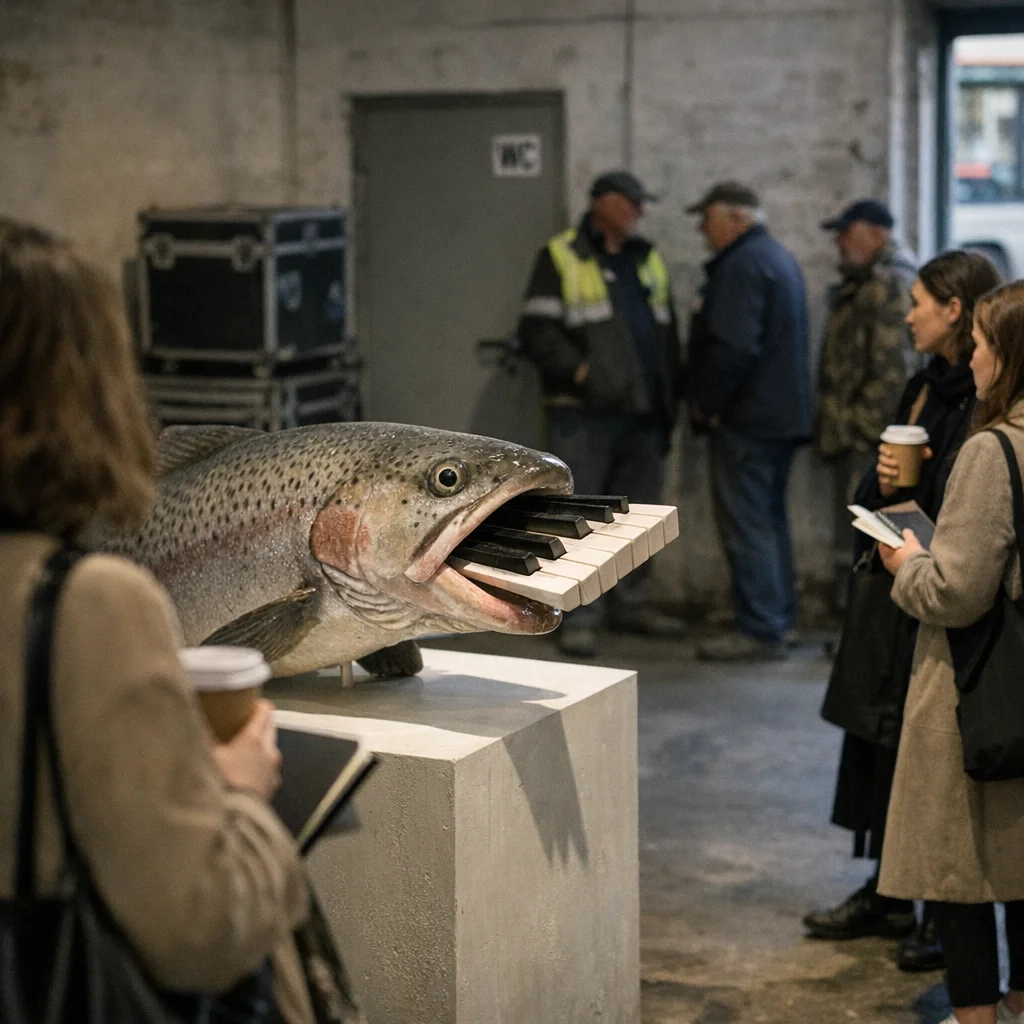
The trout performs; everyone else invoices the damage
Rohkunstbau opened again in and around Lauchhammer, because nothing flatters the metropolitan conscience like a rural setting with a past it can pose beside. The show arrives wrapped in the usual high-end grief package: extraction, decline, labor, heritage, a little soot for authenticity, and the familiar perfume of grant money trying to pretend it was born in the region. The centerpiece is still that trout with a piano shoved through its mouth, which is the ideal emblem for a curator class that loves the idea of work right up until work starts asking who paid for the fish, the instrument, and the clean-up.
The crowd came down from Berlin and its satellite moral districts in soft shoes, tote bags, and the kind of weather-resistant self-regard that only flourishes on subsidized train rides. They stood in former industrial spaces murmuring about resilience and “dialogue” with the solemn hunger of people who confuse a venue with a conscience. One grant-adjacent cultural manager described the show as a “bridge between center and periphery,” which is artspeak for sending a postcard from privilege to the place that has to host it. The bridge, naturally, is paid for by the town, while the other side arrives with canteen coffee, a tote full of theory, and the faint panic of anyone who has seen a real shift schedule up close.
Locals noticed the choreography immediately. “They always look like they’re about to apologize to the countryside while also charging it admission,” said Jens Malkowski, who works maintenance nearby. “They talk about labor like it’s a fetish object. Then they see a locked toilet or a bus after dark and suddenly they’re fragile.” He said the visitors had no trouble finding the nearest installation, but seemed personally attacked by the existence of mud, wind, and a public restroom that did not come with a curatorial statement.
That is the core obscenity of this entire ecosystem: the curator class, the municipal cultural office, the foundation people, the metropolitan visitors, all circling one another in a warm little accountability swamp. They adore the worker as a visual accent — a sleeve rolled up, a forehead damp, a noble brow under bad fluorescent light — but the affection evaporates the second labor becomes literal. Wages, transit, heating, overtime, cleaning, security, toilets: the actual body of the thing. Then the dialogue gets very quiet and very expensive.
The district office says it welcomes “cultural activity with regional relevance,” a phrase so damp and evasive it sounds like it was generated by a committee trying not to admit who would be paying for the extra bins. Local organizers promise more public programming, stronger ties to the town, and better access. Fine. Lovely. Meanwhile the visitors continue to arrive as if hardship were a seasonal exhibition they could browse, admire, and leave before dinner.
The trout remains the cleanest statement in the room. It is a fish forced to perform culture through a piano it did not ask for, which is more honesty than most of the people around it can manage. They call it exchange. It looks more like extraction with better lighting and a nicer coat.