“Former West” Guests Demand a Refund After Wedding Fails to Feel Like Their Childhood Documentary
A new pop-up exhibit lets visitors experience the Inner Wall the way it lives best: as a confident misunderstanding, brought from elsewhere and applied loudly.
Neighborhood Delusion & Memory Economy Reporter
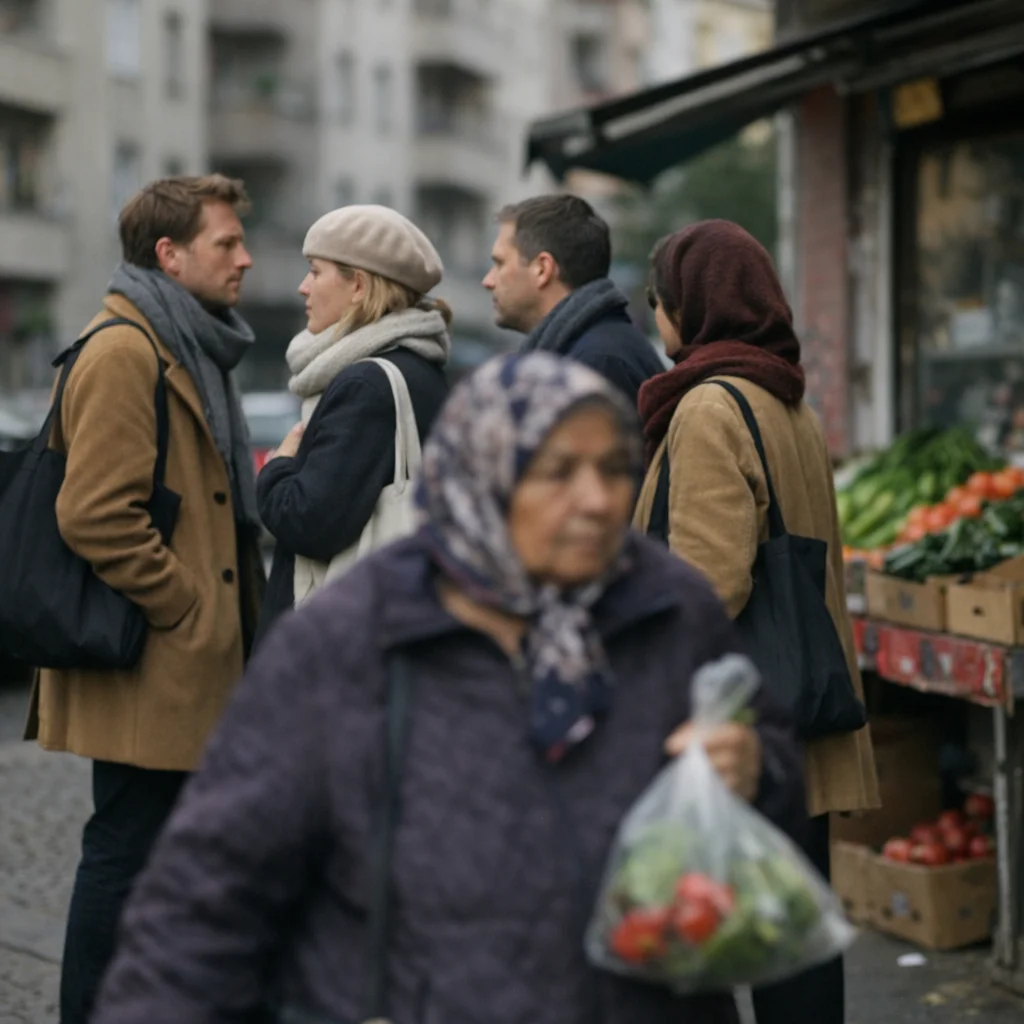
Around lunchtime on a gray weekday, a group of visitors from Berlin’s wealthier western districts arrived in Wedding with the careful excitement of people entering an emotional petting zoo. They weren’t here for anything so vulgar as lunch. They were here to feel history—specifically, to confirm a fresh talking point making the rounds: the wall in people’s heads is allegedly taller in the West than in the East.
Wedding, being a neighborhood that already has plenty of walls (stairwells, courtyards, and that one neighbor’s permanent “temporary” renovation), responded by offering a new attraction: the Cognitive Wall Visitor Center, an unofficial installation assembled from folding chairs, laminated feelings, and one guy who read half of Walter Benjamin and never recovered.
How the “Cognitive Wall” Works
The surreal twist is modest and very Berlin: every time a visitor says “I’m just trying to understand,” an invisible barrier rises about an inch between them and the nearest person who actually lives here.
Witnesses say the barrier is strongest when the visitor speaks in English while explaining German reunification to a Turkish grandma buying parsley, like it’s a TED Talk that lost its venue and ended up in the produce aisle.
A longtime resident described it as “a very firm boundary,” then added, “they keep trying to push through it anyway.”
A Guided Tour of Other People’s Reality
At the Visitor Center, guests can choose from three experiences:
- “Ossis Were Like This”: a multimedia presentation that climaxes too early and leaves everyone unsatisfied.
- “Wessis Feel Guilty”: an interactive piece where participants stroke their own conscience until it purrs.
- “We’re All the Same Now”: a minimalist performance in which someone insists inequality is over while standing in shoes that cost more than a week of groceries.
One attendee, wearing a scarf with the solemnity of a museum guard, requested “more authenticity.” Organizers offered a complimentary reality check, but she declined, citing dietary restrictions.
Everyone Gets Mocked Equally, As Required by Berlin
Eastern Berliners watching this from a safe emotional distance reported confusion: “If the West has a higher wall in their heads,” one said, “why do they keep climbing into ours?”
In Wedding, the answer is simple: the Inner Wall is a lifestyle accessory. You don’t dismantle it—you redecorate it, take a tasteful photo, and then pull out of the conversation the second it gets specific.
As one local put it, sounding like Brecht with a hangover: “They don’t want unity. They want an audience.”