Founders’ Sauna, Employees Sign the Shame Waiver
Wedding’s startup crowd has discovered that nothing says “healthy culture” like sweating in silence beside the people who can fire you.
Gentrification Symptoms & Pretend-Creative Economy Reporter
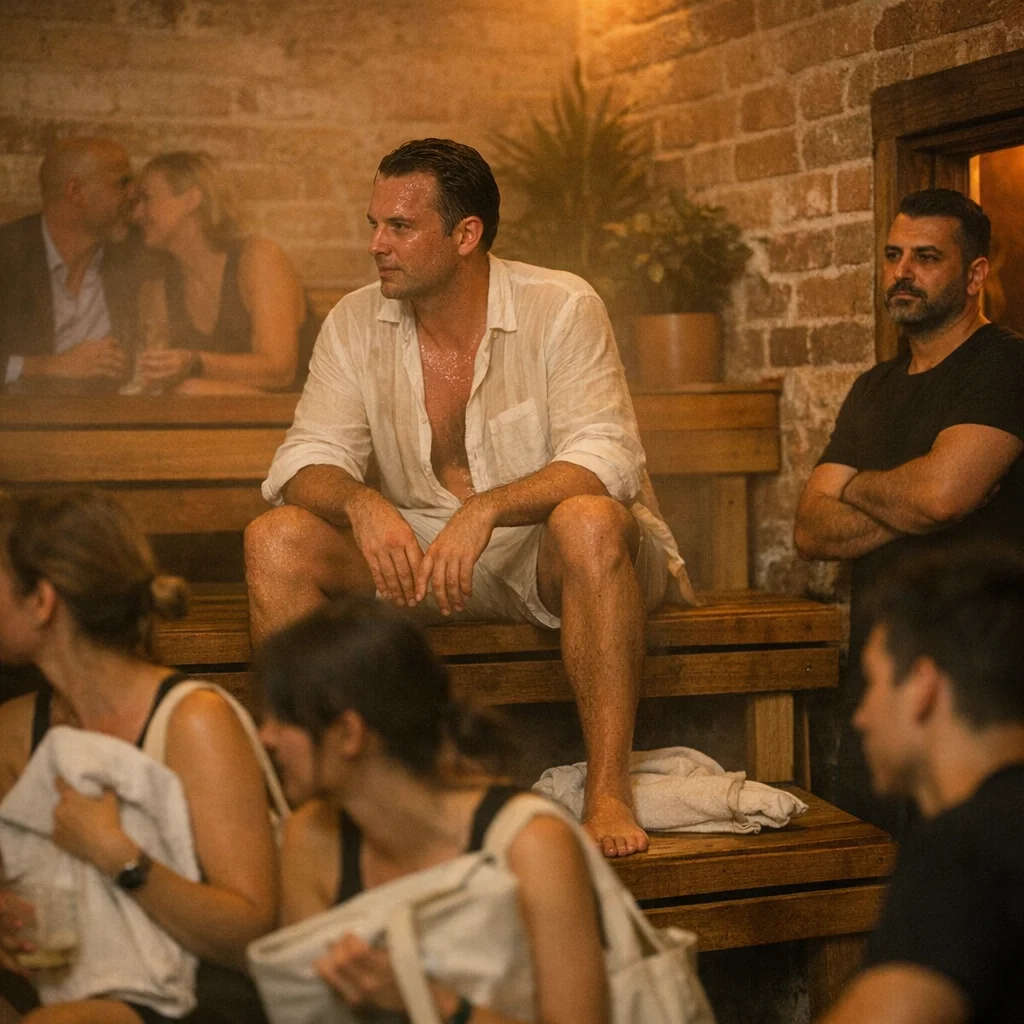
Wedding’s newest recovery racket has found the ideal clientele: people vain enough to call sweat a philosophy and timid enough to pay for the privilege of being socially handled in a towel. A boutique sauna night drifting between coworking-adjacent wellness rooms, private courtyards, and one backroom that still smells like eucalyptus, damp timber, and investor deodorant has become the borough’s preferred way to cosplay humility at premium prices.
The pitch is always the same soft-focus fraud. Guests are told the evening is about “resetting,” “holding space,” and “detoxing from the week,” which in startup dialect means: please do not mention who funded this, who profits from it, or why the air feels like a payroll confession. The organizers speak as if they are building a civic virtue. In practice they are arranging temperature-based status theater.
The social order is visible before the door fully closes. Founders take the hottest upper benches with the posture of men who think a cap table is a moral organ. One had the damp, polished face of a man who says “we’re all equals here” while checking whether his reflection still likes him. VCs arrive late on purpose, as if punctuality might expose them to accountability, then spread their thighs across the bench and talk about “long-term conviction” with the puffy entitlement of people who have never had to ask permission from anyone with a pulse and a rent contract.
Junior staff do what junior staff always do in these rooms: they smile like their jobs depend on it, because they do. They sit near the door, where the heat is weaker and the humiliation is fresher. Freelancers invited for “community texture” perform gratitude with the concentration of people trying not to get ghosted by a payment cycle. A founder from Mitte, his beard trimmed into that expensive negligence only money can maintain, announced the night was “non-hierarchical,” then immediately asked whether the bench temperature could be raised for the leadership circle. Nothing says solidarity like a man who needs the room hotter because his ego is cold.
The organizer, Leonie Weber, 31, spoke in the polished hospice voice of the wellness-industrial class: “It’s about trust, vulnerability, and sweating through the ego.” She said this while adjusting a linen wrap that looked less like clothing than a surrender flag for the well-paid. Later, after a venture capital associate arrived late, claimed the best seat, and began describing an AI product as if he were discussing a family inheritance, the room performed that special Berlin silence reserved for people watching a superior embarrass himself without being able to afford the moral luxury of laughter.
Nobody in the room was unaware of the erotic arrangement. The entire event depends on the low-grade charge of workers sweating beside the people who can fire them, investors, or both. That is the actual product, not “wellness.” The towels are just laundering equipment for power: drape, conceal, re-drape, repeat. The skin does the compliance work. The air gets thick with deodorant, ambition, and the delicate panic of people pretending not to notice who is looking at whom, and who is allowed to look back.
A Turkish bar owner from nearby, who had come only because a friend promised him there would be snacks and no pitch decks, said the whole thing reminded him of a council meeting conducted in socks. “Everybody says relaxed,” he said, “but everyone is still measuring the room.” He was the only person there describing reality instead of branding it. Around him, the room continued to perform its little civic massage: founders pretending to be vulnerable, VCs pretending to be humane, community builders pretending they had not turned social insulation into a revenue model.
This is where the local ecosystem matters. The sauna nights are not an isolated eccentricity; they are a perfect Wedding synthesis of coworking culture, investor networks, municipal tolerance, and the wellness-industrial overlap that knows how to speak softly while picking pockets with both hands. The district office says it has received no formal complaint, which is the administrative equivalent of watching a fire and praising the ambiance. The Berlin sauna association, now apparently one more layer of institutional perfume for commerce to mist over itself, praised the events as “inclusive” and “good for mental health,” two phrases so overused they should be fined for loitering.
By the final round, the room has achieved its true aim: everyone is damp, a little nauseated, and more economically legible to the people above them. The founders leave looking purified, which is what the rich call being briefly under heat. The employees leave looking available, which is what the system calls character development. And the waitlist for the next night is already longer than the line for housing justice, which is the most honest civic metric in Wedding: the more obviously degrading the ritual, the faster the tickets move.