Four Berliners Won the Mendelssohn Competition, So the City Immediately Tried to Sublet Their Talent
A historic fourfold success meets a familiar fivefold failure: management, funding, rehearsal space, basic human warmth, and the U-Bahn.
Culture Hangover & Funding Mirage Reporter
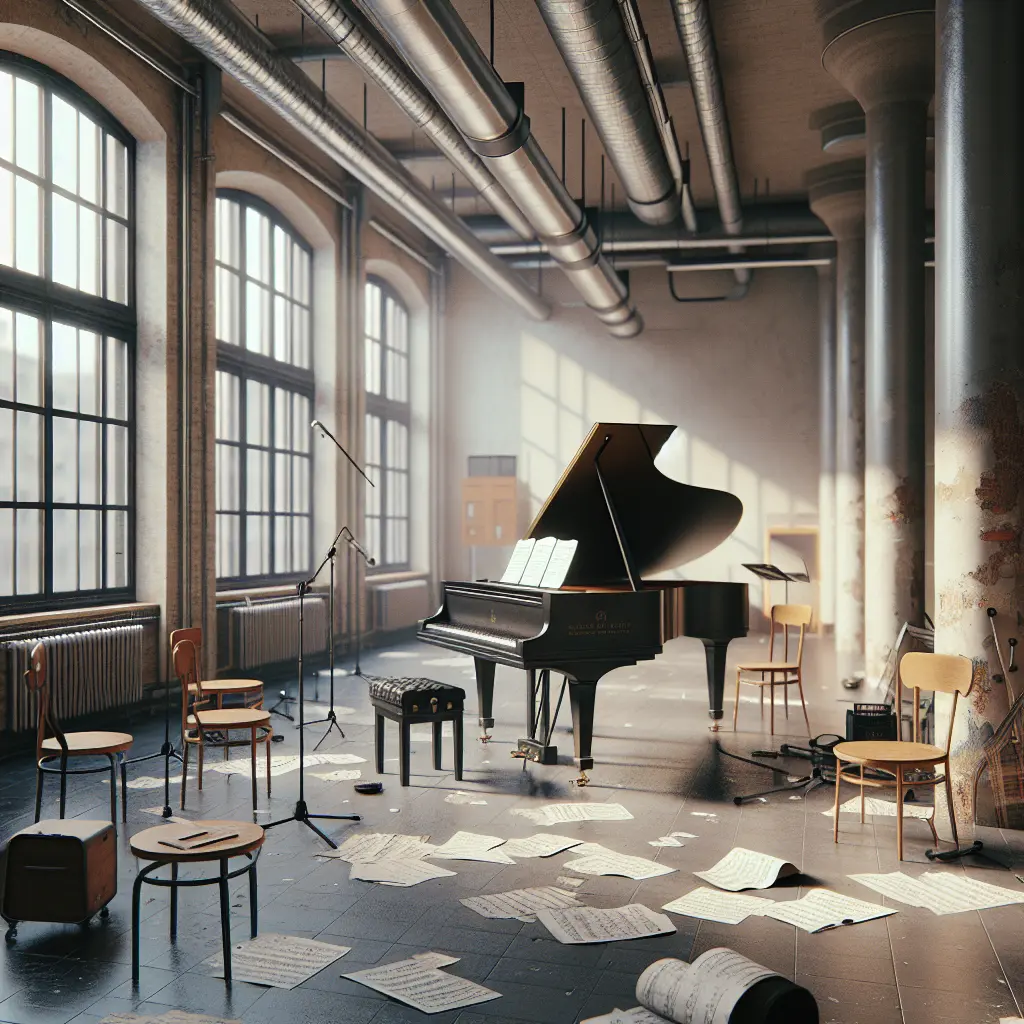
Berlin has achieved a cultural milestone: four winners at the Mendelssohn Competition. Four. At once. A statistical freak event so rare that somewhere in Mitte, a curator just fainted into a bowl of ethically sourced olives.
This is being described as a “novum,” which is polite newspaper code for “please clap, Berlin did something functional without a committee meeting that lasted longer than the Baroque era.”
And naturally, Berlin—our beloved, slightly damp museum of broken promises—responded the way it always does when excellence appears: by trying to turn it into a brand partnership and then forgetting where it put it.
The city’s plan: congratulate them, then harvest them
Within minutes of the announcement, the following initiatives were spotted forming like mold on a bathroom ceiling:
- A Senate press conference where no one can pronounce the winners’ names, but everyone says “synergy” like it’s an instrument.
- A “Classical Meets Club” showcase where someone suggests the laureates “just do Mendelssohn, but faster,” because Berlin believes tempo is a personality.
- An emergency funding round of €700, earmarked for “visibility,” meaning a poster printed on paper so thin you can see your disappointment through it.
This is Berlin’s special gift: taking something pure and immediately dragging it through the city’s wet cardboard soul until it comes out with a tote bag, a newsletter, and an unpaid internship.
Wedding reacts the only way Wedding can: suspiciously
In Wedding, the news was met with the traditional response to achievement: suspicion.
At Leopoldplatz, one man asked, “Four winners? From Berlin? What’s the catch?” A reasonable question. In this city, if something goes well, it usually means someone is about to get billed retroactively.
Local parents briefly considered enrolling their kids in music lessons, until they remembered:
- Practice is loud, and Berlin apartments have walls made from compressed regret.
- Music schools require paperwork, and paperwork is Berlin’s chosen weapon.
- Finding a piano teacher is like finding a functional public restroom: technically possible, spiritually impossible.
The Mendelssohn-to-Berlin pipeline: from genius to gig economy
The winners should enjoy the glory while it lasts, because Berlin has a well-established pipeline for talented young people:
- Win prestigious competition.
- Get booked for a “salon” in a Neukölln living room.
- Be paid in “exposure,” meaning someone tags you in an Instagram story nobody watches.
- Get asked if you can also do “a little ambient set” because the host bought a fog machine and now thinks they’re a producer.
- Finally, move to Leipzig for stability, like a quitter.
Berlin loves classical music the way it loves every serious thing: as long as it can be held in a drafty warehouse, sponsored by a beer brand, and explained by someone wearing a beanie indoors.
Congratulations, now please suffer artistically
Cultural officials are already brainstorming how to “support” these winners, which in Berlin usually means:
- Offering them a rehearsal space in an abandoned building with one working outlet and a mysterious smell.
- Inviting them to perform at an “interdisciplinary evening” where a performance artist slowly peels an orange for 40 minutes while whispering about colonialism.
- Pairing them with a startup that “democratizes classical music” by putting Beethoven on the blockchain and charging €19.99 a month for the privilege of hating it.
Meanwhile, every expat who has ever said “I’m kind of into classical” will now claim they’ve been following the Mendelssohn Competition “for years,” which is impressive, because last month they thought Mendelssohn was a brunch place.
A rare Berlin W—so enjoy it before it becomes a concept
To the four winners: congratulations. You did it. You beat the odds, the judges, and the gravitational pull of Berlin’s mediocrity.
Just one request: when the city inevitably asks you to play your winning piece at a panel titled “Soundscapes of Resilience: Reimagining Harmonic Futures,” run. Not because you’re too good for Berlin.
Because Berlin will never forgive you for proving it could be.