Four BPM Too Far: Wedding’s Dancefloors Discover the Horror of “Normal Tempo”
With stimulant supplies disrupted citywide, selectors are pacing themselves at 120–128 BPM—prompting sobriety-adjacent eye contact, accidental conversations, and a spike in awkward hand placement.
Night Economy Constraint Reporter
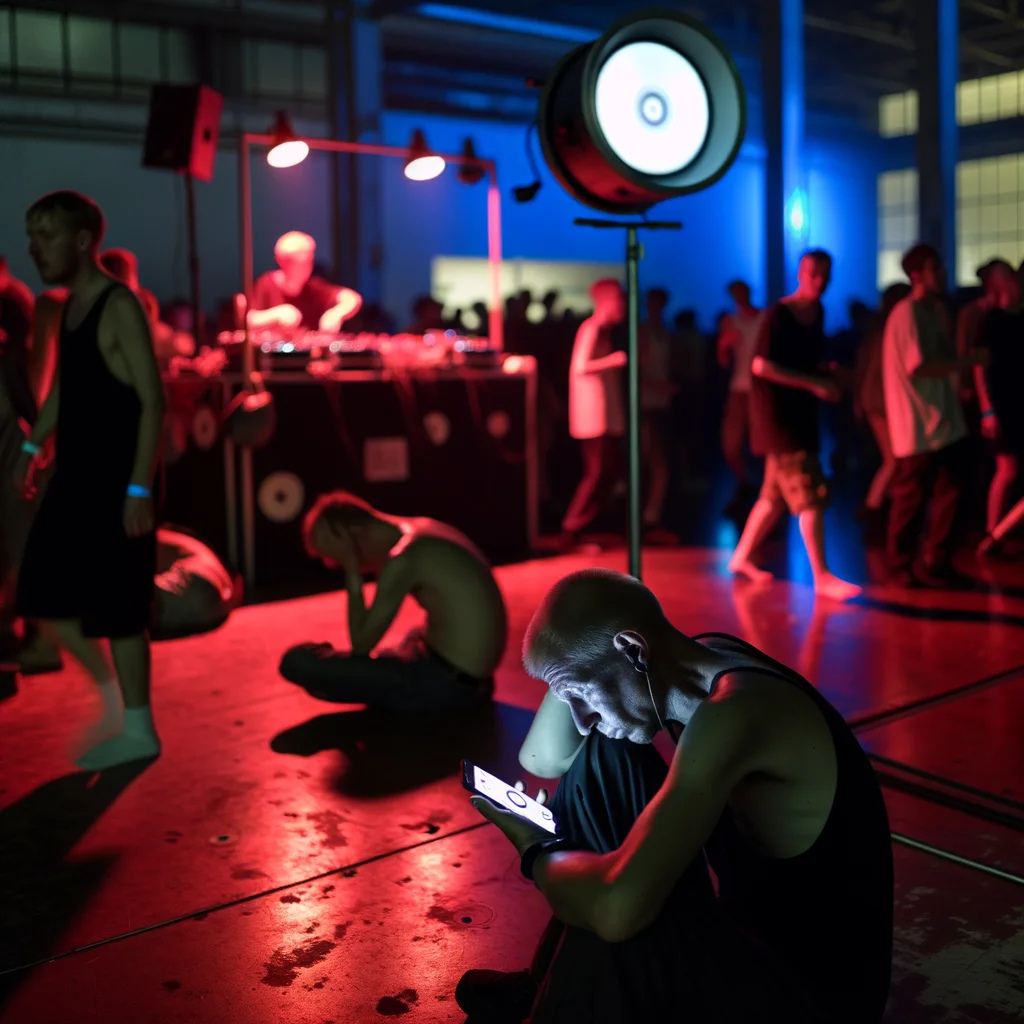
On Friday, Jan. 16, at 2:13 a.m., the main room at a former logistics hall near Osloer Straße (entrance on a side lot behind Schwedenstraße 14) delivered what witnesses described as “a legally safe amount of rhythm.” The music, measured by a volunteer with a battered metronome app and a grin that didn’t reach his eyes, hovered at 124 BPM for nearly an hour.
In Berlin, this qualifies as a municipal emergency.
The citywide stimulant shortage—nicknamed by promoters and disappointed part-time philosophers as “The Great Acceleration Drought”—has collided with nightlife scheduling like an old U-Bahn door: slowly, loudly, and directly on people’s hands. Organizers, sound technicians, and performers say they can no longer depend on chemical enthusiasm to carry extended high-tempo sets.
“Tonight I had to work with what the crowd actually has: a spine and personal history,” said Gencay Aydin, 39, owner of Aydin Elektronik & Kabel at Müllerstraße 162, who was called on Friday at 11:48 p.m. to provide additional RCA adapters after two performers allegedly attempted to “slow-mix with shame” and broke a connector. “People ask for a harder kick. I tell them: take it up with the global supply chain.”
“A Tempo You Can Explain to Your Mother”
At 1:27 a.m., two blocks away at Nisa Markt, Triftstraße 32, clerk Selin Karaca said the shortage is visible in small purchases. “They used to come in sweaty and silent, buy gum, and disappear like a Karlovy Vary art film,” Karaca said. “Now they buy sparkling water, chips, and—this is new—mints with intention. Everybody is chewing like they’re trying to process trauma.”
On Thursday, a printed notice appeared on a corkboard outside a rehearsal space on Prinzenallee 33. The paper listed a set policy in plain black letters: “Max 128 BPM. No exceptions. Do not ‘request harder’ in the booth.” A studio tenant who gave his name only as Fabian said the statement was necessary. “Without… supplemental enthusiasm, people feel everything,” he said. “A hi-hat at 146 is a comforting blur. At 124 you can hear your own morals.”
The Berlin Senate Department for Culture and Social Cohesion did not address questions about specific narcotics flows but confirmed that, as of Wednesday, Jan. 14, “several private events” had submitted noise-related incident logs referencing “unusually intelligible percussion.” A spokesperson, Marit Holzner, said the department was “monitoring shifts in neighborhood soundscapes” and encouraged operators to keep patrons “hydrated, ventilated, and—where possible—emotionally clothed.”
Unwanted Side Effects: Conversation and Time Perception
Several attendees interviewed near Leopoldplatz at 4:06 a.m. reported disorientation associated with extended normal-tempo sessions.
“I kept thinking it was the warm-up,” said Romain Delaunay, 28, who described himself as “Berlin-based, legally freelance.” “Then the warm-up became the entire night. It’s like Waiting for Godot, but Godot arrives as a tasteful groove and asks how your childhood was.”
A more practical complaint came from Türkan Yılmaz, 52, who runs a late-night börek counter on Nazarethkirchstraße 49. “They’re not losing it anymore,” she said. “They’re… staying in it. They stand there and talk to each other with their mouths full. It’s hard to swallow, professionally speaking.”
Venue staff in Wedding say they are adapting. One sound engineer, Lena Frisch, 33, said operators are experimenting with “deep” bass lines instead of raw tempo. “We’re penetrating the mix differently,” she said, pausing briefly to consider how that sounded. “You can build tension without racing the heart. Some people hate it. Some people—honestly—seem frightened by how much they can feel their own knees.”
By Sunday, promoters expect informal “BPM ration cards” to circulate in several northern districts, allowing one high-tempo moment per person, to be redeemed under supervision. In Wedding, where reinvention is constant but cash is real, a simpler compromise is emerging: slower sets, longer talks, and döner afterward—served with the quiet terror that the night might be memorable for reasons other than volume.