Frame-by-Frame Justice: Wedding’s Newest Hobby Is Slow-Motion Outrage
After the NYT’s ICE video breakdown, locals in Wedding begin treating every shaky clip like the Zapruder film—only with more opinions, less context, and a suspiciously convenient pause button.
Neighborhood Features & Domestic Security Correspondent
The New York Times just did a painstaking video analysis of an ICE shooting, reconstructing contested moments frame by frame, like a sober person trying to staple reality back together.
Naturally, Wedding saw that and said: Cute. We’ve been doing that with elevator CCTV, U8 platform clips, and “my cousin’s friend’s phone” since before it was a content vertical.
The Neighborhood’s New Public Service: Amateur Truth Extraction
If you live in Wedding and something “happens,” you have roughly eight minutes before it becomes:
- a grainy 14-second clip
- reposted with three different captions
- annotated by a guy named Deniz who “used to edit videos” (meaning: he once installed Premiere)
- debated by a philosophy student who reads Foucault like it’s a user manual
The result is a community-driven investigation that makes Rashomon look like a unanimous vote at a homeowners meeting.
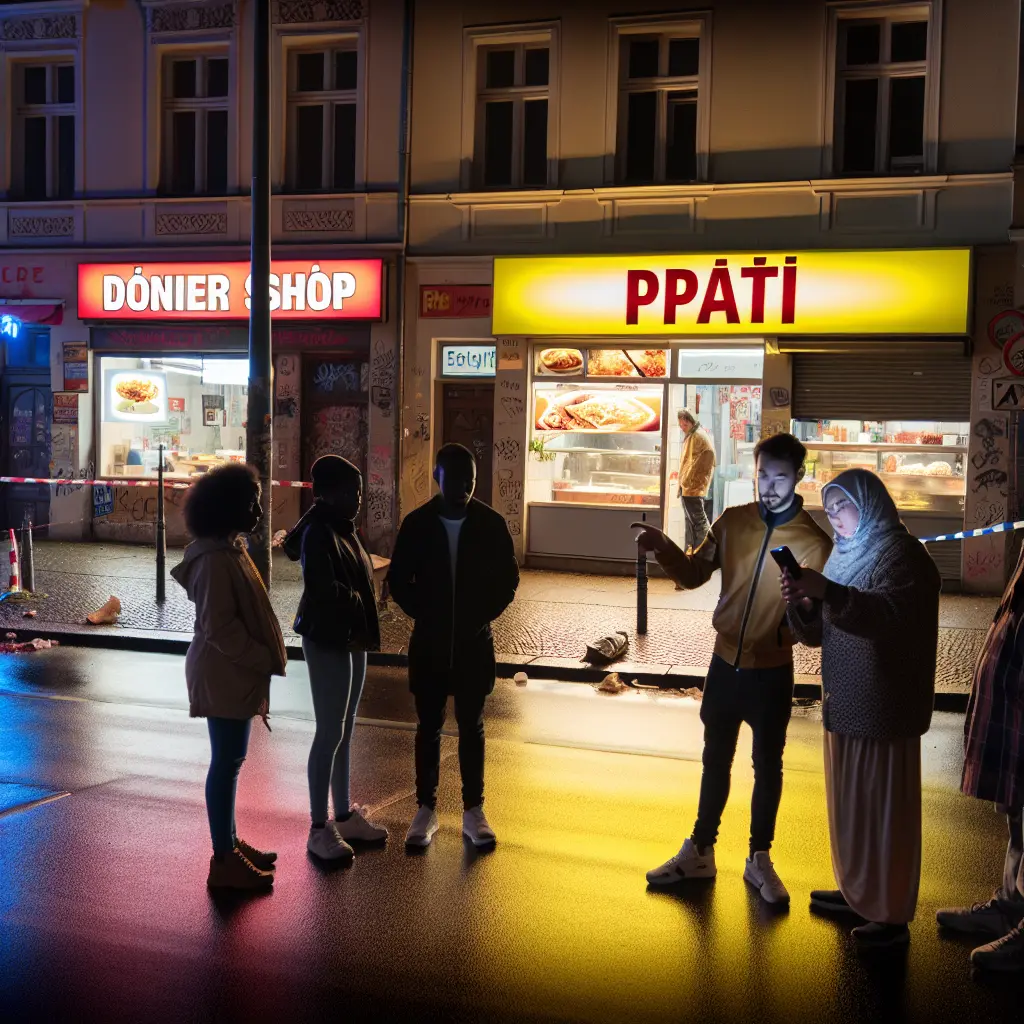
A recent example: a contested moment outside a late-night döner shop—did a man “lunge,” “reach,” or merely perform the universal Berlin gesture of looking for his lighter with tragic determination? The crowd assembled online like it was the Cannes jury, except everyone’s in sweatpants and morally certain.
Evidence, Berlin-Style: Hard to Swallow, Easy to Share
American video analysis at least pretends it’s about establishing facts. Wedding’s version is more like performance art—call it “Adorno in Vertical Format.”
The footage gets “enhanced” until the pixels look like a Gerhard Richter painting having a panic attack. Then someone announces, with stiff confidence, that the shadow clearly proves intent. Another person replies that the shadow is a social construct. A third says it’s gentrification.
Meanwhile, the actual event—whatever it was—sits in the corner like Walter Benjamin’s “aura,” quietly dying under a ring light.
The Pause Button: Berlin’s Most Intimate Form of Power
The contested moment is where the real fetish lives.
Not the moment itself—the control over the moment.
Everyone wants the authority to pause, zoom, and narrate: to penetrate the chaos with a single decisive screenshot. It’s the same urge as the guy who “just has one quick note” at the neighborhood meeting. Except now the meeting is 600 messages long and the minutes are a JPEG.
And yes, it gets ugly, because it always does. People don’t just argue about what happened—they argue about who gets to define what happened. Debord warned us about the Society of the Spectacle. Wedding replied: “Great, can we get a director’s cut?”
Official Response: A Policy of Strategic Shrugging
Authorities, asked about the neighborhood’s growing obsession with citizen video analysis, offered the traditional Berlin stance: a silence so committed it should receive arts funding.
Privately, one local official admitted the public’s frame-by-frame hobby is “challenging.” Then they asked if the clip could be sent again, because the first one “didn’t load.”
The Real Lesson From the ICE Video Breakdown
The NYT analysis suggests video can clarify contested moments.
Wedding’s experience suggests video can also become a weaponized mirror: everyone sees themselves, everyone hates the reflection, and somehow the loudest person gets to call it truth.
In the end, the neighborhood will keep doing what it does best: turning public trauma into a group project, demanding accountability from strangers, and then immediately losing interest when something requires follow-through.
Because in Wedding, justice isn’t blind.
It’s buffering.