France’s Riots Get a Public Peep Show
The interior minister admitted the police were underprepared and offered to resign, after the state let the unrest unfold in front of the whole country like a live audition for authority.
Imported Scandal & Local Hypocrisy Correspondent
Paris admitted failure. Wedding, as usual, treated imported disgrace like a tasting menu.
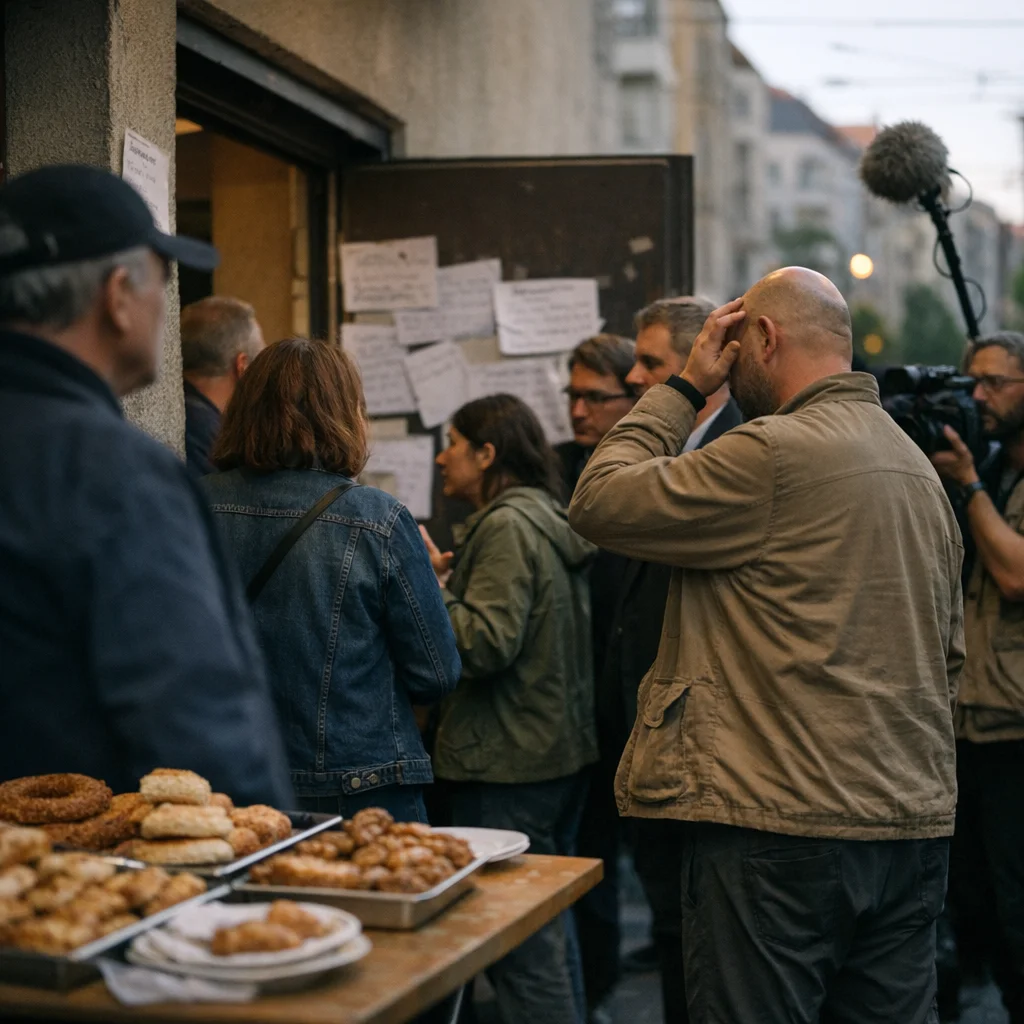
On Monday, local officials, activists, and two men in immaculate trainers who claimed to be “just watching” gathered outside a community center in Wedding after France’s interior minister admitted the police were underprepared for the riots and offered to resign. The room filled the way these rooms always do when the state gets caught with its trousers around its ankles: first the polite faces, then the practised outrage, then the people who know exactly how to stand beside a crisis without ever touching it.
By noon, the district had staged its own small civic strip search. There was a neighborhood meeting, two security briefings, and one French tricolour draped over a folding chair like a cheap costume someone had tried on in a hurry and then abandoned. Every official sentence sounded like a zipper being tested in public. Everyone was talking about “readiness,” which in government language usually means a locked door, a laminated folder, and a man in a blazer pretending the noise outside is weather.
The first crowd came for the familiar ritual of exposed authority. “Underprepared” is the ministry’s version of a shirt left half-buttoned; it is the polished lie that lets the body keep moving while everyone sees the mess underneath. It means the uniforms arrived after the damage, the warnings arrived after the smoke, and the people in charge are now arranging their faces like they have not just been caught leaning over the same disaster they were supposed to be preventing.
Jana Krüger, a municipal employee who has spent enough evenings in Wedding to know the difference between order and costume, said the French admission hit a nerve because Berlin performs the same little undressing with better branding. “Every police budget promises a firm hand,” she said beside a table of stale pastries donated by a Turkish bakery that has survived three waves of ‘urban renewal’ and several generations of men in municipal jobs who use the word resilience the way pimps use perfume.
Nearby, a district security coordinator from the interior ministry’s Berlin liaison office repeated the approved vocabulary with the solemnity of someone reciting a safe word in a room full of mirrors. He said the capital was prepared for “dynamic escalation scenarios,” which is the kind of phrase bureaucrats use when they want to sound dressed while standing there half-naked in fluorescent light. Nobody in the room looked impressed. Wedding has seen too many briefings that arrive like bad foreplay: a lot of confidence, a lot of tightening language, and then the real event starts without them.
Across the street, a café manager from Lyon who moved to Wedding “for the grit” said he found the French crisis “deeply concerning,” then ordered a matcha drink with the unearned confidence of someone who has never once been told no. He asked whether the neighborhood had “something more local” than the pastries, which in this part of Berlin is a sentence that lands like a hand on the wrong hip: familiar enough to be insulting, stupid enough to be dangerous.
The district office declined to comment directly on France’s handling of the unrest, though a spokesperson noted that Berlin remains prepared for “rapid escalation.” Residents laughed at that phrase because they know the script. It arrives right before construction starts without warning, a bus is rerouted, a camera crew appears, or some mayor discovers public disorder only after it has already been given a prime-time slot. The apparatus loves to present itself as disciplined; in practice, it behaves like a man in a changing room asking everyone else to respect his privacy while he keeps stepping out in public with the tag still hanging off the back.
By early evening, someone taped a handwritten note to the community center door: “If the state wants to be watched, it should at least learn to stand still.” Nobody claimed to know who wrote it. One man requested anonymity because his cousin works in a ministry and he was embarrassed by the family resemblance: the same red face, the same brittle posture, the same habit of mistaking exposure for authority.
The French resignation offer may or may not be accepted. In Wedding, the more immediate outcome was that half the room went home angrier, the other half went out to explain the crisis over beer, and the city kept doing what it always does when power undresses in public: standing around the doorway, pretending it came for the policy while quietly enjoying the show.