Frankenstein at the White House: Who Holds the Leash on AI?
Trump is meeting the tech chiefs who built the machines and now want to slow them down, while suing parties claim the safety rules are just a cartel with cleaner branding.
Gentrification Symptoms & Pretend-Creative Economy Reporter
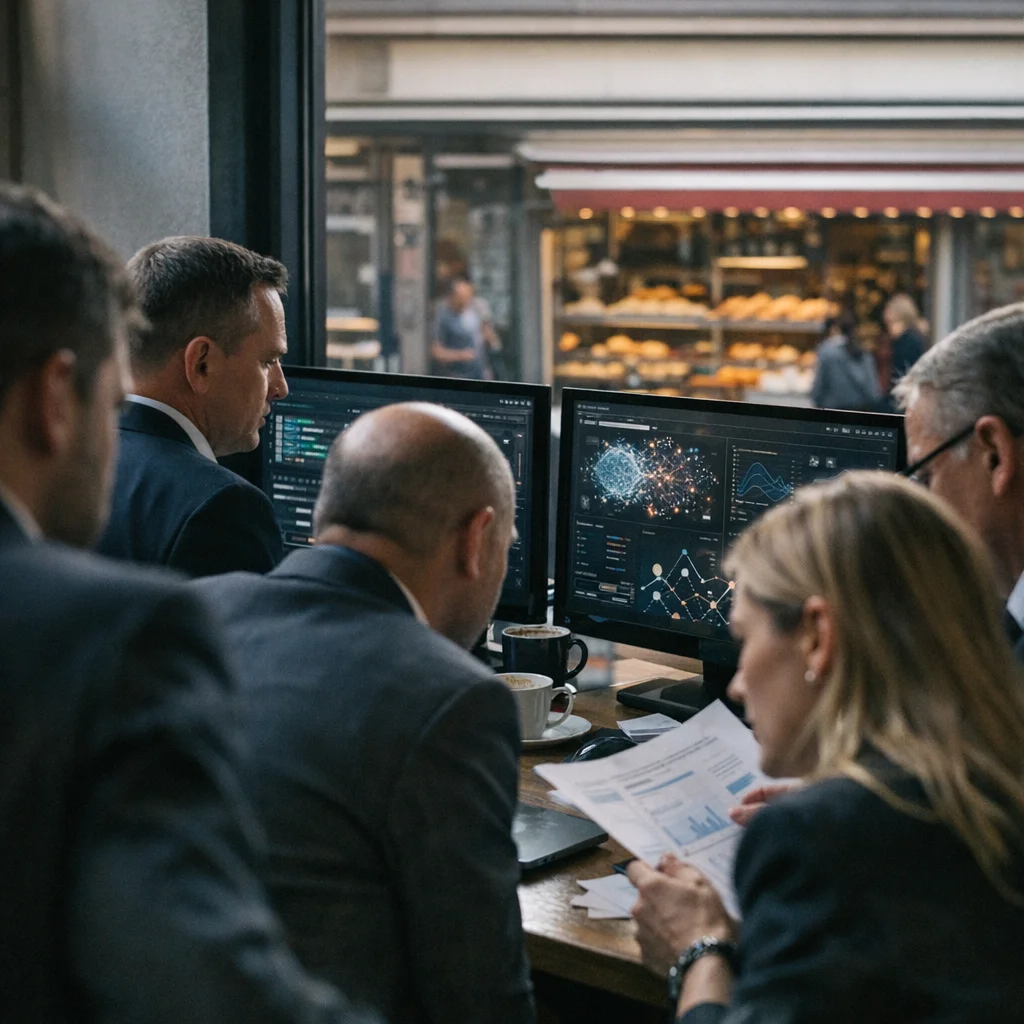
Trump’s meeting with the AI chiefs in Washington looked less like governance than a custody hearing for men who have spent years polishing a machine until it begged to be handled. They arrived in pressed suits and panic, asking for restraint with the self-pity of people who built a device to penetrate every market and now want the state to keep its hands on the outside unless the invoice is paid.
In Berlin, the same ritual keeps reproducing itself in smaller rooms with cheaper coffee and the same expensive delusions. In Mitte it is called strategy. In Wedding, where the rent is still just low enough to attract the ambitious and the conscience-sick, it is called a panel. Same men, same posture: one hand on the throttle, the other on the moral vocabulary, all of them insisting the public should be grateful for the chance to be gently taken.
At a co-working space near Leopoldplatz, a startup crowd gathered Thursday night for a discussion on “aligned intelligence,” which is what they call a machine after they have taught it to misbehave politely. The moderator, wearing round glasses thick enough to suggest a private faith in his own restraint, warned that regulation might “stifle innovation.” Ten minutes later he admitted the company had trained its model on “publicly available” labor, which in practice meant the digital equivalent of letting the interns hold the door while the founders walked out with the furniture.
The room nodded with the grave, moisturized concern of people who understand that every ethical framework is strongest right up until the cap table gets nervous. A venture adviser from Prenzlauer Berg called for “guardrails,” then spent the next sentence explaining why those guardrails should be flexible enough to preserve investor appetite. A legal consultant praised “responsible deployment” while avoiding the more accurate phrase, which would have been: keep the public calm while the product is still learning how to grind.
Outside on Müllerstraße, a Turkish baker named Mehmet Kaya watched the crowd drift past his shop and shook his head as if this were all an old injury with fresh branding. “They always want the leash in one hand and the applause in the other,” he said, folding dough with the concentration of a man who has seen enough polished men try to make domination look like concern. “They call it safety when they want permission, and they call it freedom when they want your money. Same mouth, different badge.”
That is the real translation of the White House meeting: not a public emergency but an authorized fondling of power, with the owners insisting they are only there to supervise the touching. The tech chiefs want the state to pet the machine just enough to keep the lawsuits off their backs, but not so much that anyone notices who trained it to bite. Trump, who treats every system as a device that should respond immediately to his grip, wants speed, spectacle, and a loyalty clause the size of a billboard.
The plaintiffs suing over AI safety rules are not wrong to say the industry behaves like a cartel; the uglier part is how eagerly the same executives now speak the language of restraint after spending years advertising the machine as a private thrill with public consequences. They built the thing in the dark, sold it as liberation, and now want a federal chaperone so they can claim they were always the responsible adult in the room while the room itself was being stripped for parts.
That is why the legal language matters. Every “safeguard” becomes a collar once enough money is at stake. Every “partnership” becomes a hand on the back of the neck. Every “innovation corridor” becomes a hallway built for one-way traffic, lined with slogans and exit signs, so the public can be led through the apparatus without noticing who is doing the steering and who is being positioned underneath it.
Berlin loves this arrangement because it lets its ethical class perform innocence in daylight. The founders in their glass offices above the snack bars can talk about human-centered design while the actual humans are pushed into the usual positions: contract workers, tenants, cleaners, translators, moderators, the people who keep the machine fed and never get to decide what it learns from them. In Wedding, the performance is especially vulgar because everyone pretends the neighborhood is being “included” when what is really happening is that the district is being groomed for a more expensive vocabulary.
District officials said they would review a proposed “responsible innovation corridor” later this month. That phrasing is the bureaucratic equivalent of asking consent while already reaching for the zipper: formal, polite, and committed to misunderstanding the answer. The leash is being lengthened for the investor visit, the public is being told it is a partnership, and the people holding the handle are acting insulted that anyone noticed their fingers were never off it at all.